
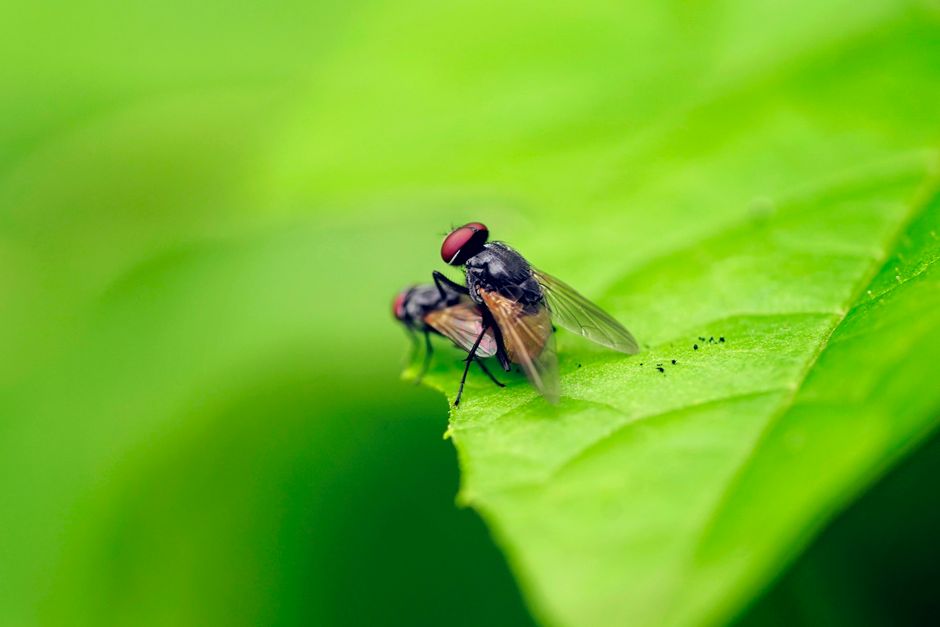
Small flies in your house are almost always breeding somewhere inside. The fastest way to get rid of them is to find and remove their breeding source, not just swat the adults you see. For most homes, that means checking drains, garbage bins, overripe fruit, and houseplant soil. Once you remove the source, the flies will disappear within a week because their life cycle is short.
What Kind of Small Fly Is In Your House?
Before you can remove the flies, you need to know what you are dealing with. The three most common small flies in homes are fruit flies, fungus gnats, and drain flies. Each one comes from a different place and needs a different approach.
Fruit flies are small, tan or brown, with red eyes. They breed in fermenting fruit, spilled juice, and damp food waste. They are most common in kitchens during late summer and fall.
Fungus gnats are tiny, dark gray or black flies that hover near houseplants. They breed in moist potting soil and feed on fungi and decaying plant matter in the dirt.
Drain flies look like tiny moths with fuzzy wings. They breed in the slimy film that builds up inside drain pipes, garbage disposals, and even in the overflow holes of sinks.
Identifying the fly tells you where to look. Fruit flies are almost always in the kitchen. Fungus gnats are almost always near plants. Drain flies are almost always near sinks and drains.
How To Remove Small Flies From House: Find the Source First
The single most effective step is finding where the flies are breeding. Adult flies you see are only about 5% of the problem. The other 95% are eggs, larvae, and pupae hidden in the breeding site.
Start in the kitchen. Check every piece of produce on the counter. Look for bruised or overripe fruit. Throw away anything with soft spots. Check the trash can, even if it has a lid. Check recycling bins for sticky bottles or cans with leftover liquid. Check under appliances for spilled juice or food debris.
If you have houseplants, check the soil. Fungus gnat larvae live in the top inch or two of moist soil. If you see tiny flies hovering just above the dirt when you water, that is your source.
If you have drain flies, look inside the sink drains. The slimy biofilm that builds up in pipes is their food and breeding ground. Kitchen sinks, bathroom sinks, and floor drains can all harbor them.
Check less obvious places too. A half-empty wine bottle left out, a forgotten potato in the back of a cabinet, or a slow-draining shower can all be breeding sites. Once you find the source and remove it, the population collapses on its own.
How To Get Rid of Fruit Flies
Fruit flies breed fast. A single female can lay about 500 eggs. The entire life cycle from egg to adult takes about 8 to 10 days in warm conditions. That speed is why a small problem becomes a big one quickly.
Remove all accessible food first. Store fruit in the refrigerator. Take out the trash daily. Wipe down counters and clean up spills immediately. Do not leave dirty dishes in the sink overnight.
Then build a simple trap. A small bowl with apple cider vinegar and a drop of dish soap works well. The vinegar attracts the flies, and the soap breaks the surface tension so they sink and drown. Cover the bowl with plastic wrap and poke a few small holes. The flies can get in but struggle to get out.
Replace the trap every few days. It will catch adult flies, but it does not address the breeding source. If you still see flies after a week, you missed a breeding site somewhere.
Some research suggests that fruit flies are also attracted to red wine and certain fermenting odors. A trap with a small amount of red wine can work as well as vinegar. The key is the soap, not the bait. Without the soap, flies can land on the liquid and fly away.



How To Get Rid of Fungus Gnats
Fungus gnats are a soil problem, not a food problem. They breed in the top layer of moist potting soil. The larvae feed on fungi and organic matter in the dirt. They do not bite humans and they do not damage healthy houseplants, but they are annoying.
The most effective approach is to let the soil dry out between waterings. Fungus gnat larvae need consistently moist soil to survive. If the top two inches of soil dry out, the larvae die. Most houseplants can tolerate this drying period, but check your specific plant’s needs first.
For heavily infested plants, repotting with fresh soil can help. Remove as much of the old soil from the roots as possible and replace it with clean potting mix. This removes most of the larvae and eggs in one step.
Yellow sticky traps are a useful monitoring tool. They catch adult gnats and help you see whether the population is shrinking. They do not solve the problem by themselves, but they tell you if your other efforts are working.
Some products contain a bacteria called Bacillus thuringiensis israelensis, or Bti. This bacteria kills fungus gnat larvae in the soil. It is sold as a mosquito dunk or a liquid soil drench. It is considered safe for houseplants and people. Follow the label instructions for how much to use.
How To Get Rid of Drain Flies
Drain flies breed in the organic film that lines drain pipes. This slimy layer is made of soap scum, hair, food particles, and bacteria. It builds up over time and provides food for the larvae.
Cleaning the drain is the direct solution. Pour boiling water down the drain once a week to break up the film. This is simple and effective, but it does not remove all the buildup in the trap area.
A more thorough approach is mechanical cleaning. Use a stiff drain brush to scrub the inside of the pipe where you can reach it. This physically removes the biofilm that the flies need. You can buy a drain brush at most hardware stores.
Some people use baking soda and vinegar followed by hot water. This combination creates a fizzing reaction that can help loosen buildup. It is not a substitute for mechanical cleaning, but it can help maintain a clean drain.
Do not pour bleach down the drain expecting it to work. Bleach does not penetrate the biofilm well and can damage pipes over time. The slime layer protects the larvae from the bleach.
Drain flies can also breed in the overflow hole of a sink. This is the small opening near the top of the sink that prevents overflowing. Clean it with a small brush or cotton swab dipped in cleaning solution.
How To Prevent Small Flies From Coming Back
Prevention is simpler than treatment. The goal is to remove the conditions that allow flies to breed in the first place.
In the kitchen, store produce in the refrigerator or in sealed containers. Take out the trash daily, especially in warm weather. Clean up spills immediately, including under appliances and in hard-to-reach corners. Rinse recyclable containers before putting them in the bin.
For houseplants, water less frequently. Let the top layer of soil dry out before watering again. Remove dead leaves and debris from the soil surface. If you bring new plants home, inspect the soil for gnats before bringing them inside.
For drains, run hot water for 30 seconds after each use. This flushes away food particles and soap scum before they can build up. Once a week, pour boiling water down each drain to keep the pipes clear.
Check your garbage disposal regularly. Food particles can accumulate in the rubber splash guard and the area underneath it. Clean it by running cold water and ice cubes through it, then follow with hot water and soap.
Seal gaps around windows and doors. While most small flies come from inside breeding sources, some can enter from outside. Weather stripping and door sweeps reduce the chance of outdoor flies coming in.
When To Call a Professional
Most small fly problems are solved at home within one to two weeks. If you have removed all visible breeding sources, cleaned your drains, and changed your watering habits, but the flies persist, you may have a hidden source.
Check for a leak under the sink or behind the refrigerator. Moisture from a slow leak can create a breeding site in wood or drywall. Check crawl spaces and basements for standing water or organic debris. Check trash chutes in apartment buildings.
If you cannot find the source, a pest control professional can help. They have tools to inspect wall voids, under flooring, and in other inaccessible areas. They can also apply treatments that are not available to consumers.
Do not assume the problem is unsolvable. Small flies are always breeding somewhere. If you still see them, you have not found the source yet. Persistence pays off.
Frequently Asked Questions
How long does it take to get rid of small flies in the house?
Most infestations clear up within 5 to 10 days after you remove the breeding source. The remaining adults die off naturally within that time, and no new flies emerge.
Will apple cider vinegar get rid of fruit flies?
Apple cider vinegar attracts fruit flies, but the trap only works if you add dish soap. The soap breaks the surface tension so the flies sink and drown instead of landing and flying away.
Can small flies come from houseplants?
Yes, fungus gnats breed in moist potting soil. Let the top two inches of soil dry out between waterings, and consider repotting heavily infested plants with fresh soil.
Why do I still see flies after cleaning my kitchen?
You likely missed a breeding source. Check under appliances, inside recycling bins, in drain pipes, and in any forgotten produce or open beverage containers.
