
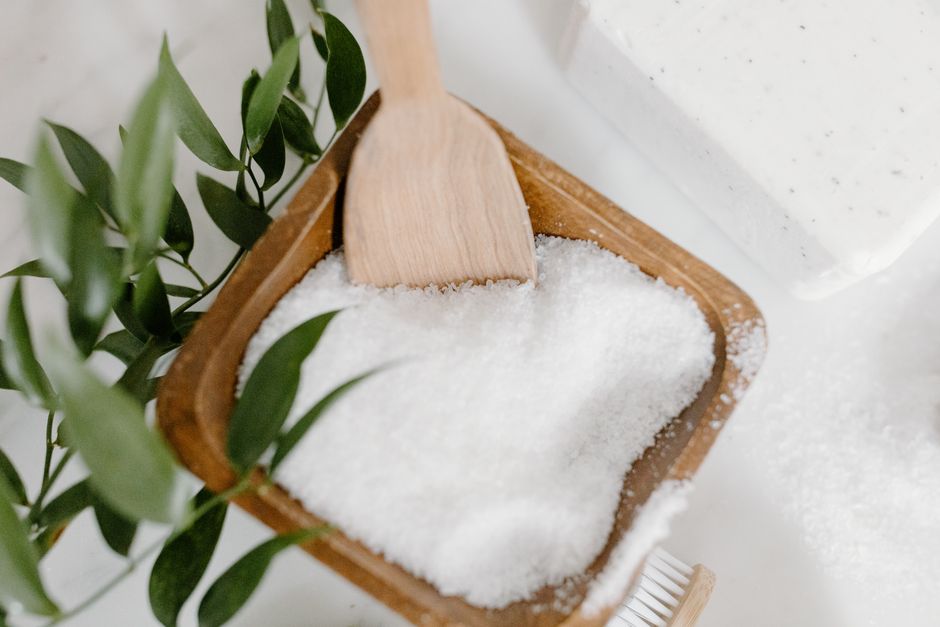
Epsom salt is magnesium sulfate, and it is a popular addition to foot soaks and baths. It does not chemically dissolve or remove dead skin or calluses on its own. However, soaking in warm water with Epsom salt softens thick, hardened skin, which makes it much easier to remove with a pumice stone or foot file afterward. The salt itself is not an exfoliant; it is a softening agent that prepares the skin for physical removal.
What Does Epsom Salt Actually Do to Your Skin?
Epsom salt is not the same as table salt or sea salt. It is a mineral compound made of magnesium and sulfate. When you dissolve it in warm water, it changes the water slightly, but it does not break down the protein (keratin) that makes calluses hard.
The primary benefit comes from the warm water soak itself. Soaking for 10 to 15 minutes hydrates the outer layer of skin. This hydration plumps up the dead skin cells and softens the callus, making it less rigid. Once the skin is soft, you can gently file it away with a pumice stone or a foot file.
Some people believe the magnesium in Epsom salt is absorbed through the skin and reduces inflammation or muscle soreness. Research on magnesium absorption through the skin is limited and mixed. The evidence is not strong enough to confirm that significant amounts of magnesium enter the bloodstream through a foot soak.
Does Epsom Salt Remove Calluses Directly?
No. Epsom salt does not contain enzymes or acids that break down dead skin. Calluses are dense layers of dead skin cells that form in response to pressure or friction. They are tough and often have a yellowish tint. The salt cannot dissolve this tissue.
What the soak does is soften the callus. The water hydrates the skin cells, and the salt may help draw some moisture into the tissue. After the soak, the callus is more pliable. You can then remove the softened layers with a pumice stone, foot file, or exfoliating tool. Without the physical scrubbing step, the Epsom salt soak alone will not reduce a callus.
It is important to use gentle pressure when filing. Removing too much skin at once can expose the sensitive living tissue underneath. This can lead to soreness, bleeding, or infection. The goal is to thin the callus gradually, not to eliminate it entirely.
How to Use Epsom Salt for Feet and Calluses
If you want to soften a callus, a foot soak is the standard approach. The process is straightforward.
- Fill a basin with warm water. The water should be comfortable to the touch, not hot.
- Add about half a cup of Epsom salt for every gallon of water. Stir until it dissolves.
- Soak your feet for 10 to 15 minutes. Longer soaks do not provide additional benefit and may dry out the skin.
- Pat your feet dry with a towel. Do not rub.
- Use a pumice stone or foot file to gently rub the callus in a circular or back-and-forth motion.
- Rinse your feet and apply a thick moisturizer or foot cream immediately afterward.
Repeat this process once or twice a week as needed. Consistent moisturizing between soaks is just as important as the soaking itself. Calluses form because of pressure, and keeping the skin flexible can reduce the buildup.
Do not use an Epsom salt soak if you have open wounds, cuts, or cracked skin on your feet. The salt can sting, and soaking an open wound may increase the risk of infection. If you have diabetes or poor circulation, talk to a doctor before soaking your feet or using any foot care tools at home.




What Works Better for Calluses: Soaks or Acid Treatments?
Epsom salt soaks are a gentle method for softening skin. But they are not the only option. Other products work differently and may be more effective for thicker calluses.
Products containing urea or salicylic acid are common over-the-counter treatments for calluses. Salicylic acid works by breaking down the keratin protein that holds dead skin cells together. Urea is a humectant that draws moisture into the skin and also helps break down dead tissue. These products are applied directly to the callus and can soften it over several days.
Epsom salt soaks provide immediate softening for a single session. Acid treatments provide gradual softening over time. Many people use both. A soak softens the skin for filing, and an acid cream applied daily keeps the callus from rebuilding quickly.
There is no strong evidence that one method is clearly superior to the other for all people. The best approach depends on the thickness of the callus and your skin sensitivity. Acid treatments can cause irritation if applied to healthy skin around the callus. Epsom salt soaks are generally milder but require more time and effort.
Does Epsom Salt Help with Dead Skin on the Body?
The same principle applies to dead skin on other parts of the body. Epsom salt baths do not remove dead skin cells directly. They soften the skin, making it easier to exfoliate with a washcloth, loofah, or body scrub.
Some people use Epsom salt as a physical scrub by mixing it with oil or soap. In this case, the salt crystals act as an abrasive. The rough texture of the crystals helps slough off dead skin cells through friction. This is different from the soaking method. As a scrub, the salt is doing physical exfoliation, not chemical exfoliation.
If you use Epsom salt as a body scrub, be gentle. The crystals are jagged and can cause micro-tears in the skin if you press too hard. People with sensitive skin or conditions like eczema may find salt scrubs too irritating.
Risks and Precautions with Epsom Salt
Epsom salt is generally safe for most people when used in a bath or foot soak. But it is not without risks.
Soaking for too long can dry out your skin. The salt draws moisture out of the skin over time, especially if the water is hot. Keep soaks under 20 minutes and rinse off afterward. Always apply moisturizer after soaking to lock in hydration.
If you have diabetes, peripheral neuropathy, or any condition that reduces blood flow to your feet, check with a healthcare provider before using foot soaks. These conditions increase the risk of skin damage and infection. A minor abrasion from a pumice stone can become a serious problem if you cannot feel it or if it heals slowly.
Do not swallow Epsom salt. It is not a food product. Ingesting magnesium sulfate can cause diarrhea, nausea, and cramping. It is only intended for external use.
There is no clinical evidence that Epsom salt treats fungal infections like athlete’s foot. If you have a fungal infection, an antifungal medication is the appropriate treatment. Soaking may temporarily relieve symptoms, but it will not cure the infection.
Frequently Asked Questions
Can Epsom salt soften a callus in one soak?
A single 15-minute soak will soften the outer layers of a callus enough for light filing. Thick calluses may require several sessions over multiple weeks to see significant reduction.
Should I use Epsom salt or sea salt for calluses?
Epsom salt is preferred for soaking because it dissolves easily and is less abrasive than sea salt. Sea salt can be used as a physical scrub, but Epsom salt is gentler for softening skin before filing.
Can I use Epsom salt on cracked heels?
Only if the cracks are not open or bleeding. Soaking open cracks can increase the risk of infection. If the skin is broken, skip the soak and use a thick moisturizer or consult a doctor.
How often should I soak my feet with Epsom salt for calluses?
Once or twice a week is usually enough. Soaking more often can dry out the skin and make the problem worse. Daily moisturizing is more important than frequent soaking.
