
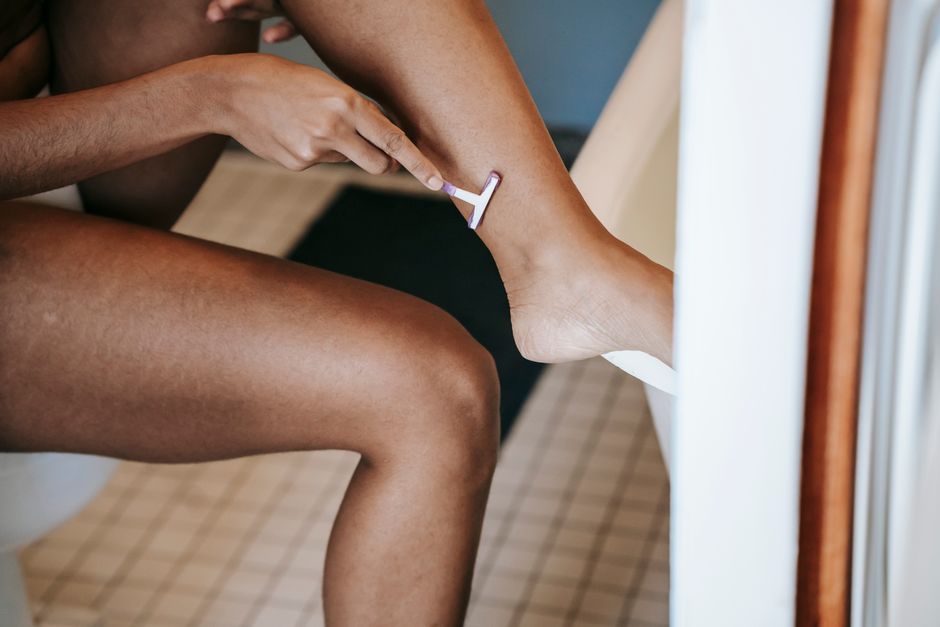
An ingrown hair on your leg happens when a hair curls back and grows into the skin instead of rising out of the follicle. The result is a small, often itchy bump that can look like a pimple. Most ingrown hairs clear up on their own within a few days to a couple of weeks, but there are safe steps you can take at home to help them resolve and to lower the odds of getting more.
What Causes Ingrown Hairs on the Legs?
Hair grows out of a tiny pocket in the skin called a follicle. Normally the hair pushes up through the surface. An ingrown hair happens when the sharp tip turns back into the skin or when dead skin blocks the opening so the hair cannot break through.
Two things drive most cases on the legs. One is cutting the hair in a way that leaves a sharp, pointed edge. The other is a follicle that is already partly blocked by dead skin cells.
Shaving is the most common trigger. A razor can slice a hair at an angle, leaving a tip sharp enough to pierce the skin as it regrows. Waxing, tweezing, and epilating can also set the stage, especially if a hair snaps off below the surface.
Some people are simply more prone to it. Curly or coarse hair is more likely to curve back into the skin. Tight clothing that rubs against the leg can push hairs inward and irritate follicles. Dry skin that sheds unevenly can clog openings. And people with certain skin conditions that cause frequent follicular irritation tend to get more of them.
One thing worth clarifying: an ingrown hair and a pimple are not the same thing, even though they look alike. An ingrown hair has a visible hair trapped underneath. A pimple is a blocked oil gland. Treating one like the other can make things worse.
How To Remove Ingrown Hair Legs: Safe Methods
The safest approach is to let the hair grow out on its own while you gently encourage the skin to release it. Aggressive squeezing is the main thing that turns a minor bump into an infection.
Warm compress
A warm, damp cloth held against the bump for a few minutes several times a day softens the skin and can help the hair work its way to the surface. This is the least risky first step.
Gentle exfoliation
Lightly rubbing the area with a soft washcloth or a gentle exfoliating product can lift dead skin that is trapping the hair. Keep it gentle. Scrubbing hard irritates the follicle and can make the bump worse.
Sterilized tweezers, only if the hair is visible
If you can clearly see a loop of hair at the surface, you can use clean tweezers to gently free it. Do not dig into the skin to reach a hair that is buried. Do not pluck it out completely if it is already growing normally — that can restart the cycle.
If the bump is red, hot, swollen, or leaking pus, that suggests infection rather than a simple ingrown hair. In that case, stop home removal attempts and see a clinician. Signs of spreading infection need medical care.
What You Should Not Do
Squeezing, picking, and digging at an ingrown hair are the most common mistakes. They push bacteria deeper, raise the risk of infection, and often leave a dark mark or scar that lasts far longer than the original bump.
Do not use a needle or pin to pry the hair out. Do not apply strong acids or undiluted essential oils to the skin. Do not shave over an active ingrown hair — you will irritate it further and may cut the skin.
Some over-the-counter products are marketed for ingrown hairs. The evidence that they speed resolution is limited. Products containing salicylic acid or glycolic acid can help exfoliate the skin surface, and some clinicians recommend them for prevention. But they are not a guaranteed fix, and they can sting on broken skin.



How to Prevent Ingrown Hairs When You Shave
If you shave your legs, a few changes lower the odds of trapping hairs.
- Shave in the direction the hair grows, not against it. This leaves a less sharp tip.
- Use a sharp blade. A dull razor tugs and cuts unevenly.
- Soften the hair first with warm water and a shave gel or cream.
- Rinse the razor after each stroke so it does not clog.
- Moisturize after shaving to keep the skin from drying and flaking.
Exfoliating gently a day or two after shaving can help hairs break through before they curl back. Some people find that switching from shaving to trimming with an electric razor, or to a depilatory cream, reduces ingrown hairs. Depilatory creams dissolve hair at the surface but can irritate sensitive skin, so test on a small area first.
Laser hair removal is the option with the strongest evidence for reducing ingrown hairs over the long term, because it reduces the hair itself. It works best on dark hair and lighter skin, though newer devices can treat a wider range of skin and hair types. It requires multiple sessions and is usually done in a clinic or medical spa.
When to See a Doctor
Most ingrown hairs are harmless and clear up without treatment. See a clinician if the bump is getting larger, is very painful, or is leaking pus. Also seek care if you develop a fever or if redness spreads beyond the bump.
Some people get recurrent, widespread ingrown hairs that leave dark marks or scars. This pattern is sometimes called pseudofolliculitis. A dermatologist can confirm what is going on and discuss options, which may include prescription creams or laser treatment.
Rarely, a bump that does not heal or that keeps changing could be something other than an ingrown hair. A clinician can tell the difference. Do not assume every persistent bump is harmless.
How Long Do Ingrown Hairs Take to Heal?
A simple ingrown hair usually resolves within one to two weeks as the hair grows out or the skin sheds it. If you have removed the trapped hair, the bump often settles within a few days.
A dark mark left behind can take much longer to fade — often several weeks to months. This is called post-inflammatory hyperpigmentation, and it is more common in people with darker skin tones. Sun exposure can make these marks darker, so protecting the area from the sun may help.
If a bump is still there after a few weeks, or if it keeps coming back in the same spot, it is worth having a clinician look at it.
Do Ingrown Hairs Always Need Treatment?
No. Most ingrown hairs on the legs resolve on their own without any intervention. The main role of home care is to avoid making things worse and to reduce the chance of infection or scarring.
The evidence for most home remedies is limited. Warm compresses, gentle exfoliation, and avoiding picking are low-risk and widely recommended by clinicians, but they are based more on common practice than on large clinical trials. The strongest evidence for prevention points to reducing or changing how hair is removed, particularly laser treatment for people who get them repeatedly.
Frequently Asked Questions
How do you get an ingrown hair out of your leg?
Apply a warm compress and gently exfoliate to help the hair reach the surface, then use clean tweezers only if the hair is clearly visible. Do not dig into the skin or squeeze the bump.
Should I pop an ingrown hair on my leg?
No. Popping pushes bacteria deeper and raises the risk of infection and scarring, and it rarely helps the hair come out.
How long does an ingrown hair on the leg last?
Most clear up within one to two weeks on their own. A dark mark left behind can take several weeks to months to fade.
When should I see a doctor for an ingrown hair?
See a clinician if the bump is very painful, getting larger, leaking pus, or if redness spreads or you develop a fever. A bump that does not heal after a few weeks should also be checked.
