
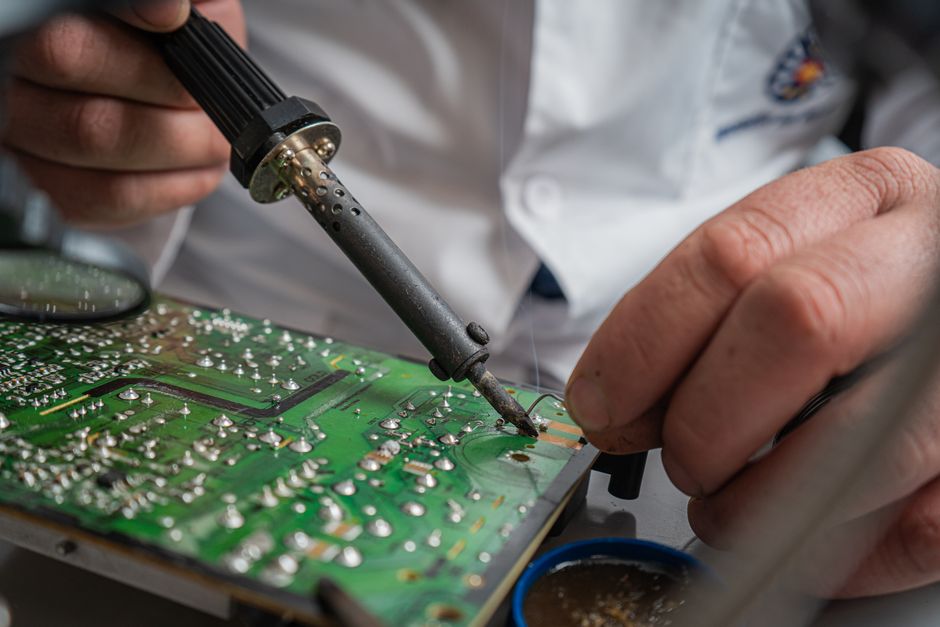
Removing a solder joint comes down to two tools: solder wick (braid) or a solder pump (desoldering pump). Solder wick pulls molten solder upward through capillary action, while a solder pump uses suction to vacuum it away. Both work well, and the right choice depends on the joint size, your skill level, and whether you are removing a component or just cleaning up excess solder.
What Is Solder Wick and How Does It Work?
Solder wick is a braided copper wire coated with flux. When you place it over a heated solder joint, the solder melts and flows into the braid. The copper acts like a sponge, soaking up the liquid solder through capillary action.
The flux in the wick is essential. It cleans the surface and helps the solder flow into the braid instead of beading up on it. Without flux, the wick will not pull solder effectively, and the joint will stay messy.
Wick comes in different widths. Narrow wick works for fine pitch work like circuit boards. Wide wick clears larger joints and through-hole pads quickly. Using wick that is too narrow for a large joint means slow work and multiple attempts. Using wick that is too wide on a small pad can pull solder from neighboring components.
One common mistake is pressing down hard with the iron. Pressing does not help. The heat needs to transfer through the wick to the joint. Light pressure with the flat side of the iron tip against the wick is enough. Hold it until you see the solder flow into the braid, then lift both together.
What Is a Solder Pump and How Does It Work?
A solder pump, also called a desoldering pump, is a spring-loaded suction tool. You cock the plunger, heat the solder joint with your iron, then place the pump tip over the molten solder and press the release button. The plunger snaps back and creates suction that pulls the solder into the barrel.
Timing is everything with a pump. The solder must be fully molten when you trigger the suction. If you fire too early, you pull semi-solid solder and leave a mess. If you fire too late, the solder has already solidified and the pump does nothing.
Most hand pumps have a Teflon tip that resists heat and solder adhesion. These tips wear out over time and should be replaced when they become clogged or deformed. A clogged tip dramatically reduces suction power.
Pumps are excellent for removing large amounts of solder from through-hole joints. They are less precise than wick for fine surface-mount work. The suction can pull solder from unintended areas if the tip is not positioned exactly over the joint.
How To Remove A Solder Joint Using Wick Or Pump: Step-by-Step
Preparation matters more than technique. Clean the area with isopropyl alcohol if it is dirty or greasy. Apply fresh flux to the joint if you have liquid or paste flux available. Fresh flux makes both wick and pump work noticeably better.
Set your iron to the correct temperature. Most lead-free solder requires 350-400°C (660-750°F). Leaded solder melts at a lower temperature, around 300-350°C (570-660°F). If you are unsure what solder is on the board, start at 350°C and adjust from there.
Using solder wick:
- Place the wick flat on the joint.
- Press the iron tip on top of the wick.
- Wait 1-3 seconds for the solder to melt and flow into the braid.
- Lift the iron and wick together while the solder is still liquid.
- Cut off the used section of wick before the next attempt.
Using a solder pump:
- Cock the plunger until it locks.
- Heat the joint with the iron for 2-4 seconds until the solder flows freely.
- Move the iron away and immediately place the pump tip over the molten solder.
- Press the release button.
- Clean the pump tip and repeat if solder remains.
For through-hole components with multiple pins, alternate between heating and pulling. Heat one pin, pull the solder, move to the next pin, and repeat. Do not try to remove a component until every pin is free. Forcing a component out while even one pin is still soldered can lift the pad off the circuit board.





Which Tool Should You Choose?
Both tools have strengths and weaknesses. The table below compares them directly.
| Factor | Solder Wick | Solder Pump |
|---|---|---|
| Precision | High — good for fine pads | Moderate — tip size limits accuracy |
| Solder volume | Low to moderate per pass | High per trigger pull |
| Through-hole joints | Works but slow | Excellent — fast removal |
| Surface-mount components | Excellent — precise control | Risky — can pull adjacent solder |
| Learning curve | Gentle — forgiving | Steeper — timing matters |
| Cost | Low — consumable rolls | Moderate — reusable tool |
Most people benefit from owning both. Wick handles cleanup and fine work. A pump clears large joints and removes components faster. If you only do occasional soldering, start with wick. It is harder to damage a board with wick than with a pump.
Common Mistakes and How To Avoid Them
Lifted pads are the most serious damage that occurs during desoldering. A lifted pad happens when the copper trace separates from the circuit board. This usually occurs from too much heat, too much force, or pulling a component before all solder is removed. Once a pad lifts, the board may be permanently damaged.
Overheating is the second most common problem. Solder melts quickly, but prolonged heat damages components and board material. If a joint is not melting within 5 seconds, stop and check your iron temperature. Do not keep pressing harder.
Using old or oxidized solder makes removal harder. Old solder joints often look dull and crusty. Applying fresh flux or adding a small amount of fresh solder to the joint can help it melt and flow more easily. This technique, called “adding solder to remove solder,” works because fresh solder carries flux that helps the old solder reflow.
Not cleaning the work area between attempts leaves residue that interferes with subsequent soldering. Flux residue from wick can be sticky and corrosive over time. Clean the board with isopropyl alcohol after desoldering, especially before soldering a new component in place.
When To Use Wick vs. Pump for Specific Jobs
Removing a through-hole resistor or capacitor with two or three pins: use a pump. Heat each pin and pull the solder. The component will drop out once all pins are free.
Removing a multi-pin integrated circuit (IC): use wick or a combination. Wick cleans each pad precisely without pulling solder from neighboring pins. A pump is harder to position accurately between closely spaced pins.
Cleaning excess solder from a joint you just made: use wick. Place the wick over the joint, heat briefly, and the excess flows away. The pump is overkill for this job and risks pulling too much solder.
Repairing a cold solder joint: use wick to remove the old solder completely, then re-solder fresh. Adding more solder on top of a cold joint rarely fixes the underlying problem.
Safety Notes for Desoldering
Soldering irons reach temperatures above 300°C (570°F). The tip and the solder are hot enough to cause serious burns on contact. Always return the iron to its stand when not in use. Never set a hot iron directly on a workbench.
Solder fumes are not safe to breathe. Lead-free solder still produces fumes from flux that can irritate the lungs. Work in a ventilated area or use a fume extractor. Wash your hands after soldering, especially before eating.
Lead-based solder is still common in older electronics. If you are desoldering vintage equipment, assume the solder contains lead. Do not eat or drink while working. Clean your workspace afterward to avoid spreading lead dust.
Frequently Asked Questions
Do I need flux when using solder wick?
Most solder wick comes pre-fluxed, so additional flux is optional. Adding extra flux helps on old or oxidized joints where the built-in flux is insufficient.
Why is my solder wick not absorbing solder?
Your iron may not be hot enough, or you are not holding the iron on the wick long enough for heat to transfer. Pressing harder does not help — use the flat side of the tip and wait 2-3 seconds.
Can a solder pump damage a circuit board?
Yes, if used carelessly. Firing the pump too close to a pad or pulling a component before all solder is removed can lift pads off the board.
Which is easier for a beginner: wick or pump?
Solder wick is generally more forgiving for beginners because it does not require precise timing. A pump requires you to trigger suction at the exact moment the solder is molten.
