
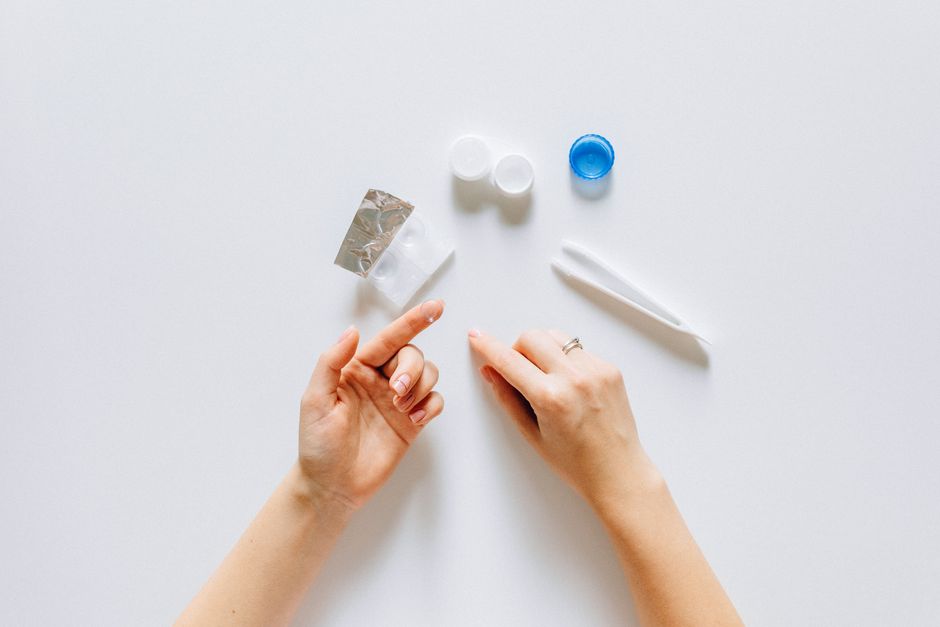
Putting in contact lenses starts with clean, dry hands. Wash them with soap and water, then dry with a lint-free towel. Place the lens on your fingertip, check it is not inside out, and hold your upper eyelid open. Look up and place the lens on the lower white part of your eye. Gently close your eye and blink. To remove, pull your lower eyelid down, look up, and pinch the lens gently with your thumb and index finger. Store lenses in fresh solution every night inside a clean case. Replace the case every three months.
How To Use Eye Contacts Insert Remove And Store Safely?
Safety starts before you touch a lens. The American Academy of Ophthalmology states that most contact lens problems come from poor hygiene. Wash your hands with a mild soap that has no oils or fragrances. Dry them completely because water can carry bacteria onto the lens.
Never use tap water to rinse lenses. Tap water contains microbes that can cause serious eye infections. Only use fresh contact lens solution for cleaning and storing. Never top off old solution — always empty the case, rinse it with solution, and fill with fresh liquid. Research published in the journal Optometry and Vision Science found that people who reuse solution are five times more likely to develop corneal infections.
How Do You Tell If a Contact Lens Is Inside Out?
This is one of the most common questions new users ask. Place the lens on your fingertip and hold it up to eye level. Look at the shape from the side. A correct lens looks like a smooth bowl with edges that curve upward evenly. An inside-out lens looks like a shallow plate with edges that flare outward slightly.
Some lenses have a laser marking near the edge. If you see numbers or letters that look backwards or blurry, the lens is inside out. When the marking reads correctly, the lens is ready to insert. If you put an inside-out lens in your eye, it will feel uncomfortable and may move around. Remove it, flip it, and try again.
What Is the Correct Way to Insert Contact Lenses?
Stand in front of a well-lit mirror. Open your lens case and use your fingertip to pick up one lens. Rinse it with solution and place it on your dominant hand’s index finger. Check for tears or debris. Never insert a damaged lens.
Use your non-dominant hand to hold your upper eyelid open. Use the middle finger of your dominant hand to pull your lower eyelid down. Look up slightly and place the lens on the white part of your eye below your pupil. Release your eyelids slowly and blink gently. The lens should center itself. If it feels stuck, close your eye and massage your eyelid lightly.
- Always insert the right lens first to avoid mixing them up
- Replace lenses according to their schedule — daily, bi-weekly, or monthly
- Never wear lenses longer than prescribed even if they feel fine





How Do You Remove Contact Lenses Without Damaging Your Eye?
Wash and dry your hands before removal. Look up and pull your lower eyelid down with your middle finger. Use your thumb and index finger to gently pinch the lens. It should come off easily. If it feels stuck, do not dig at it. Apply rewetting drops and blink several times. Wait 30 seconds and try again.
Some people struggle with pinching because their fingers are too dry or too wet. A small amount of solution on your fingertip can help. If you have long nails, use the pads of your fingers instead of your fingertips. Never use tweezers or any tool to remove a lens. The cornea is delicate and can scratch easily.
For rigid gas permeable lenses, the removal method is different. Do not pinch these lenses. Place your index finger on the outer corner of your eye and pull toward your ear. Blink and the lens will pop out onto your hand or a clean surface.
How To Store Contact Lenses Correctly?
Storing lenses properly prevents contamination and keeps them comfortable. Always use fresh solution. Never use saline alone for storage — saline does not disinfect. Only multipurpose solution or hydrogen peroxide systems clean and disinfect properly.
Clean your lens case every day. Rinse it with solution and leave it open to air dry. The CDC recommends replacing your lens case every three months. Cases that are cracked or have buildup should be thrown away immediately. Store your case in a dry place away from moisture like bathroom sinks.
| Storage Mistake | Risk |
|---|---|
| Topping off old solution | Bacteria multiply in diluted solution |
| Using tap water | Risk of Acanthamoeba keratitis |
| Storing in a bathroom | Higher airborne bacteria exposure |
| Keeping lenses past expiration | Reduced disinfection effectiveness |
What Should You Do If a Contact Lens Gets Stuck?
A stuck lens is common and usually not an emergency. First, blink several times. If the lens is dry, apply rewetting drops. Close your eye and gently massage your eyelid in circles. Look in the direction opposite to where you feel the lens. This often moves it back into place.
If the lens is folded under your upper eyelid, pull your upper lid away from your eye and look down. You may see the edge of the lens. Gently push it back onto the cornea with a clean finger. If you cannot free the lens after 15 minutes of trying, stop. Call your eye doctor. Do not rub your eye forcefully — this can scratch your cornea.
Can You Sleep in Contact Lenses?
The FDA has approved some lenses for overnight wear. But even approved lenses carry higher infection risks. A study in Ophthalmology found that sleeping in contacts increases the risk of microbial keratitis by six to eight times. This is a serious infection that can cause vision loss.
If you accidentally fall asleep in your lenses, do not panic. Apply rewetting drops as soon as you wake up. Wait 15 minutes and try to remove them. If they feel stuck, add more drops and wait. If the lens comes out but your eye feels red or painful, see your eye doctor the same day. Never force a dry lens off your eye.
Common Mistakes People Make With Contact Lenses
Swimming or showering in contacts is a major risk. Water contains organisms that can bind to contact lenses and infect your cornea. The CDC states that wearing contacts in water is the leading cause of Acanthamoeba keratitis. Remove lenses before any water activity.
Wearing disposable lenses longer than recommended is another common mistake. Many people stretch daily lenses for a week because they feel fine. But protein deposits build up over time. These deposits trap bacteria and reduce oxygen flow to your cornea. Follow the replacement schedule your doctor gave you.
Sharing contacts with friends is never safe. Your prescription is unique to your eyes. Sharing spreads bacteria and can transfer infections like pink eye. Each person should have their own lenses and case.
Frequently Asked Questions
How do I put in contact lenses for the first time?
Wash your hands, place the lens on your fingertip, hold your eyelids open, and place the lens on your eye. Blink gently to center it.
How long can I store contact lenses in solution?
Most lenses can be stored in solution for up to 30 days. If not used within a month, discard them and open a new pair.
Can I use water to clean my contact lenses?
No. Water can cause serious eye infections. Only use fresh contact lens solution for cleaning and storing.
What happens if I put a contact lens in backwards?
It will feel uncomfortable and may move around. Remove it, check the shape, flip it if needed, and reinsert it correctly.
