
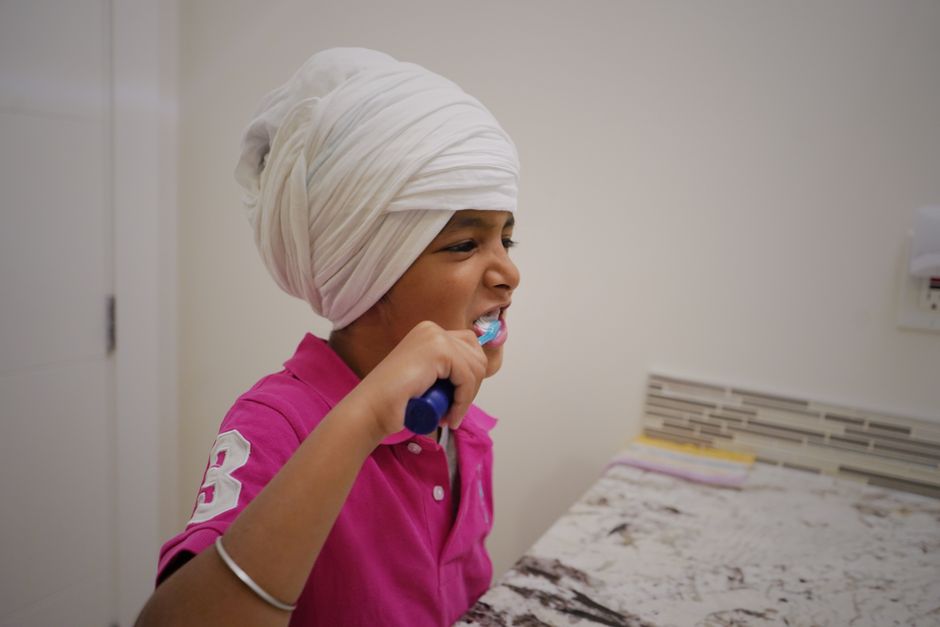
Brushing your teeth twice a day is one of the most reliable ways to protect your teeth and gums. But knowing that and doing it are two different things. The real trick to remembering is to stop relying on your memory. You need to attach brushing to a routine you already have, not to a vague intention. When brushing becomes part of your existing flow — like after breakfast or before your shower — you stop thinking about it entirely.
Why do people forget to brush their teeth?
Forgetting to brush is rarely a discipline problem. It is a habit problem. Your brain is designed to automate repeated actions so you do not have to think about them. If brushing is not wired into a daily routine, it simply does not happen.
Stress and fatigue make this worse. When your mental energy is low, your brain falls back on habits. If brushing was never a habit, it falls off the list entirely. This is why people who brush perfectly on vacation forget at home after a long day. The behavior was never automatic.
Another factor is that brushing has no immediate consequence if skipped. Cavities and gum disease take months or years to develop. Your brain does not register a threat, so it does not prioritize the action. You are not lazy. You just have no immediate feedback telling you to act.
How To Remember To Brush Your Teeth Habits That Stick
The most effective strategy is habit stacking. This means attaching brushing to an action you already do every single day without fail. For example, brush immediately after pouring your morning coffee. Or brush right before you step into the shower. The existing habit acts as a trigger for the new one.
Choose a trigger that is specific and consistent. “After breakfast” works because you eat breakfast daily. “When I feel tired” does not work because tiredness is not a fixed event. The more concrete the trigger, the faster the habit forms.
Research on habit formation suggests that repeating a behavior in the same context builds automaticity. The cue, the behavior, and the reward become linked in your brain. Over time, the cue alone is enough to prompt the behavior. This is why consistency matters more than motivation.
Do not rely on willpower. Willpower is a limited resource that depletes through the day. A morning trigger works because your willpower is highest and your routine is predictable. An evening trigger works because you can attach it to a fixed event like taking off your contacts or changing into pajamas.
What time of day matters most?
Both morning and evening brushing matter, but for different reasons. Morning brushing removes the bacteria that multiplied in your mouth overnight. Saliva production drops during sleep, which means less natural cleaning. Brushing in the morning also coats your teeth with fluoride, which protects them through the day.
Evening brushing is arguably more important. Throughout the day, food particles feed bacteria that produce acid. This acid attacks your tooth enamel. If you go to bed without brushing, those bacteria work on your teeth for eight hours straight. That is a long window of acid exposure.
If you can only guarantee one brushing, make it the evening one. But the goal is both. Most adults need about two minutes of brushing per session to remove plaque effectively. Set a timer if you are not sure how long you brush. Many electric toothbrushes have a built-in two-minute timer.




What tools actually help you remember?
Physical reminders work because they interrupt your autopilot. A toothbrush that stays visible on the counter is a constant cue. Putting it away in a drawer hides the reminder and makes brushing easier to skip.
Electric toothbrushes with timers add a layer of accountability. They make you brush for the full two minutes, and some models have pressure sensors that tell you when you are brushing too hard. These features do not make you remember, but they make the brushing session more effective when it happens.
Toothpaste with a strong flavor can also help. If you enjoy the taste, you are more likely to brush. This sounds trivial, but sensory rewards reinforce habits. A minty finish after brushing gives your brain a small positive signal to associate with the behavior.
Phone alarms work for some people but not others. The problem with alarms is that they fire at a set time, not at a behavioral cue. If your evening routine shifts by an hour, the alarm fires at the wrong moment. A behavioral trigger like “after I wash my face” is more flexible and more reliable.
Does a toothbrush chart work for adults?
Charts and habit trackers are common advice, and they work for some people. The mechanism is simple: visible progress creates a small sense of accomplishment. Marking an X on a calendar after brushing gives you immediate feedback that skipping does not.
Research on habit tracking shows it works best in the early stages of habit formation. The act of marking a chart reinforces the behavior. But the effect fades over time. Once brushing becomes automatic, the chart becomes unnecessary.
If you use a chart, place it where you will see it. On the bathroom mirror is ideal. The chart is not a permanent solution. It is a bridge between conscious effort and automatic behavior. If charts feel childish, use a habit tracking app on your phone instead. The principle is the same.
What if you travel or your routine changes?
Habits break when routines break. Travel, illness, and schedule changes disrupt your triggers. This is normal. The habit is not gone. You just need to re-establish the cue in your new environment.
When you travel, pack your toothbrush in a visible place. Do not bury it in a toiletry bag. Put it on the hotel counter where you can see it. If you normally brush after coffee, keep that sequence even on vacation. The trigger matters more than the location.
If you miss a day, do not spiral. One missed brushing does not erase the habit. The research on habit formation is clear that occasional lapses do not undo progress. What matters is that you return to the routine the next day. Guilt is not a useful motivator here.
How long until brushing feels automatic?
Research on habit formation suggests it takes anywhere from two to eight weeks for a behavior to become automatic. The exact time varies by person and by the complexity of the behavior. Brushing is a simple behavior, so it tends to fall on the shorter end of that range.
Consistency in the first few weeks matters most. Missing a day here and there does not reset the clock, but frequent gaps slow the process. Aim for both brushings every day for the first month. After that, the behavior starts to feel strange when you skip it.
Do not expect perfection. The goal is not to brush perfectly every day for the rest of your life. The goal is to brush most days without having to think about it. That is the definition of a habit.
When should you see a dentist?
Regular dental visits are part of good oral health, but they do not replace daily brushing. Most dental professionals recommend a checkup every six months. Some people need more frequent visits based on their individual risk for gum disease or cavities.
If you have gone years without brushing regularly, your gums may bleed when you start again. This is common and usually temporary. The bleeding happens because your gums are inflamed from plaque buildup. As you brush consistently, the inflammation decreases and the bleeding stops.
If bleeding continues after two weeks of consistent brushing, see a dentist. Persistent bleeding can be a sign of gum disease that requires professional treatment. Do not brush harder to stop the bleeding. Brush gently with a soft-bristled brush.
Frequently Asked Questions
How can I trick myself into brushing my teeth?
Attach brushing to an existing daily habit like making coffee or taking a shower. The existing habit triggers the brushing so you do not have to remember it.
Is it okay to brush your teeth once a day?
Brushing once a day is better than not brushing at all, but twice a day is the standard recommendation. Evening brushing is the more important session because it removes food and bacteria before they attack your teeth overnight.
How long does it take to form a brushing habit?
Most people need two to eight weeks of consistent repetition before brushing feels automatic. Missing an occasional day does not undo your progress.
Does an electric toothbrush help you remember to brush?
An electric toothbrush does not make you remember, but built-in timers ensure you brush for the full two minutes. Seeing the brush on the counter is what actually triggers the memory.
