
Tired, aching feet can make the end of a long day feel much worse. The most effective home remedies combine immediate relief—like cold water, gentle stretching, and elevation—with consistent habits that address the root cause of the fatigue. Simple actions like rolling a frozen water bottle under your foot or soaking in warm Epsom salt water can reduce discomfort quickly, while daily foot exercises and proper footwear help prevent the problem from returning.
Why Do My Feet Get So Tired and Achy?
Foot fatigue usually comes from standing or walking for long periods. The muscles, ligaments, and tendons in your feet work hard all day to support your entire body weight. When they are overworked, they become fatigued and sore.
Poor circulation can also play a role. When blood pools in your lower legs and feet, it can cause a heavy, achy feeling. Tight shoes, high heels, or shoes without proper arch support put extra strain on the foot’s natural structure. Being overweight adds more pressure to the feet with every step. Flat feet or high arches can also change how your body distributes weight, which leads to faster muscle fatigue.
Sometimes, tired feet are a sign of an underlying condition. Peripheral artery disease, diabetes, or thyroid issues can cause foot pain and fatigue. If your feet hurt regularly without a clear reason, or if the pain is severe, it is worth discussing with a doctor.
How To Relieve Tired Feet Easy At Home Remedies: Quick Methods That Work
When your feet feel heavy and sore, a few simple techniques can bring fast relief. These methods target blood flow, muscle tension, and inflammation directly.
Cold therapy is one of the fastest ways to reduce aching feet. Fill a shallow basin with cold water and a few ice cubes, then soak your feet for 10 to 15 minutes. Cold constricts blood vessels, which reduces swelling and numbs pain. A frozen water bottle works well too. Roll it under your foot for a few minutes. This combines cold therapy with a gentle massage that releases tension in the arch.
Warm water is better for feet that feel stiff rather than swollen. Add half a cup of Epsom salt to a basin of warm water and soak for 15 to 20 minutes. Epsom salt contains magnesium, which some research suggests may help relax muscles, though the evidence for absorption through the skin is limited. The warmth alone improves blood flow and relaxes tight tissues.
Elevation is simple but effective. Lie down and prop your feet up on pillows so they are higher than your heart. Keep them there for 15 minutes. Gravity helps drain pooled blood and fluid back toward your core, which reduces that heavy, swollen feeling.
Foot Massage and Stretching Techniques for Tired Feet
Massage and stretching do more than feel good. They actively work out tension and improve flexibility in the small muscles of the foot.
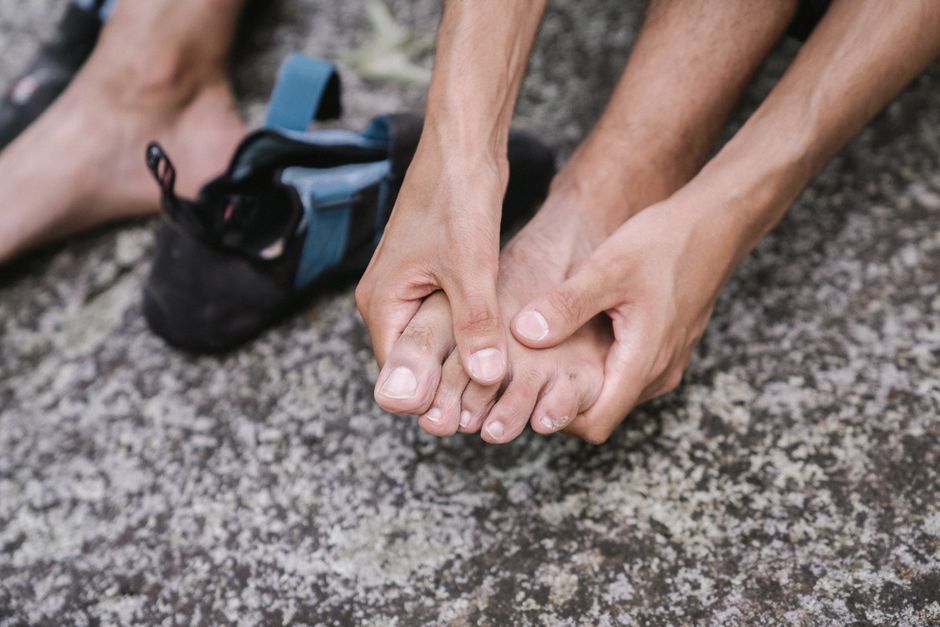
You do not need a professional massage to get benefits. Use your thumbs to press firmly along the arch of your foot, moving from your heel toward your toes. Pay attention to any tight spots and spend extra time on them. A tennis ball or massage ball placed on the floor works well. Roll your foot over the ball slowly for several minutes, applying as much pressure as feels comfortable.
Stretching the calf muscles is important because tight calves pull on the Achilles tendon, which strains the bottom of the foot. Stand facing a wall with your hands on it. Step one foot back, keeping the heel on the floor, and bend the front knee until you feel a stretch in the back leg. Hold for 30 seconds and switch sides.
Another effective stretch targets the plantar fascia, the thick band of tissue along the bottom of the foot. Sit down and cross one ankle over the opposite knee. Pull your toes back toward your shin until you feel a stretch along the bottom of your foot. Hold for 30 seconds. Doing this before you get out of bed in the morning can reduce first-step pain.





Foot Exercises to Build Strength and Prevent Fatigue
Strong feet tire less easily. Simple exercises done daily can build the muscles that support your arches and improve your balance.
Towel scrunches strengthen the small muscles in your feet. Place a towel flat on the floor and sit in a chair with your foot on it. Use your toes to scrunch the towel toward you. Repeat 10 times per foot.
Calf raises strengthen the muscles in your lower leg that help push you forward when you walk. Stand with your feet hip-width apart. Rise up onto your toes, hold for a second, and lower back down slowly. Do 10 to 15 repetitions. If you need support, hold onto a counter or chair.
Toe spreads improve mobility and balance. Sit with your feet flat on the floor. Spread your toes apart as wide as you can, hold for a few seconds, then relax. Repeat 10 times. This exercise is harder than it sounds for many people, especially if you have worn narrow shoes for years.
These exercises do not require special equipment and take less than five minutes. Consistency matters more than intensity. Doing them a few times per week is a reasonable starting point.
Choosing Footwear and Daily Habits That Reduce Foot Strain
What you put on your feet matters more than any remedy. Shoes that fit poorly or lack support can undo the benefits of massage and stretching.
Look for shoes with a wide toe box so your toes can spread naturally. A firm heel counter—the part that wraps around your heel—provides stability. Shoes should bend at the ball of the foot, not in the middle of the arch. Replace worn-out shoes. The cushioning breaks down over time, even if the outside of the shoe looks fine.
Rotating between two pairs of shoes gives each pair time to recover and reduces repetitive pressure on the same spots. If you stand at work all day, consider cushioned insoles or shoes designed specifically for prolonged standing. These are not luxury items; they are tools that reduce daily strain.
If you wear high heels regularly, try to limit the height and the time you spend in them. Heels shift your weight forward and force the calf muscles into a shortened position, which contributes to foot and leg fatigue.
When Should You See a Doctor About Foot Pain?
Home remedies work well for everyday tiredness. But some symptoms need professional attention.
See a doctor if you have pain that does not improve with rest and home care after a couple of weeks. Seek care sooner if you have severe pain, swelling that does not go down, numbness, or tingling. Changes in skin color—such as pale, blue, or red skin—warrant a checkup. So do open sores or wounds that are slow to heal.
People with diabetes or peripheral artery disease should be especially careful with foot symptoms. Circulation problems can turn minor issues into serious ones. If you have these conditions, do not rely on home remedies alone for persistent foot pain.
Sudden, severe foot pain after an injury could mean a fracture or ligament tear. Swelling, bruising, and the inability to bear weight are signs that you should have the foot examined rather than treating it at home.
Frequently Asked Questions
How long should I soak my tired feet in Epsom salt?
Soak for 15 to 20 minutes in warm water with half a cup of Epsom salt.
Is it better to use cold or warm water for tired feet?
Cold water works best for swollen, hot feet, while warm water helps with stiffness and muscle tension.
Can foot exercises really prevent tired feet?
Yes, strengthening the small muscles in your feet and calves reduces fatigue over time.
How often should I massage my feet for relief?
A daily five-minute massage using your hands or a ball can help maintain relief and reduce tension.
