
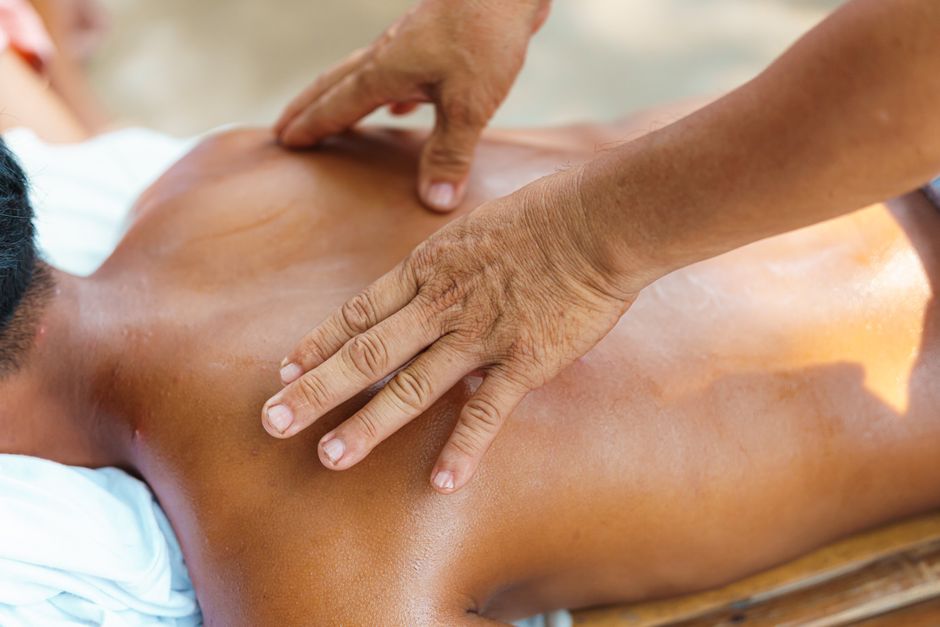
Spinal stenosis pain often feels better when you bend forward and worse when you stand up straight or walk. That single pattern explains most of what helps. Exercises that gently open the space around the spinal cord, build support in the hips and core, and restore some flexibility can ease symptoms for many people. They work best alongside activity changes, weight management where relevant, and medical care that matches how narrow the canal actually is.
What Is Spinal Stenosis and Why Does It Hurt?
Spinal stenosis means the bony canal that carries the spinal cord and nerve roots has narrowed. The most common type affects the lower back and is called lumbar spinal stenosis. A similar process can happen in the neck, called cervical stenosis.
The narrowing usually comes from age-related changes. Discs lose height and bulge. Facet joints enlarge. Ligaments thicken. Any of these can press on the nerves traveling through the canal. The result is not a muscle strain. It is mechanical pressure on nerve tissue, sometimes combined with reduced blood flow to the nerves.
Symptoms follow a recognizable pattern in lumbar stenosis:
- Pain, aching, or heaviness in the buttocks or legs that comes on with walking or standing
- Relief when sitting or leaning forward, such as over a shopping cart
- Leg symptoms that appear before back pain, and that improve with rest
- Numbness, tingling, or weakness in more advanced cases
That leaning-forward relief is a useful clue. Bending forward slightly widens the canal and takes pressure off the nerves. Clinicians call this the shopping cart sign. It is one of the more reliable hints that stenosis is the problem rather than a hip or circulation issue.
Not everyone with narrowed canals has pain. Imaging studies regularly find stenosis in people with no symptoms at all. The scan tells you about anatomy. The symptoms tell you whether that anatomy matters.
How To Relieve Spinal Stenosis Pain Exercises And More
Exercise is one of the better-supported approaches for lumbar stenosis, though it is not a cure for the narrowing itself. The goal is to reduce pain, improve function, and build the muscles that support the spine and hips. Physical therapy is often the starting point, and a therapist can tailor movements to your specific symptoms.
Several types of exercise tend to help:
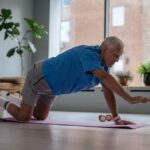
- Flexion-based movements. Seated forward bends, knee-to-chest stretches, and gentle pelvic tilts open the canal slightly. These often feel better than extension movements like backward bends.
- Core strengthening. Exercises that train the deep abdominal and back muscles, such as dead bugs or modified planks, help stabilize the spine. Avoid positions that make leg symptoms worse.
- Hip strengthening. Strong hip muscles take load off the lower back. Bridges, clamshells, and seated leg lifts are common starting points.
- Stretching. Tight hamstrings and hip flexors can pull the pelvis into positions that aggravate symptoms. Gentle stretching may help, though the evidence for stretching alone is limited.
- Low-impact aerobic activity. Walking on flat ground, stationary cycling, or water exercise keeps you moving. Cycling and pool work are often easier than walking because the forward-leaning posture relieves pressure.
Some research suggests supervised physical therapy produces better results than a home program alone, at least in the short term. The evidence is not overwhelming, but the pattern is consistent enough that many clinicians recommend starting with a therapist who can correct your form.
What exercise does not do is reverse the bony narrowing. It builds support around the spine and improves how your body tolerates the pressure. That distinction matters. If a program promises to “open” a narrowed canal permanently through stretching, that claim goes beyond what the evidence shows.
Which Exercises Should You Avoid With Spinal Stenosis?
Movements that push the spine into extension, meaning backward bending, often worsen symptoms in lumbar stenosis. That includes standing backbends, certain yoga poses like upward dog, and exercises that arch the lower back under load.
High-impact activities are also worth reconsidering. Running on hard surfaces, jumping, and heavy lifting with poor form can increase compressive forces on the spine. This does not mean you must stop all activity. It means choosing movements that keep the canal open rather than closing it further.
A practical rule: if a movement sends pain or numbness down your leg, stop. Leg symptoms are the signal that matters most in stenosis. Back discomfort alone is less informative.
Some people find that certain positions during exercise, like lying flat on the stomach, are uncomfortable. Others tolerate them fine. Response varies, so adjust based on your own symptoms rather than a fixed list.




What Non-Exercise Treatments Help Spinal Stenosis?
Exercise is one piece. Several other approaches have reasonable evidence behind them, and some are commonly used in clinical practice without strong trial support.
Physical therapy combines exercise with manual techniques, posture training, and education. It is a standard first-line option for mild to moderate symptoms.
Medications like nonsteroidal anti-inflammatory drugs can reduce pain and inflammation. They treat symptoms, not the narrowing. Long-term use carries risks, particularly for the stomach, kidneys, and heart, so discuss duration with a clinician.
Epidural steroid injections deliver anti-inflammatory medication near the affected nerves. Some studies suggest they can provide short-term relief, though the evidence for lasting benefit is mixed. They are generally considered a bridge rather than a fix.
Weight management may reduce load on the spine and improve symptoms. The relationship is plausible and some studies support it, but the evidence is not as strong as it is for exercise.
Surgery is considered when symptoms are severe, progressive, or not responding to conservative care. Decompression surgery removes bone and ligament pressing on the nerves. Research generally shows surgery outperforms conservative care for carefully selected patients with moderate to severe symptoms, but the gap narrows over time and surgery carries its own risks.
Does Walking Make Spinal Stenosis Worse?
Walking often triggers symptoms in lumbar stenosis, but that does not mean you should stop walking. The pattern is about posture and duration, not walking itself.
Standing upright narrows the canal slightly. Walking adds repetitive load. Together they can bring on leg pain after a certain distance. The distance varies widely between people and is not a reliable measure of how severe the stenosis is.
Strategies that help include:
- Taking frequent short walks instead of one long one
- Leaning forward slightly or resting hands on a cart or railing when symptoms start
- Alternating walking with seated rest
- Using a stationary bike or pool walking when outdoor walking is difficult
Staying active matters for overall health, including cardiovascular fitness and muscle strength. The goal is to find a form of activity you can sustain, not to push through leg pain that keeps returning.
When Should You See a Doctor About Spinal Stenosis?
See a clinician promptly if you have loss of bladder or bowel control, numbness in the groin or inner thighs, or sudden weakness in both legs. These can signal cauda equina syndrome, a rare but serious emergency that needs immediate medical attention.
Other reasons to seek care include:
- Leg pain that limits walking distance and is getting worse over weeks or months
- Weakness, foot drop, or balance problems
- Pain that no longer responds to rest or position changes
- Symptoms in both legs that interfere with daily activities
For most people, stenosis is not dangerous in itself. It is a mechanical problem that tends to progress slowly, if at all. Some people stay stable for years. Others notice gradual decline. Regular check-ins with a clinician help track which group you are in.
What Does the Evidence Actually Show?
The strongest evidence for conservative management of lumbar stenosis supports exercise and physical therapy for improving pain and function. The effects are modest but real, and the risks are low.
Evidence for injections is mixed. Some trials show short-term relief, others do not. Evidence for traction, ultrasound, and many passive modalities is weak or absent. These are sometimes offered in clinical practice, but that is different from being proven.
For surgery, trials comparing decompression with conservative care generally favor surgery for patients with moderate to severe symptoms, at least in the first couple of years. Beyond that, outcomes tend to converge. Surgery is not automatically better for everyone, and the decision depends on symptom severity, overall health, and personal priorities.
One clarification worth making: stenosis is not the same as a disc herniation. A herniated disc is a soft material pushing on a nerve, often in younger adults, and it can shrink over time. Stenosis is usually a bony and ligamentous narrowing in older adults that does not resolve on its own. The exercises overlap, but the prognosis and timeline differ.
Frequently Asked Questions
Can spinal stenosis be reversed with exercise?
No. Exercise can reduce pain and improve function, but it does not reverse the bony narrowing. It builds support around the spine and helps your body tolerate the pressure better.
What is the best exercise for spinal stenosis?
There is no single best exercise. Flexion-based movements, core strengthening, and hip strengthening are commonly recommended, and a physical therapist can tailor a program to your symptoms.
Is walking good or bad for spinal stenosis?
Walking is generally good for overall health but often triggers leg symptoms in lumbar stenosis. Short, frequent walks with rest breaks usually work better than long continuous walks.
When is surgery needed for spinal stenosis?
Surgery is considered when symptoms are severe, getting worse, or not responding to conservative care. It is not needed for everyone, and the decision depends on symptom severity and overall health.
