
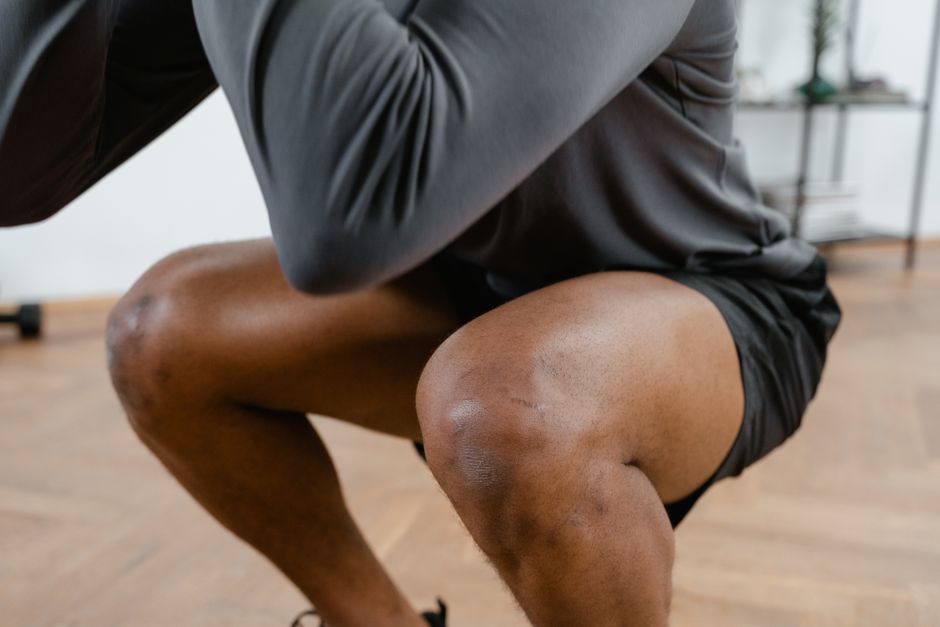
Knee pain rarely has one simple fix. The right approach depends on what is causing it, but most cases improve with targeted exercises that build the muscles supporting the joint, appropriate use of a brace or support in specific situations, and treatment aimed at the underlying cause rather than just the symptom. Surgery is reserved for structural damage that doesn’t respond to other measures.
What Usually Causes Knee Pain?
The knee sits between the two longest bones in the body and takes load with every step. It bends, straightens, and twists under the weight of your body. That makes it vulnerable to a range of problems, and the cause shapes everything about how it should be treated.
Some of the most common causes include:
- Osteoarthritis — gradual breakdown of cartilage, most common in adults over 50 but not limited to them
- Patellofemoral pain — pain around or behind the kneecap, often from tracking problems or muscle imbalance
- Ligament injuries — ACL, MCL, and others, usually from a specific incident
- Meniscus tears — often from twisting, sometimes degenerative with age
- Tendinopathy — irritation of the patellar or quadriceps tendon from repeated load
- Bursitis — inflammation of the fluid sacs around the joint
These conditions feel different. Osteoarthritis tends to produce stiffness and pain that worsens with activity. A meniscus tear often causes catching or locking. Patellofemoral pain is typically worse going down stairs or sitting for long periods. Getting the diagnosis right matters because the exercises and supports that help one condition may not help another.
How To Fix Knee Pain Exercises Braces Treatment: What Actually Works
The strongest evidence for managing most non-surgical knee pain sits with exercise. Not rest. Not a brace alone. Exercise that strengthens the muscles controlling the knee and hip, done consistently over weeks and months.
This is where many people go wrong. They rest until the pain settles, then return to the same activity that caused it. The pain comes back. The cycle repeats. Structured loading of the joint and surrounding muscles is what changes the picture over time.
Braces have a narrower role than most people assume. They can provide support, improve confidence, and help with specific mechanical problems. They are not a substitute for strengthening. A brace that feels good but lets you skip the exercises is not solving the underlying issue.
Treatment covers the full range: activity modification, physical therapy, weight management where relevant, medication for pain control, and in some cases injections or surgery. The right combination depends on the diagnosis, your age, your activity level, and how long the problem has been present.
Which Exercises Help Knee Pain Most?
The exercises with the best support are those that build the quadriceps, hamstrings, glutes, and hip stabilizers without placing excessive load on a painful joint. The goal is to make the muscles around the knee stronger so the joint itself takes less strain.
Useful categories include:
- Quadriceps setting — tightening the thigh muscle while the leg is straight, which builds strength with minimal joint movement
- Straight leg raises — lifting the leg while keeping it straight, working the quadriceps and hip flexors
- Mini squats or wall sits — controlled bending under load, within a pain-free range
- Step-ups — building strength and control through a functional movement
- Hamstring curls — strengthening the back of the thigh to balance the joint
- Hip abduction and glute work — side-lying leg lifts or banded walks, which help control knee alignment
Two things matter more than the specific exercise choice. First, the exercise needs to be progressed gradually. Starting too hard or too fast often flares the pain. Second, it needs to be done consistently. Strength takes weeks to build, and the evidence for exercise in knee osteoarthritis and patellofemoral pain reflects programs sustained over time, not single sessions.
Some discomfort during exercise is generally acceptable. Sharp pain, swelling that persists, or pain that worsens over days is a signal to back off and get it checked. A physical therapist can tailor a program to the specific diagnosis, which is more effective than a generic routine pulled from the internet.



Do Knee Braces Actually Help?
Braces help in specific situations. They are not a universal fix, and the evidence for their benefit is stronger for some uses than others.
A hinged brace can provide stability after a ligament injury or during recovery from surgery. A patellar tracking brace or strap may reduce pain in some people with patellofemoral problems by altering the forces around the kneecap, though results vary and the evidence is not uniform. Compression sleeves can help with swelling and provide a sense of support.
What braces do not do is strengthen the muscles or fix the underlying mechanics. Used alone, they may mask symptoms while the real problem continues. Used alongside an exercise program, they can help people stay active and confident during recovery.
There is also a practical point worth knowing. Many people wear a brace longer than necessary. Once strength and stability improve, ongoing reliance on a brace can reduce the demand on the muscles that need to work. Some clinicians recommend weaning off support as strength returns. The timeline for that is individual and best guided by a clinician.
When Is Surgery the Right Answer?
Surgery is considered when structural damage is significant, when symptoms do not respond to conservative treatment over a reasonable period, or when the knee cannot function safely without it.
Examples include a torn ligament that leaves the knee unstable, a meniscus tear causing mechanical locking, or advanced osteoarthritis where joint replacement may be appropriate. These decisions are made case by case, often with imaging and a specialist assessment.
For many people with knee osteoarthritis, exercise and weight management remain first-line approaches. Not everyone with arthritis needs surgery, and not everyone who has surgery gets complete relief. Outcomes vary, and the decision involves weighing risks against expected benefit for your specific situation.
What Else Helps Beyond Exercise and Braces?
Several other measures support recovery. Weight management matters because every pound of body weight places several times that load through the knee during walking. Losing excess weight reduces that load and is consistently associated with reduced knee pain in people with osteoarthritis.
Activity modification helps in the short term. Switching from high-impact activities to swimming, cycling, or walking on flat ground can keep you moving while the joint settles. Complete rest is rarely the answer because it weakens the muscles that protect the joint.
Pain medication can help manage symptoms while exercise and other measures take effect. Which medication and how much is a decision for a clinician, particularly for people with other health conditions or on other medications.
Ice and elevation can reduce swelling after activity. Heat may ease stiffness. Neither treats the underlying cause, but both can make the process more comfortable.
How Long Does It Take to Improve?
Most people notice some improvement within a few weeks of starting a structured exercise program, but meaningful strength gains and lasting pain reduction typically take longer. Programs are usually measured in months, not days.
The timeline varies with the cause, how long the problem has been present, age, activity level, and how consistently the program is followed. Patellofemoral pain often responds within several weeks to a few months. Osteoarthritis management is generally ongoing rather than a fixed course.
Setbacks are common. Flare-ups do not mean the program has failed. They usually mean the load was increased too quickly or the joint needs a short period of adjustment. Working with a physical therapist helps navigate these points without abandoning the approach that works.
Frequently Asked Questions
Should I rest or exercise when my knee hurts?
Short rest during a flare-up can help, but prolonged rest weakens the muscles that support the knee. Structured exercise is the mainstay of recovery for most non-surgical knee pain.
Can a knee brace cure knee pain?
No. A brace can support the joint and reduce symptoms in specific situations, but it does not fix the underlying cause. Exercise and addressing the diagnosis are what drive lasting improvement.
How long should I wear a knee brace?
There is no single timeline. It depends on the injury and your progress. Some clinicians recommend weaning off support as strength returns, guided by a clinician who knows your case.
When should I see a doctor for knee pain?
See a doctor if you cannot bear weight, have significant swelling, the knee locks or gives way, or the pain does not improve over several weeks. These signs may indicate a structural problem that needs assessment.
