
Muscle tension usually eases fastest when you combine two things: gentle stretching to restore length and range, and heat to relax the muscle and calm the nervous system signal telling it to stay tight. Neither approach works instantly on its own. Together, they address both the physical tightness and the nerve-driven guarding that keeps a muscle clenched long after the original trigger has passed.
This article explains how stretching and heat actually work on muscle tissue, when to use each, how to combine them safely, and when muscle tightness is a sign of something that needs medical attention rather than a warm shower and a few slow stretches.
Why Do Muscles Stay Tight in the First Place?
Muscle tension is not just a muscle problem. It is usually a nervous system decision.
Muscles contract when the brain and spinal cord send signals through motor nerves. They relax when that signal drops off. When a muscle stays tight for hours or days, it is often because the nervous system is keeping it in a low-level state of contraction — a kind of protective guarding. This can follow an injury, poor posture, stress, cold, or simply holding one position too long.
Two separate things happen in a tight muscle. The muscle fibers themselves may shorten and lose some elasticity. At the same time, the surrounding connective tissue — fascia and the sheath around the muscle — can stiffen and restrict movement. This is why a tight muscle often feels hard or ropey to the touch, not just sore.
There is also a blood flow component. A muscle held in contraction for a long time compresses the small blood vessels inside it. That reduces oxygen delivery and lets metabolic waste products build up, which can add to the aching, heavy feeling people describe as tension.
So when people ask how to relieve muscle tension, the real question is how to interrupt the contraction signal, restore length to the tissue, and get blood moving again. Stretching and heat each target different parts of that problem.
How Does Stretching Actually Release Muscle Tension?
Stretching works by signaling the nervous system to let go.
Inside muscles and tendons are sensory receptors called muscle spindles and Golgi tendon organs. The spindles monitor length and trigger contraction when a muscle stretches too far or too fast. The Golgi tendon organs monitor tension and trigger relaxation when tension gets high. A slow, sustained stretch keeps tension in a range that activates the Golgi tendon organ response, which reduces the contraction signal. This is a well-established reflex, sometimes called autogenic inhibition.
That is why slow beats fast. A quick bounce or jerk activates the muscle spindle instead, which makes the muscle tighten rather than release. A slow stretch held long enough to feel the muscle soften is doing the opposite.
Stretching also improves what clinicians call stretch tolerance — how much length a person can tolerate before the brain signals danger. Some of the relief people feel after stretching comes from this change in perception, not from the tissue physically lengthening. That is still real relief, but it explains why a stretch often needs to be repeated.
Static stretching, where you hold a position without movement, is the most studied approach for reducing perceived tightness. Dynamic stretching, where you move a joint through its range, is generally better before activity. For tension relief specifically, slow and held tends to work better than fast and bouncy.
How Does Heat Relax a Tight Muscle?
Heat relaxes muscle by increasing blood flow and slowing the rate at which nerve fibers fire.
When you apply heat to an area, blood vessels near the surface widen. That increases circulation to the muscle underneath, which helps clear the metabolic byproducts that build up during prolonged contraction and delivers more oxygen. Warmer tissue is also more extensible — it stretches further before reaching its limit.
Heat also has a direct effect on nerve conduction. Warmer tissue conducts nerve signals differently, and this contributes to the feeling of relaxation. This is a large part of why a warm bath or heating pad feels so good on a stiff neck or lower back.
There is an important limit here. Heat affects the tissue it can reach. Superficial heat — heating pads, warm showers, hot packs — mainly warms skin, fat, and the outer layers of muscle. It does not deeply penetrate thick muscle groups. That is not a reason to skip it, but it explains why heat alone rarely fixes a deep, chronic tension pattern.
Heat is also not appropriate for every situation. On a fresh injury, in an area that is swollen, or over skin that is numb or has poor circulation, heat can make things worse. If an area is hot, red, and swollen, that is a signal to hold off.





Should You Stretch Before or After Applying Heat?
Heat first, then stretch. That order has the strongest physiological logic behind it.
Warming tissue before stretching increases blood flow and makes the muscle more pliable, which means you can move into a stretch with less resistance. Stretching cold tissue is more likely to trigger the protective contraction reflex, the exact response you are trying to avoid.
A practical sequence looks like this:
- Apply heat to the tight area for a short period — long enough to feel warmth, not so long that the skin reddens or you risk a burn. Follow the manufacturer’s instructions on any heating device.
- Move gently into a slow stretch and hold it at the point of mild tension, not pain.
- Breathe steadily. Holding your breath increases muscle tension and works against you.
- Release slowly, then repeat a few times rather than holding one long stretch.
Some clinicians also recommend heat after stretching, to keep blood flow elevated and reduce next-day soreness. The evidence for this specific sequencing is not strong, but it is not harmful for most people.
One caveat that often gets lost: heat and stretching relieve symptoms, not always the underlying cause. If tension keeps returning to the same spot, the driver is often posture, ergonomics, stress, or an unresolved injury — not a lack of stretching.
What Else Helps When Heat and Stretching Are Not Enough?
Heat and stretching are the first line, but several other approaches have reasonable evidence behind them.
Movement and activity. Gentle movement through a full range — walking, swimming, light mobility work — often does more for chronic tension than passive stretching alone. Muscles that are used regularly tend to hold less baseline tension than muscles that sit still for hours.
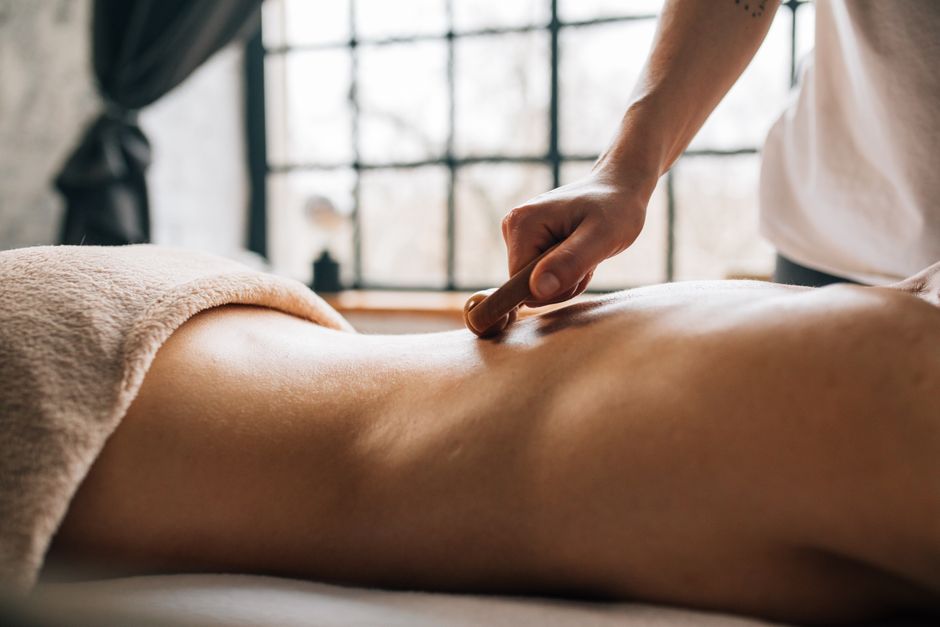
Massage and manual therapy. Massage can reduce perceived tension and increase short-term range of motion. The effects tend to be temporary, and research on long-term benefit is mixed, but short-term relief is well documented.
Stress management. Because muscle tension is often driven by the nervous system, stress reduction is not a soft suggestion — it is a direct lever. Breathing exercises, adequate sleep, and reducing sustained mental stress can lower the baseline tension signal.
Ergonomic changes. If tension collects in the neck, shoulders, or lower back, the position you hold for hours matters more than any single stretch. Adjusting screen height, chair support, and how often you change position addresses the cause rather than the symptom.
Medication. Over-the-counter pain relievers can reduce discomfort, and in some cases clinicians prescribe muscle relaxants for specific conditions. These are decisions for a clinician, not self-treatment for routine tension.
What does not have strong evidence: detoxes, “muscle release” gadgets marketed with dramatic claims, and supplements advertised to “flush” tension. No clinical evidence currently confirms these work.
When Is Muscle Tension a Sign of Something More Serious?
Most muscle tension is benign and responds to heat and stretching. Some patterns need medical evaluation.
Seek medical attention if muscle tightness comes with any of the following:
- Severe pain that starts suddenly, especially after an injury
- Weakness, numbness, or tingling in an arm or leg
- Loss of bladder or bowel control alongside back pain
- Muscle stiffness with fever, rash, or joint swelling
- Tension that keeps worsening despite rest, heat, and stretching
- Muscle pain with dark urine after intense exertion
Persistent muscle stiffness can also be a feature of several medical conditions, including inflammatory and neurological ones. It is not possible to tell these apart from ordinary tension without an evaluation, so a pattern that does not improve or that comes with other symptoms deserves a medical visit rather than more stretching.
There is one more point worth making plainly. Muscle tension is common, and most of it is not dangerous. But “common” is not the same as “always harmless,” and the symptoms above are the ones that change the picture.
Frequently Asked Questions
Does heat or stretching relieve muscle tension faster?
Heat tends to relax muscle and increase blood flow quickly, while stretching restores length and reduces the contraction signal. Using heat first and then stretching generally works better than either one alone.
How long should you hold a stretch for tight muscles?
Hold a slow static stretch at the point of mild tension, not pain, and repeat it a few times rather than forcing one long hold. If the stretch causes sharp pain or numbness, stop.
Can you use a heating pad every day for muscle tension?
For most people, short sessions of superficial heat are considered safe when used as directed, but prolonged or high-heat use can burn skin. People with diabetes, nerve damage, or poor circulation should check with a clinician first.
When should muscle tightness be checked by a doctor?
Get medical care if tightness comes with weakness, numbness, loss of bladder or bowel control, fever, or pain that keeps worsening. Tension that does not improve with rest, heat, and stretching also warrants an evaluation.
