
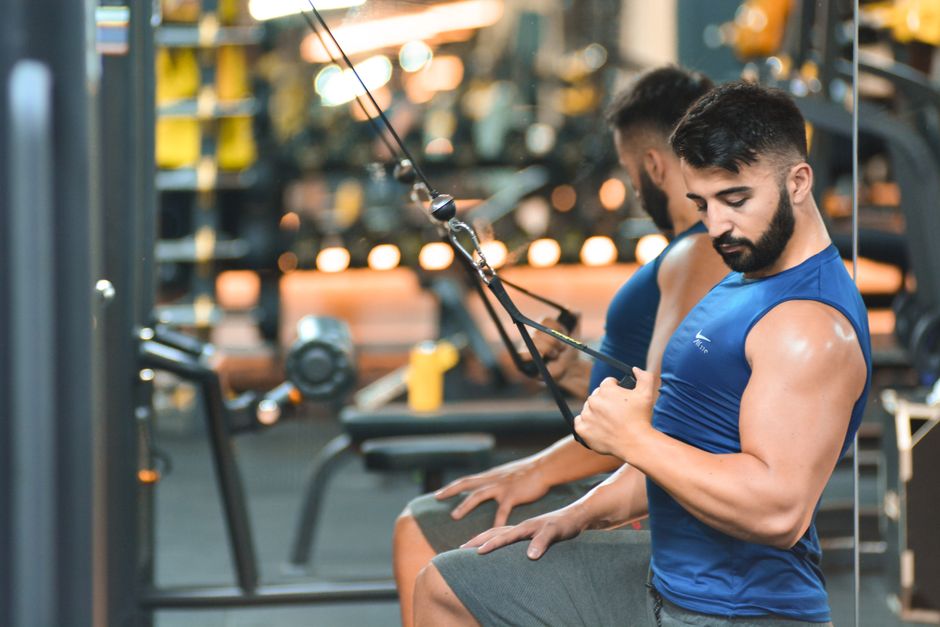
Face pulls primarily target the rear deltoids, which are the back part of your shoulder muscles. They also work the traps (upper back), rhomboids (between shoulder blades), and rotator cuff muscles. This makes face pulls one of the most effective exercises for improving posture and shoulder health.
What specific muscles do face pulls work?
The main muscle worked is the posterior deltoid. This is the back head of your deltoid muscle, which sits on the back of your shoulder. When you pull the rope toward your face, this muscle does most of the work to move your arms backward and rotate them outward.
Secondary muscles include the trapezius, especially the middle and lower fibers. Your rhomboids also activate to pull your shoulder blades together. The rotator cuff muscles, particularly the infraspinatus and teres minor, work hard to externally rotate your shoulders during the movement.
Your biceps also help as stabilizers, but they are not a primary target. The core muscles engage to keep your torso stable throughout the exercise.
Why does muscle targeting matter for face pulls?
Most people have overdeveloped front shoulders from too much bench pressing and pushing movements. This creates muscle imbalance that pulls the shoulders forward and rounds the upper back. Face pulls directly correct this by strengthening the neglected rear delts and upper back.
When your rear delts are weak, your rotator cuff has to work harder to stabilize the shoulder joint during other exercises. This increases injury risk, especially for overhead movements. Strengthening the posterior deltoid with face pulls helps keep the shoulder ball centered in the socket.
Research consistently shows that balanced shoulder development reduces impingement risk. The rear deltoid is often the weakest link in the shoulder chain for most people who lift weights.
How do you perform face pulls correctly?
Set a cable pulley at about upper-chest height. Attach a rope handle. Grab it with an overhand grip, palms facing each other. Step back until your arms are fully extended with tension on the cable.
Pull the rope toward your face while keeping your elbows high and wide. Your hands should end up beside your ears, with the rope splitting apart. Squeeze your shoulder blades together at the peak of the movement. Hold for one second, then slowly return to the start.
The most common mistake is using too much weight. This forces you to use your lower back and body momentum instead of your rear delts. Use a weight where you can control the movement completely. Your elbows should stay above your hands throughout the pull.
Do not pull the rope behind your head. This puts unnecessary strain on your neck and reduces rear delt activation. Keep the pull to in front of your face.





What are common face pull mistakes to avoid?
Pulling with your arms instead of your shoulder blades is the biggest error. Think of starting the movement by squeezing your shoulder blades together, not by bending your elbows. Your arms are just hooks attached to the rope.
Letting your elbows drop below your hands reduces rear delt activation significantly. Keep your elbows high throughout the movement. If your elbows drop, you shift the work to your middle traps and biceps.
Using a jerking motion to start the pull means you are using momentum, not muscle. The concentric phase should take about two seconds. The eccentric phase should take about three seconds. Slow controlled reps build more strength and reduce injury risk.
Rounding your shoulders forward at the start of each rep defeats the purpose of the exercise. Keep your chest up and shoulders back even at the starting position.
How often should you do face pulls?
For most people, two to three times per week works well. Face pulls are not a heavy compound lift. They are an accessory exercise for shoulder health and posture. You can do them more frequently than exercises like deadlifts or bench press.
Two to three sets of 12 to 15 reps per session is a good starting point. The weight should be light enough that you feel the rear delts working but heavy enough that the last two reps of each set are challenging.
Some people do face pulls every training session as part of their warm-up. This is fine if you keep the weight light. Using them as a finisher at the end of a workout also works well when your rear delts are already warmed up.
Evidence indicates that higher rep ranges work well for the posterior deltoid because it responds to metabolic stress. Going beyond 15 reps per set can be effective for muscle endurance and blood flow to the joint.
Can face pulls replace other shoulder exercises?
No. Face pulls cannot replace overhead pressing or lateral raises. They target a specific movement pattern that is missing from most training programs. They are a complement, not a replacement.
Think of face pulls as a corrective exercise that fills a gap. Most people do enough pushing and front delt work from daily activities and other lifts. Face pulls add the pulling and external rotation that modern life and typical gym routines neglect.
If you only had time for one shoulder exercise, face pulls would not be your best choice. Overhead press or lateral raises would give you more overall shoulder development. But face pulls are likely the most important shoulder exercise for long-term joint health.
What equipment do you need for face pulls?
A cable machine with a rope attachment is the standard setup. The rope allows your hands to rotate naturally at the end of the movement, which improves external rotation activation. A straight bar or single handle does not allow this rotation.
Resistance bands work as an alternative if you do not have access to cables. Loop a band around a sturdy anchor at chest height. The resistance curve is different with bands because tension increases as you pull, but the movement pattern is similar.
Dumbbells are a poor substitute. The resistance direction is wrong. With a cable or band, the resistance pulls your arms forward, which is the correct direction for rear delt work. With dumbbells, gravity pulls straight down, which does not replicate the movement mechanics.
Frequently Asked Questions
Do face pulls build bigger shoulders?
Yes, but mostly the back part of your shoulders that is visible from the side and rear. Face pulls will not significantly grow your front or side delts, so they are not a complete shoulder builder on their own.
Are face pulls good for posture?
Yes, they are one of the best exercises for improving rounded shoulders and forward head posture. Strengthening the rear delts and rhomboids pulls your shoulders back into better alignment.
How much weight should I use for face pulls?
Start with the lightest weight on the stack, typically 10 to 20 pounds. Most people never need more than 30 to 40 pounds for proper form. If you cannot keep your elbows high and control the movement, the weight is too heavy.
Can face pulls help shoulder pain?
Some studies suggest they can reduce shoulder impingement pain by strengthening the external rotators and improving joint mechanics. If you have acute shoulder pain, consult a physical therapist first before adding new exercises.
