
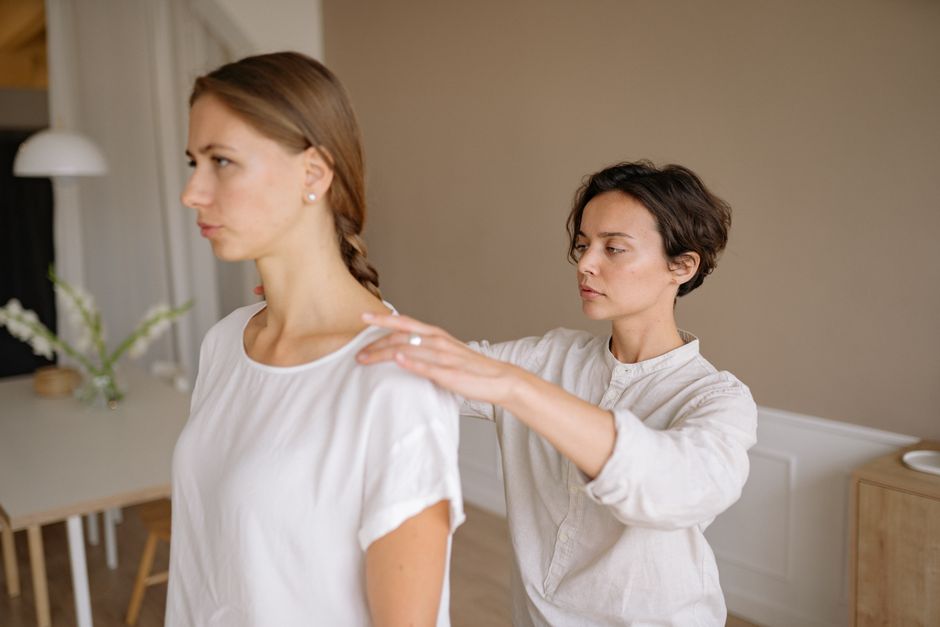
A tight neck can make simple tasks like turning your head or checking your blind spot feel impossible. The most effective way to relieve a tight neck is a combination of gentle stretching, targeted heat application, and over-the-counter anti-inflammatory medication if needed. This approach works because it addresses both the muscle tension and the underlying inflammation or spasm simultaneously.
What Causes a Tight Neck in the First Place?
Most tight necks come from everyday habits, not serious medical problems. Sleeping in a bad position is one of the most common causes. Your pillow might be too high or too flat, forcing your neck muscles to hold a strained angle for hours.
Looking down at your phone for long periods is another major cause. This position, often called “tech neck,” puts extra strain on the muscles at the back of your neck. The average adult head weighs about 10 to 12 pounds. When you tilt your head forward, the force on your neck increases significantly.
Stress also plays a big role. When you are stressed, your shoulder and neck muscles tend to tighten up without you noticing. This can lead to a cycle where the muscles stay tight, causing pain, which then causes more tension.
Less common causes include a sudden injury like whiplash from a car accident or a condition like arthritis in the neck joints. If your neck pain came on suddenly after a fall or accident, you should see a doctor.
Does Stretching Actually Help a Tight Neck?
Yes, stretching is one of the most effective things you can do. Research published in journals like the Clinical Journal of Pain has found that specific neck stretches can reduce pain and improve range of motion in people with chronic neck tension.
The key is to stretch gently. Do not force your neck into painful positions. A good starting stretch is the chin tuck. Sit up straight, pull your chin straight back like you are making a double chin, and hold for 5 seconds. Repeat this 10 times. This targets the deep muscles at the base of your skull.
Another effective stretch is the side bend. Slowly tilt your ear toward your shoulder until you feel a gentle pull on the opposite side. Hold for 15 to 30 seconds. Repeat on the other side. Do three repetitions per side.
Stretching works best when your muscles are warm. This is why doing it after a warm shower or after applying heat is more effective than stretching cold muscles first thing in the morning.
How To Relieve A Tight Neck Stretches Heat And More: A Practical Comparison
Here is a simple breakdown of the most common methods and what the evidence says about each one.
| Method | How It Works | Best For | Evidence Level |
|---|---|---|---|
| Gentle Stretching | Lengthens tight muscles and improves blood flow | Mild to moderate tension | Strong |
| Heat Therapy | Increases blood flow and relaxes muscle fibers | Chronic tightness or morning stiffness | Strong |
| Cold Therapy | Reduces inflammation and numbs pain | Acute injury or sharp pain | Strong |
| Ibuprofen or Naproxen | Reduces inflammation at the source | Pain with muscle spasm | Moderate to Strong |
| Massage | Manually releases trigger points and knots | Localized tight spots | Moderate |
| Acupuncture | Stimulates nerves and blood flow | Chronic neck pain | Weak to Moderate |
Heat therapy is often the most underrated tool. A heating pad applied to the back of your neck for 15 to 20 minutes can significantly reduce muscle spasm. The American Academy of Orthopaedic Surgeons recommends heat as a first-line treatment for muscle tightness.





What Is the Best Way to Use Heat for a Tight Neck?
Moist heat works better than dry heat for muscle tightness. A warm, damp towel placed on your neck for 15 minutes is more effective than a dry heating pad at the same temperature. The moisture helps the heat penetrate deeper into the muscle tissue.
If you use a heating pad, set it on medium or low. High heat can burn your skin, especially if you fall asleep with it on. Never use heat on an area that is swollen or bruised. Heat is for muscle tightness, not for acute inflammation.
A warm shower is another excellent option. Let the water run directly on the back of your neck for several minutes. This combines heat with the gentle pressure of the water stream, which can help loosen tight muscles.
Some people report that alternating heat and cold works well. The theory is that heat relaxes the muscle while cold reduces any inflammation. There is limited strong evidence for this alternating approach, but some people find it helpful. If you try it, end with heat to keep the muscle relaxed.
What About Over-the-Counter Medications?
Ibuprofen (Advil, Motrin) and naproxen (Aleve) are non-steroidal anti-inflammatory drugs, or NSAIDs. They work by reducing inflammation in the muscles and joints. For a tight neck that is also painful, these can be very effective.
Acetaminophen (Tylenol) works differently. It reduces pain signals in the brain but does not reduce inflammation. For muscle tightness, NSAIDs are generally a better choice because they target the inflammation that often causes the spasm.
The CDC reports that about 20% of adults in the US have chronic pain, and NSAIDs are one of the most commonly used treatments. However, these medications are not for everyone. They can cause stomach bleeding or kidney problems if used too often or in high doses. Follow the label directions and do not take them for more than 10 days without talking to a doctor.
What Should You Avoid When Your Neck Is Tight?
Do not use a neck brace or collar unless a doctor tells you to. Wearing a collar for more than a few days can weaken your neck muscles and make the problem worse. Your muscles need to move to recover.
Avoid sleeping on your stomach. This position forces your neck to twist to one side for hours. Sleeping on your back with a supportive pillow is better. Sleeping on your side with a pillow that keeps your head aligned with your spine is another good option.
Do not crack or pop your neck forcefully. Some people do this to get temporary relief, but it can actually strain the joints and ligaments. If you feel the need to crack your neck constantly, that is a sign your muscles are tight and need proper treatment.
Avoid heavy lifting or strenuous exercise until the tightness improves. This includes weightlifting, running, or any activity that jolts your head and neck. Gentle walking is fine and can help increase blood flow to the area.
When Should You See a Doctor for a Tight Neck?
Most tight necks go away on their own within a few days to a week. But there are signs that mean you should get medical help.
- The pain is severe and does not improve with home treatment after a week.
- The pain spreads down your arm or into your hand. This can indicate a pinched nerve.
- You have numbness, tingling, or weakness in your arms or hands.
- The neck pain came on after a fall, car accident, or direct injury.
- You have a headache along with neck stiffness, especially if it is the worst headache of your life.
- You have a fever or chills along with the neck pain. This could be a sign of an infection like meningitis.
If you have any of these symptoms, see a doctor promptly. Do not wait to see if they go away on their own.
Can Massage or Physical Therapy Help?
Massage therapy can help release tight knots in the neck and shoulder muscles. A 2014 study in the Annals of Internal Medicine found that massage was as effective as medication for chronic neck pain in the short term. However, the effects tend to wear off after a few weeks.
Physical therapy is more structured than massage. A physical therapist will assess your posture, movement patterns, and muscle strength. They can give you specific exercises to correct the underlying problem that caused the tightness in the first place. This is especially helpful if your neck gets tight frequently.
For most people, a few sessions of physical therapy or massage are enough to break the cycle of tension. The key is to also do the stretches and exercises at home to maintain the benefit.
Frequently Asked Questions
How long does a tight neck usually last?
Most tight necks improve within 3 to 7 days with home treatment like stretching and heat. If it lasts longer than two weeks, see a doctor.
Is it better to use heat or ice on a tight neck?
Heat is better for muscle tightness and stiffness. Ice is better if there is swelling or if the pain came on suddenly from an injury.
Can a bad pillow cause a tight neck?
Yes, a pillow that is too high or too flat can keep your neck in a strained position all night, leading to morning stiffness and pain.
Should I stop moving my neck when it is tight?
No, gentle movement is better than complete rest. Moving your neck slowly through its full range of motion helps prevent the muscles from getting stiffer.
