
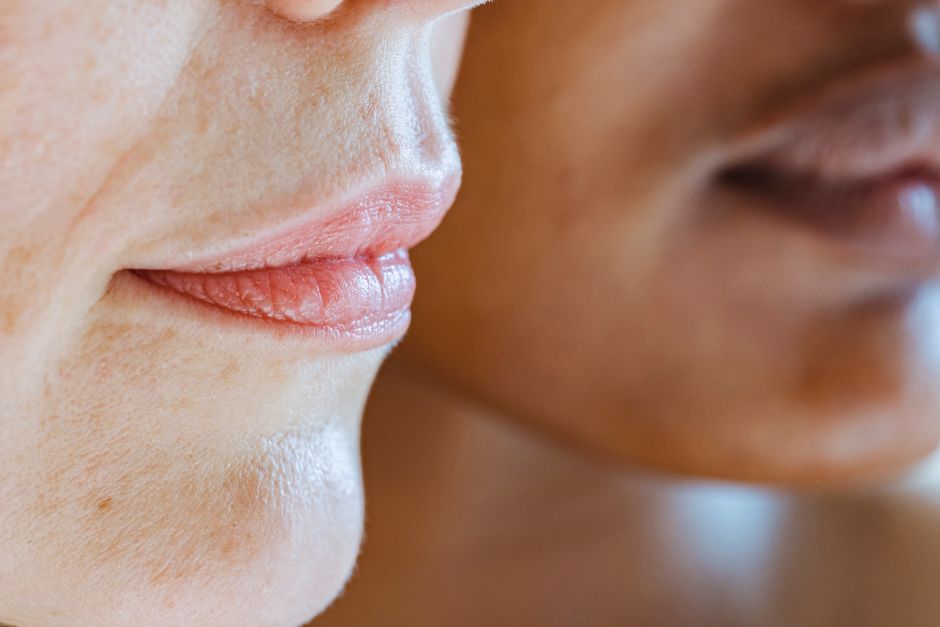
Chapped lips are a common problem, and the fastest way to treat them is to add moisture and lock it in with a barrier. For most people, a thick, unscented ointment like plain petroleum jelly applied several times a day will resolve mild chapping within 24 to 72 hours. The key is to stop the cycle of moisture loss and avoid the habits that make the problem worse.
Why Do Lips Get Chapped in the First Place?
Your lips do not have oil glands like the rest of your skin. They lack the protective outer layer that keeps moisture trapped on other parts of your body. This means water evaporates from the lip surface much faster, leaving the tissue dry and vulnerable to cracking.
Environmental factors are the most common triggers. Cold, dry air pulls moisture away from the skin. Wind accelerates evaporation. Sun exposure damages the thin skin on the lips just as it damages other skin, but the lips have less melanin to protect them.
Licking your lips is the most common behavioral cause. Saliva contains digestive enzymes that break down the delicate tissue. When saliva evaporates, it takes more moisture with it, leaving the lips drier than before. This creates a cycle: lips feel dry, you lick them, they get drier, you lick them more.
How To Cure Chapped Lips Quickly: The Fastest Method
The fastest way to heal chapped lips is to use an occlusive ointment. An occlusive is a substance that forms a physical barrier over the skin, preventing water from escaping. Petroleum jelly is the most effective and widely studied option.
Apply a generous layer of petroleum jelly to your lips before bed and reapply throughout the day as needed. For severely cracked lips, some dermatologists recommend a technique called “slugging” for the lips: apply a water-based moisturizer first, then seal it with a thick layer of petroleum jelly on top. This traps the water against the skin where it can be absorbed.
Most people notice significant improvement within one to three days of consistent application. Complete healing of deep cracks may take up to a week. If your lips do not improve after two weeks of consistent care, that is a reason to see a doctor.
What Actually Works: Ingredients That Help
Not all lip balms are created equal. The ingredient list matters more than the brand or the price.
Ointments and balms that contain petroleum jelly, dimethicone, or beeswax are the most effective at trapping moisture. These ingredients create a physical seal that stops water loss. Products with these ingredients are called occlusives.
Humectants pull water into the skin. Glycerin, hyaluronic acid, and aloe vera are common humectants in lip products. They work well when paired with an occlusive on top. Used alone, a humectant can actually draw moisture out of the lips if the air is very dry.
Some products contain ceramides, which are lipids that help restore the skin’s natural barrier. Evidence suggests ceramide-containing products help repair damaged skin, though most studies focus on the skin of the body rather than the lips specifically.
Products that come in a tube or jar are generally better than those in a stick form. Sticks contain more wax and less oil, making them less effective at sealing in moisture. If you prefer a stick, look for one that lists petrolatum or beeswax as one of the first three ingredients.



Ingredients To Avoid in Lip Products
Some ingredients make chapped lips worse, even though they are common in lip care products.
Camphor, phenol, and menthol create a cooling sensation but they are also irritants. They can inflame the lip tissue and increase moisture loss. Many medicated lip balms contain these ingredients. If your lips feel tingly after applying a balm, that is a sign of irritation, not healing.
Fragrance and flavoring are common allergens. Cinnamon, mint, and citrus flavors are particularly problematic. These ingredients encourage licking, which worsens the problem.
Salicylic acid and lanolin can cause reactions in some people. Lanolin is a natural wax from sheep’s wool, and while it is an effective occlusive for many people, up to 5% of people with sensitive skin react to it.
If a product stings, burns, or causes your lips to feel more irritated after use, stop using it. That is not normal and not a sign that the product is “working.”
Habits That Make Chapped Lips Worse
Certain habits can undo the progress you make with treatment. Recognizing them is half the battle.
Licking your lips is the number one habit to break. The digestive enzymes in saliva break down lip tissue. When the saliva evaporates, it takes natural moisture with it. The result is a cycle of increasing dryness.
Picking or peeling the flaky skin is also counterproductive. Peeling removes the protective layer of new skin underneath and can cause bleeding and infection. Let dead skin fall off on its own, or gently exfoliate with a soft washcloth after a warm shower.
Breathing through your mouth increases moisture loss from the lips. This is often worse at night. Some people find that using a humidifier in the bedroom helps counteract this effect.
Holding metal objects like pens, paperclips, or jewelry between your lips can irritate the skin. Some people develop contact dermatitis from the nickel in these items.
Being outside in cold or windy conditions without protection is a common trigger. A scarf pulled up over the mouth can help, but the most reliable protection is a thick layer of ointment applied before you go out.
When Chapped Lips Are Not Just Chapped Lips
Most chapped lips are a temporary nuisance that resolves with simple care. But persistent lip problems can be a sign of something else.
Cheilitis is the medical term for inflammation of the lips. There are several types. Angular cheilitis affects the corners of the mouth and causes painful cracks that may bleed or crust. It is often caused by a fungal or bacterial infection, and it does not respond to regular lip balm. If the corners of your mouth are cracked and painful, see a doctor. This often requires a prescription antifungal or antibiotic cream.
Allergic contact dermatitis can cause persistent lip irritation. This is a delayed allergic reaction to an ingredient in a lip product, toothpaste, or food. Common culprits include propolis (bee products), fragrances, and preservatives. If your lips are persistently irritated and you use multiple products, consider simplifying to a single plain petroleum jelly product for two weeks to see if symptoms improve.
Actinic cheilitis is a precancerous condition caused by long-term sun exposure. It typically affects the lower lip and causes persistent dryness, scaly patches, and sometimes a loss of the sharp border between the lip and the skin. This condition is more common in people with fair skin and a history of significant sun exposure. It requires evaluation by a dermatologist.
Certain vitamin deficiencies can also cause lip symptoms. Deficiencies in vitamin B2 (riboflavin), vitamin B3 (niacin), and iron have been associated with cracked lips, though these are less common than environmental causes.
See a doctor if your lips do not improve after two weeks of consistent care with a plain ointment, if you have bleeding or crusting, if the corners of your mouth are cracked, or if you have a persistent sore or lump on your lip that does not heal.
How To Prevent Chapped Lips Long Term
Prevention is about consistency and protection. The same principles that treat chapped lips also prevent them.
Apply an occlusive balm before going outside in cold, dry, or windy weather. Reapply after eating, drinking, or washing your face. Keep a tube of plain petroleum jelly in your car, at your desk, and by your bed so it is always within reach.
Use a lip balm with SPF during the daytime. Sun damage accumulates over time and contributes to chronic lip dryness and premature aging of the lips. Look for a product with SPF 15 or higher that also contains an occlusive ingredient.
Stay hydrated. Dehydration does not directly cause chapped lips, but chronic dehydration can contribute to dry skin overall, including the lips. Drinking water is not a substitute for topical treatment, but it is part of a sensible approach.
Consider a humidifier in your bedroom during winter months. Indoor heating lowers humidity, and this dry air accelerates moisture loss from the lips and skin. A humidifier adds moisture back into the air, which can help reduce nighttime dryness.
Be patient with prevention. It takes time for the lip barrier to repair itself. Consistent daily care is more effective than occasional intensive treatment.
Myths About Chapped Lips That Need To Go
Several popular beliefs about lip care are not supported by evidence.
Myth: Lip balm is addictive. Some people worry that their lips become “dependent” on lip balm. This is not a real condition. What happens is that people stop producing their own moisture when they use a balm regularly, so when they stop, their lips feel dry. The lips are not addicted; they are just no longer receiving external moisture.
Myth: Spicy food causes chapped lips. Spicy food can cause a temporary tingling or flushing sensation, but it does not cause chronic chapping. If you have sensitive skin, spicy food can irritate already damaged lips, but it is not a primary cause.
Myth: You need to exfoliate your lips regularly. Exfoliation removes dead skin, but it also removes the protective barrier. Over-exfoliating can make chapped lips worse. Gentle exfoliation once a week is fine, but daily scrubbing is counterproductive.
Myth: All lip balms are the same. This is demonstrably false. The ingredient list determines effectiveness. A balm with camphor and menthol will irritate; a balm with petrolatum and ceramides will protect. Read labels.
Frequently Asked Questions
How long does it take for chapped lips to heal?
Mild chapped lips typically heal within 24 to 72 hours of consistent treatment with an occlusive ointment like petroleum jelly. Deep cracks may take up to a week to fully heal.
Is it better to use lip balm or petroleum jelly for chapped lips?
Petroleum jelly is generally more effective because it creates a thicker barrier that traps more moisture. Many commercial lip balms contain waxes and emollients that are less occlusive than pure petroleum jelly.
Can toothpaste make chapped lips worse?
Yes, some toothpaste ingredients like sodium lauryl sulfate and certain flavorings can irritate sensitive lips. If your lips are persistently chapped and you use flavored toothpaste, try switching to a flavor-free, SLS-free brand for two weeks to see if it helps.
When should I see a doctor for chapped lips?
See a doctor if your lips do not improve after two weeks of consistent care, if you have bleeding or crusting, if the corners of your mouth are cracked, or if you have a persistent sore that does not heal.
