
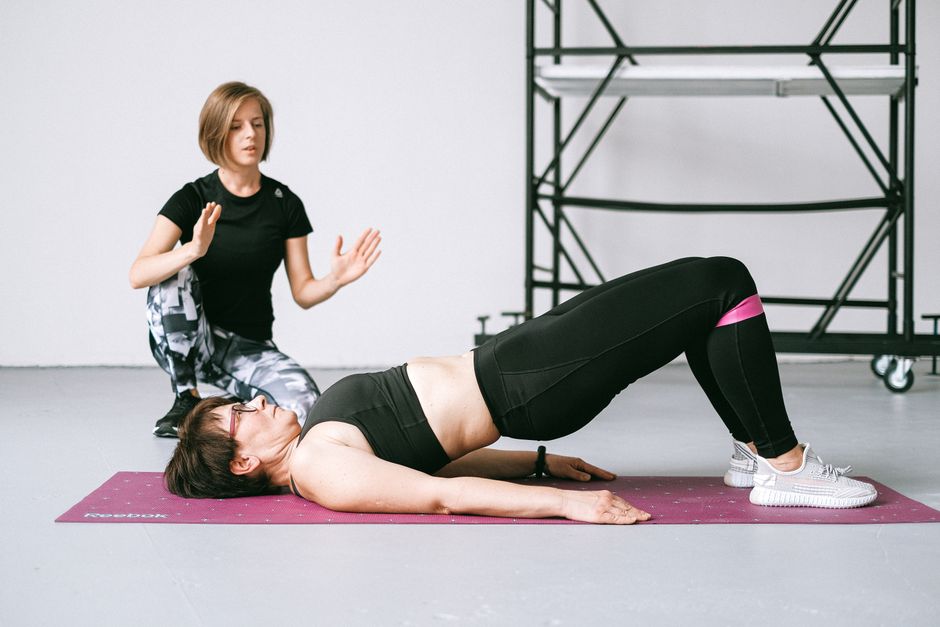
Pelvic floor tension is common, and it responds well to training — not by strengthening the muscles, but by teaching them to let go. Learning how to relax pelvic muscles starts with slow breathing, gentle stretches, and a technique called a reverse Kegel. These approaches work because the pelvic floor is a skeletal muscle group you can consciously control, and like any muscle, it can learn to release tension with practice.
What Is Pelvic Floor Tension and Why Does It Happen?
The pelvic floor is a hammock-shaped group of muscles that stretches from your pubic bone to your tailbone. These muscles support your bladder, bowel, and — in women — the uterus. They also control urination and bowel movements.
Like muscles in your neck or jaw, the pelvic floor can become tight or overactive. When these muscles stay contracted more than they should, it is sometimes called pelvic floor dysfunction, hypertonic pelvic floor, or a non-relaxing pelvic floor.
Several things can contribute to this:
- Chronic stress or anxiety that causes unconscious muscle clenching
- Habitual holding of urine or bowels
- Pelvic surgery, childbirth, or injury
- Endometriosis or other conditions that cause ongoing pelvic pain
- Sitting for long periods without breaks
- Previous pelvic floor training that focused only on tightening (Kegels) without balancing relaxation
One point that surprises many people: doing Kegel exercises when your pelvic floor is already tight can make symptoms worse. The muscles need to learn to release before strengthening makes sense. Some clinicians refer to this as the “down-training” phase.
Symptoms of a tight pelvic floor can include pain during sex, difficulty emptying your bladder or bowels, a feeling of heaviness or pressure in the pelvis, and lower back or hip pain. These symptoms overlap with several other conditions, so a proper evaluation matters.
How To Relax Pelvic Muscles: Techniques That Help
The most reliable way to relax the pelvic floor is through a combination of breathing exercises, targeted stretches, and a technique called a reverse Kegel. These approaches are used in pelvic floor physical therapy, which is a recognized specialty within physical therapy.
Here are the main techniques.
Diaphragmatic Breathing
Your diaphragm and pelvic floor work together. When you breathe deeply into your belly, the diaphragm moves downward and the pelvic floor gently lengthens in response. Shallow chest breathing does the opposite — it keeps the pelvic floor in a slightly contracted state.
To practice:
- Lie on your back with knees bent and feet flat on the floor.
- Place one hand on your belly and one on your chest.
- Breathe in slowly through your nose so your belly rises. Your chest should move very little.
- Breathe out slowly through your mouth. Feel your belly fall.
- Continue for several minutes. Aim for slow, even breaths — roughly 6 breaths per minute is a common target in relaxation training.
This is not just a relaxation trick. It uses the natural mechanical link between breathing and pelvic floor movement. When done consistently, it can help retrain the muscles to stay in a relaxed state.
Reverse Kegels
A reverse Kegel is the opposite of a standard Kegel. Instead of squeezing and lifting the pelvic floor, you gently push down and release. This teaches the muscles to lengthen rather than contract.
To try it:
- Start in a comfortable lying position.
- Take a slow breath in. As you breathe out, imagine gently letting go of the muscles around your vagina or rectum — as if you are slowly starting to pass gas or urine. The key word is gently. Do not strain or push hard.
- Hold the release for a few seconds, then rest.
- Repeat several times.
Some people find it easier to imagine the pelvic floor as an elevator. A Kegel is the elevator going up. A reverse Kegel is the elevator going down to the ground floor and the doors opening.
If you have trouble feeling the difference, a pelvic floor physical therapist can use biofeedback to help you identify the right muscles and confirm you are doing the exercise correctly. Biofeedback is a well-established tool in pelvic floor therapy.
Child’s Pose and Other Stretches
Gentle yoga stretches can help release tension in the hips, lower back, and pelvic area. Child’s pose (kneeling with your hips back toward your heels and your arms extended forward) is a common starting point. Other options include a supine twist, happy baby pose, and a supported squat.
These stretches are not a cure on their own. But they can reduce surrounding muscle tension that feeds into pelvic floor tightness. The evidence for yoga specifically as a treatment for pelvic floor dysfunction is limited but growing. Some studies suggest it helps with related pain and quality of life, though more research is needed.
What Makes Pelvic Floor Tension Worse?
Certain habits and behaviors can keep the pelvic floor locked in a contracted state, even when you are actively trying to relax it. Being aware of these can make a real difference.
- Holding your breath during exercise or daily tasks. Breath-holding increases intra-abdominal pressure, which pushes down on the pelvic floor and triggers a guarding response.
- Chronic straining on the toilet. This includes pushing hard to have a bowel movement or hovering over the toilet seat. Both keep the pelvic floor engaged when it should be releasing.
- Sitting for hours without moving. Prolonged sitting puts direct pressure on the pelvic floor and reduces blood flow to the area.
- Clenching habits. Some people unconsciously squeeze their pelvic floor the way others clench their jaw. This often happens during stress, driving, or focused work.
- Too many Kegels without relaxation. If you have been doing Kegels daily and your symptoms are getting worse, this may be why.
If you notice yourself clenching during the day, try a quick body scan. Check your jaw, shoulders, and pelvic floor. Often, simply noticing the tension is enough to let it go.





When Should You See a Pelvic Floor Physical Therapist?
If you have tried relaxation techniques for several weeks and your symptoms have not improved, or if you have pain, difficulty urinating or having bowel movements, or pain during sex, it is worth seeing a professional. Pelvic floor physical therapy is a specialized field, and a trained therapist can assess whether your pelvic floor is too tight, too weak, or both.
This distinction matters. Some people have a pelvic floor that is both weak and tight — the muscles cannot relax, but they also cannot generate good strength. In that case, relaxation work usually comes first. Strengthening may be added later, once the muscles can release properly.
A pelvic floor physical therapist may use:
- Internal or external manual therapy to release trigger points
- Biofeedback to help you learn to control the muscles
- Electrical stimulation in some cases to help muscles relax
- Guidance on posture, breathing, and daily habits
Some clinicians also recommend vaginal dilators or pelvic wands for at-home release work, but these should be used under professional guidance, especially if you have pain. There is no single approach that works for everyone, and treatment should be tailored to your specific situation.
If your symptoms include blood in your urine, severe pain, or sudden difficulty urinating, see a doctor promptly. These can signal other conditions that need urgent evaluation.
How Long Does It Take To Relax Pelvic Muscles?
There is no fixed timeline. Some people notice improvement within a few weeks of consistent practice. Others need several months of guided therapy.
What matters more than speed is consistency. Brief daily practice — even 5 to 10 minutes of breathing and gentle stretching — tends to work better than occasional long sessions. The pelvic floor responds to repeated, gentle cues over time.
Progress is not always linear. Stress, hormonal changes, and flare-ups of other conditions can temporarily increase tension. That does not mean the approach is not working. It means the nervous system and muscular system are both involved, and both need time to adjust.
Can Stress Cause Pelvic Floor Tightness?
Yes. The pelvic floor is directly influenced by the nervous system. When your body is in a stress response — fight, flight, or freeze — the pelvic floor often tightens as part of a broader guarding pattern. This is the same reflex that makes you clench your jaw or hunch your shoulders when you are tense.
For some people, chronic stress keeps the pelvic floor in a state of low-level contraction for years. Over time, this can lead to pain, dysfunction, and difficulty relaxing even when the person is trying to.
This is why relaxation techniques that address the nervous system — not just the muscles — tend to be most effective. Breathing exercises, progressive muscle relaxation, and mindfulness-based approaches can all help calm the stress response that feeds pelvic floor tension. The evidence for these approaches specifically for pelvic floor dysfunction is still developing, but the link between stress and muscle tension is well established.
What About Medication or Surgery?
For most people with pelvic floor tension, conservative approaches like physical therapy, breathing, and stretching are the first line. Medication and surgery are generally reserved for specific cases.
Some doctors prescribe muscle relaxants or inject botulinum toxin into the pelvic floor muscles for severe cases. These are not first-line treatments, and they carry risks. Botulinum toxin injections, for example, can temporarily weaken the muscles and may cause incontinence in some people. They should only be considered under the care of a specialist.
Surgery is rarely used for pelvic floor tension alone. It is more commonly considered when there is a structural problem, such as organ prolapse or a specific nerve compression, that is not responding to other treatments.
If you are considering medication or a procedure, ask your doctor about the evidence for that specific approach in your situation. What works for one cause of pelvic floor dysfunction may not work for another.
Frequently Asked Questions
Can I relax my pelvic floor on my own?
Yes, many people can make progress with breathing exercises, reverse Kegels, and gentle stretches at home. If symptoms do not improve after a few weeks, a pelvic floor physical therapist can provide more targeted help.
Are Kegels bad for a tight pelvic floor?
Standard Kegels can make a tight pelvic floor worse because they strengthen muscles that are already overactive. Relaxation and down-training usually come first, and strengthening may be added later if needed.
How do I know if my pelvic floor is too tight?
Common signs include pain during sex, difficulty emptying your bladder or bowels, and a feeling of pressure or heaviness in the pelvis. Only a trained clinician can confirm the diagnosis through an exam.
Does stress really affect the pelvic floor?
Yes, the pelvic floor tightens as part of the body’s stress response, similar to jaw or shoulder clenching. Addressing stress through breathing and relaxation can help reduce pelvic floor tension over time.
