
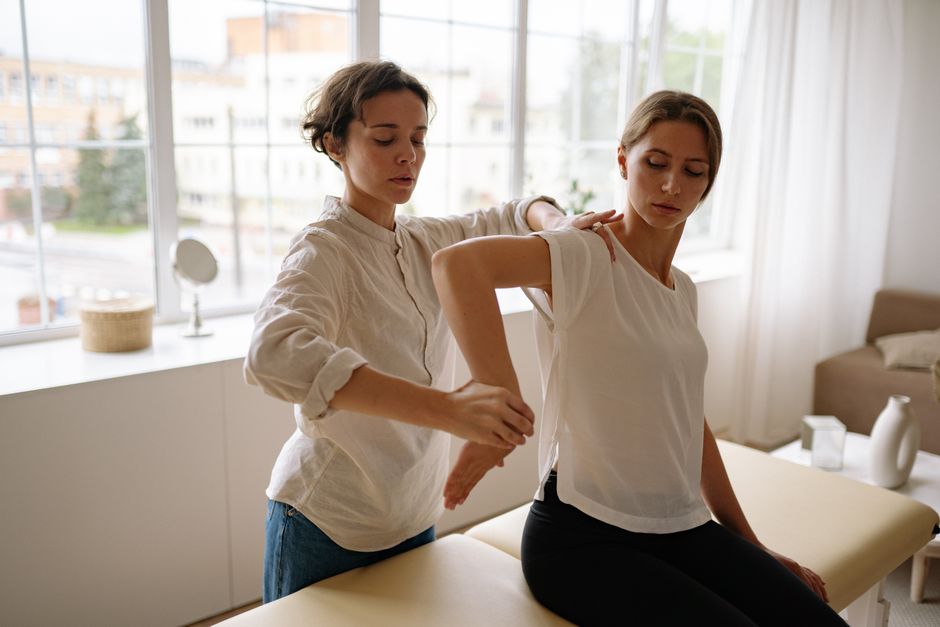
A torn rotator cuff is a common injury, and the recovery process can feel overwhelming. Rehabbing it successfully means following a structured, phase-by-phase approach that gradually restores motion, strength, and function. The process typically moves from protecting the shoulder and reducing pain, to regaining flexibility, then rebuilding strength, and finally returning to full activity.
What Exactly Happens When You Tear Your Rotator Cuff?
The rotator cuff is a group of four muscles and their tendons that surround the shoulder joint. They work together to keep the ball of the upper arm bone firmly in the shallow socket of the shoulder blade. This allows you to lift your arm and rotate it.
A tear can range from a mild strain to a complete rupture of the tendon. It often happens from a sudden injury like a fall, or it can develop gradually from repetitive overhead motions. The pain is usually felt on the outside of the shoulder and can be worse at night, especially when you lie on the affected side.
Understanding the injury matters because the rehab approach is not about “pushing through the pain.” It is about respecting the healing tissue while gently encouraging it to work again. The timeline for recovery varies widely, but most non-surgical tears take several months to improve significantly.
Phase 1: Protect the Shoulder and Control Pain
This first phase begins immediately after the injury. The main goals are to protect the torn tendon from further damage and to reduce pain and inflammation. You are not trying to strengthen anything here.
Your doctor may recommend a sling for a short period, usually just a few days, to let the acute pain settle. Rest is important, but complete immobilization for too long can lead to a stiff shoulder. A stiff shoulder is much harder to rehab than a torn tendon.
Ice packs applied to the shoulder for 15-20 minutes several times a day can help control pain and swelling. Anti-inflammatory medications, if approved by your doctor, can also help during this early stage.
Even in this phase, you can begin gentle pendulum exercises. You lean forward and let your arm hang down, then gently swing it in small circles. This motion does not use the rotator cuff muscles actively, but it helps keep the joint moving and reduces stiffness.
Phase 2: Restore Your Range of Motion
Once the acute pain starts to settle, usually within a week or two, you move to the next goal: getting your arm moving again. This phase focuses on regaining pain-free range of motion. You are not lifting heavy weights here.
Passive and active-assisted exercises are the foundation of this phase. Passive means a therapist or your other arm moves the injured arm for you. Active-assisted means you use your good arm or a stick to help the injured arm move.
Common exercises include using a wand or dowel to gently lift your arm forward and out to the side. You might also do pulley exercises at home or in a clinic. The key is to move only within a pain-free range. If an exercise hurts, you are pushing too far, too fast.
Your physical therapist will also begin gentle stretching for the back of the shoulder, known as the posterior capsule. This tightness is common after an injury and can limit how far you can reach across your body. This phase typically lasts for several weeks until you can move your arm almost as far as the uninjured side.



Phase 3: Rebuild Strength With Rotator Cuff Exercises
This is often called the strengthening phase. Now that your shoulder moves well, you need to retrain the rotator cuff muscles to hold the joint stable. This is the longest phase of rehab and requires patience.
You start with isometric exercises, where you push against a wall or another immovable object without actually moving your arm. This contracts the muscle without stressing the healing tendon. After that, you progress to light resistance bands or very light dumbbells.
The classic rotator cuff strengthening exercises include external rotation and internal rotation. For external rotation, you keep your elbow at your side and rotate your forearm outward against a band. For internal rotation, you rotate your forearm inward. These exercises directly target the muscles that were torn.
Scapular stabilization is also critical here. Your shoulder blade provides the base for all arm movement. If it is weak or moves incorrectly, your rotator cuff has to work harder. Exercises like prone rows, wall slides, and shoulder blade squeezes help build this foundation.
A common mistake is progressing to heavier weights too quickly. The rotator cuff muscles are small. They respond best to high repetitions with light resistance. Your therapist will guide you on when it is safe to increase the load.
Phase 4: Advanced Strengthening and Return to Activity
The final phase focuses on building power and endurance. You are preparing the shoulder to handle everyday activities, work demands, and possibly sports. This phase does not start until you have full range of motion and no pain with basic strengthening.
Exercises become more dynamic. You might progress to pushing movements like push-ups or bench presses, and pulling movements like rows or lat pulldowns. The key is that your shoulder blade remains stable as you move.
You will also work on eccentric strengthening. This means slowly lowering a weight rather than lifting it. This type of exercise places a specific load on the tendon and is often used in the later stages of rehab to improve tendon health.
Returning to full activity is gradual. If you play a sport, you start with basic drills and slowly add speed and force. For everyday life, you test your ability to reach overhead into cabinets, carry grocery bags, and lift objects from the floor. You should be able to do all of these without pain or a feeling of instability before returning to heavy lifting or high-impact sports.
When Is Surgery Needed for a Torn Rotator Cuff?
Not all rotator cuff tears require surgery. Many people, especially those with partial tears or tears caused by degeneration, do well with the rehab program described above. The decision to have surgery depends on several factors.
Complete tears, large tears, or tears in younger, active individuals are more likely to be considered for surgical repair. If you have significant weakness in your arm that does not improve after a period of conservative rehab, surgery may be the better option. Your doctor will use an MRI to see the size and location of the tear.
Surgery involves reattaching the torn tendon to the bone. After surgery, you will still need to go through the same phases of rehab, but the timeline is longer and more structured. The shoulder is often immobilized in a sling for several weeks to protect the surgical repair before any motion is started.
The success of surgery depends heavily on the quality of the rehab afterward. A well-performed surgery with poor rehab will not give good results. A less severe tear with excellent rehab often gives excellent results.
How Long Does Rotator Cuff Rehab Take?
There is no single answer because every tear is different. A small partial tear in an older person may feel better in six to eight weeks. A larger tear in a younger athlete may take six months or more to fully rehab.
As a general rule, you can expect to spend at least three to four months in a structured rehab program. The first month is usually focused on pain control and range of motion. The next two to three months are spent on progressive strengthening. The final phase of returning to sports or heavy work can take another month or two.
It is important to distinguish between being pain-free and being fully healed. The tendon may feel better long before it is strong enough to handle heavy loads. Following the phase-by-phase approach prevents you from re-injuring the shoulder by returning to activity too soon.
Consistency is more important than intensity. Doing a small amount of correct exercise every day is far more effective than doing a long, painful session once a week. Listen to your body. If an exercise causes sharp pain, stop. Mild muscle soreness after exercise is normal, but joint pain is not.
Frequently Asked Questions
Can a torn rotator cuff heal without surgery?
Yes, many partial tears and some full tears can heal with physical therapy and time. The success of non-surgical treatment depends on the size of the tear and your age and activity level.
How soon can I lift weights after a rotator cuff tear?
You should not lift weights until you have full pain-free range of motion and your therapist clears you for strengthening. This usually takes at least four to six weeks, but it varies by individual.
What exercises should I avoid with a torn rotator cuff?
Avoid overhead presses, heavy lifting, and sudden pulling movements during the early phases of rehab. These place high stress on the healing tendon and can worsen the tear.
Is it normal to have shoulder pain at night during recovery?
Night pain is very common during the early phases of a rotator cuff injury. It usually decreases as you regain motion and strength, but persistent night pain can be a sign that you are doing too much.
