
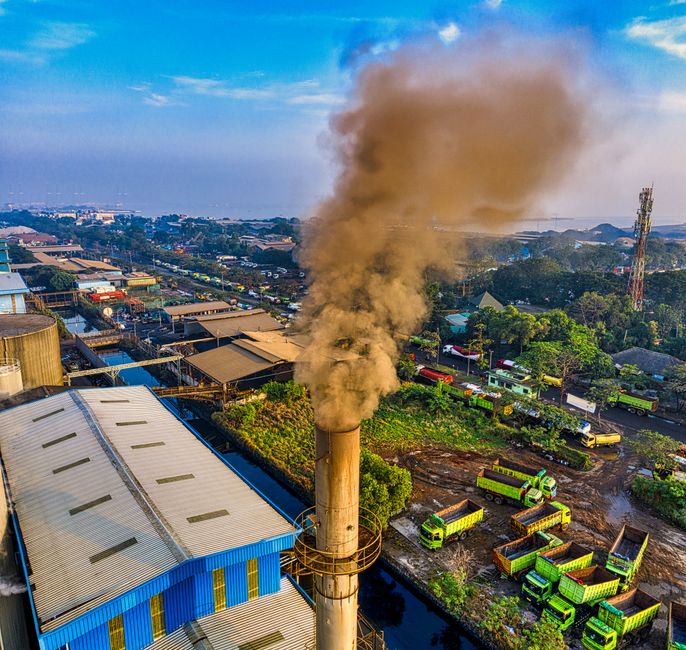
Industry produces more carbon dioxide than any other sector of the global economy. Steel, cement, chemicals, and manufacturing together account for roughly a quarter of all energy-related CO2 emissions worldwide, according to the International Energy Agency. Reducing those emissions is not a matter of one fix. It requires cleaner electricity, redesigned industrial processes, and in some cases technologies that are still being scaled up. The real solutions exist. What varies is how quickly each one can be deployed and how much it costs.
Why Is Industrial CO2 So Hard to Eliminate?
Most industrial emissions come from burning fossil fuels to create high heat. Steel furnaces, cement kilns, and chemical reactors need temperatures that range from several hundred to more than 1,500 degrees Celsius. Electricity can generate that heat in principle, but the infrastructure to deliver it at industrial scale is not yet widespread.
A second problem is process emissions. In cement production, about half the CO2 released does not come from fuel at all. It comes from the chemical reaction that turns limestone into clinker, the key ingredient in cement. No amount of clean energy eliminates that reaction. It has to be captured or the material has to be replaced.
These two factors — extreme heat demand and unavoidable chemical emissions — explain why industry has been slower to decarbonize than electricity generation. Power grids can add wind and solar. A cement plant cannot simply swap out its chemistry.
What Are the Most Effective Ways to Cut Industrial CO2 Emissions?
Four approaches cover most of the realistic near-term and mid-term options. They are not mutually exclusive. Most credible decarbonization plans for industry use several at once.
- Electrification with clean power. Replacing gas-fired heat with electric heat — where temperatures allow — and running those systems on low-carbon electricity. This works best for low- and medium-temperature processes like food processing, textiles, and paper.
- Hydrogen as a fuel and feedstock. Green hydrogen, made by splitting water with renewable electricity, can replace natural gas in some high-heat processes and in chemical production. It is currently expensive and limited in supply.
- Carbon capture and storage. Capturing CO2 before it enters the atmosphere and injecting it underground. This is one of the few options for cement process emissions.
- Material efficiency and substitution. Using less material, recycling more, and switching to lower-carbon alternatives like blended cements or recycled steel.
The right mix depends on the industry. A paper mill and a steel plant face very different technical constraints. Blanket solutions do not apply.
Can Renewable Energy Alone Decarbonize Industry?
No. Renewable electricity is essential, but it cannot address process emissions or all high-temperature heat needs on its own. That is a common misconception worth stating plainly.
What renewables can do is substantial. Industrial electricity demand can be met with wind, solar, and other low-carbon sources. That covers lighting, motors, compressors, and low-temperature heat. For industries like light manufacturing and food processing, clean electricity may cover the majority of energy needs.
For steel and cement, electricity helps but does not finish the job. Electric arc furnaces can melt recycled steel using electricity, and that route produces far less CO2 than traditional blast furnaces. But making steel from iron ore still requires a chemical reduction step that today relies mostly on coal. Hydrogen-based direct reduced iron is a promising alternative, and several plants are operating or under construction, but the technology is not yet dominant.
The honest summary: renewables are necessary but not sufficient. They are the foundation, not the whole building.





How Does Carbon Capture Fit Into Industrial Emissions Reduction?
Carbon capture and storage, often abbreviated CCS, captures CO2 at the point where it is produced and stores it deep underground in geological formations. For cement, it is one of the few tools that addresses process emissions directly.
The technology is proven in principle. Oil and gas operations have injected CO2 underground for decades. What remains uncertain is scale. The number of large industrial CCS facilities operating worldwide is small relative to the volume of emissions that would need to be captured. Costs are high, and building the pipeline networks and storage sites takes years.
Some climate analysts view CCS as essential for cement and chemicals. Others argue it has been slow to deliver and should not be treated as a substitute for reducing fossil fuel use. Both positions have merit. The evidence to date shows CCS works technically but has not yet been deployed at the pace needed to make a large dent in global industrial emissions.
What Role Does Hydrogen Play in Cutting Industrial Emissions?
Hydrogen burns without producing CO2, and it can also serve as a chemical feedstock. That makes it useful in two ways: as a clean fuel for high-temperature heat, and as a replacement for fossil-based hydrogen in ammonia and refining.
The catch is how the hydrogen is made. Nearly all hydrogen produced today comes from natural gas, a process that releases CO2. Green hydrogen, made with renewable electricity, produces no CO2 during production but costs significantly more. Blue hydrogen, made from natural gas with carbon capture, sits in between on both cost and emissions.
Steel is the most advanced test case. Hydrogen-based direct reduced iron replaces coal in the iron-making step, and several commercial-scale plants are operating or being built, mainly in Europe. Whether the approach scales globally depends on hydrogen supply, cost, and renewable electricity availability.
For most other industrial applications, hydrogen remains more promise than practice. The International Energy Agency has noted that hydrogen use in industry is growing but from a very small base.
What Practical Steps Can Manufacturers Take Now?
Not every solution requires waiting for new technology. Many manufacturers can reduce emissions today with established methods.
- Audit energy use. Identify where heat and electricity are wasted. Leaks, inefficient motors, and poorly insulated equipment are common and fixable.
- Switch to renewable electricity. Power purchase agreements and on-site generation can lower the carbon intensity of purchased power.
- Recover waste heat. Many industrial processes release heat that can be captured and reused on-site.
- Increase recycling. Recycled steel and aluminum require far less energy than primary production. Boosting recycling rates lowers emissions across the supply chain.
- Use blended cements. Substituting a portion of clinker with materials like fly ash or slag reduces the carbon intensity of concrete.
- Plan for electrification. When equipment reaches end of life, evaluate electric alternatives where temperatures permit.
These steps do not solve the problem entirely. They buy time and reduce emissions while larger technologies mature. For many companies, they also lower energy costs, which makes them easier to justify.
What Are the Biggest Barriers to Reducing Industrial CO2?
Cost is the most obvious barrier. Low-carbon industrial processes generally cost more than fossil-based ones. Without policy support, companies that invest in them may be at a competitive disadvantage.
Infrastructure is another. Green hydrogen needs electrolyzers and pipelines. CCS needs CO2 transport networks and storage sites. Electrification needs grid capacity. None of these can be built overnight, and all require coordination across sectors.
There is also a technology readiness gap. Some solutions, like hydrogen steel, are proven at pilot and early commercial scale but not yet at the volume needed to transform a global industry. Others, like electrified cement kilns, remain largely experimental.
Policy plays a large role in whether these barriers fall. Carbon pricing, subsidies, and public investment in infrastructure can shift the economics. The European Union’s emissions trading system and similar programs elsewhere are designed to do exactly that. How effective they will be is still being tested.
How Do We Know Which Solutions Actually Work?
We know because emissions are measurable. A steel plant that switches from coal to hydrogen either lowers its CO2 output or it does not. A cement plant with carbon capture either stores the CO2 or it escapes. Unlike some areas of sustainability where claims are hard to verify, industrial emissions can be tracked at the stack, the facility, and the sector level.
That measurability matters. It means progress is not a matter of opinion. The data will show which technologies scale and which stall. The solutions that work will be the ones that reduce measured emissions at a cost that industry and society are willing to pay.
What is clear now is that no single approach will get industry to zero. The realistic path combines clean electricity, hydrogen where it makes sense, carbon capture for unavoidable emissions, and smarter use of materials. Each piece is established. The challenge is putting them together at scale.
Frequently Asked Questions
What is the single biggest source of industrial CO2 emissions?
Steel and cement production together account for a large share of global industrial CO2, largely because both require very high heat and, in cement’s case, release CO2 through chemical reactions. No other industrial sector combines both challenges at the same scale.
Can carbon capture really reduce industrial emissions?
Yes, carbon capture can reduce emissions from industrial processes where CO2 is produced, and it is one of the few options for cement process emissions. However, it has not yet been deployed at the scale needed to significantly cut global industrial emissions.
Is green hydrogen a realistic solution for industry?
Green hydrogen is technically viable for steel and chemical production, and several commercial plants are operating. Its wider use depends on lowering production costs and expanding renewable electricity supply, which remains a significant constraint.
What can small manufacturers do to cut emissions?
Small manufacturers can start with energy audits, waste heat recovery, renewable electricity purchases, and equipment upgrades at end of life. These steps are established, often cost-saving, and do not require new technology.
