
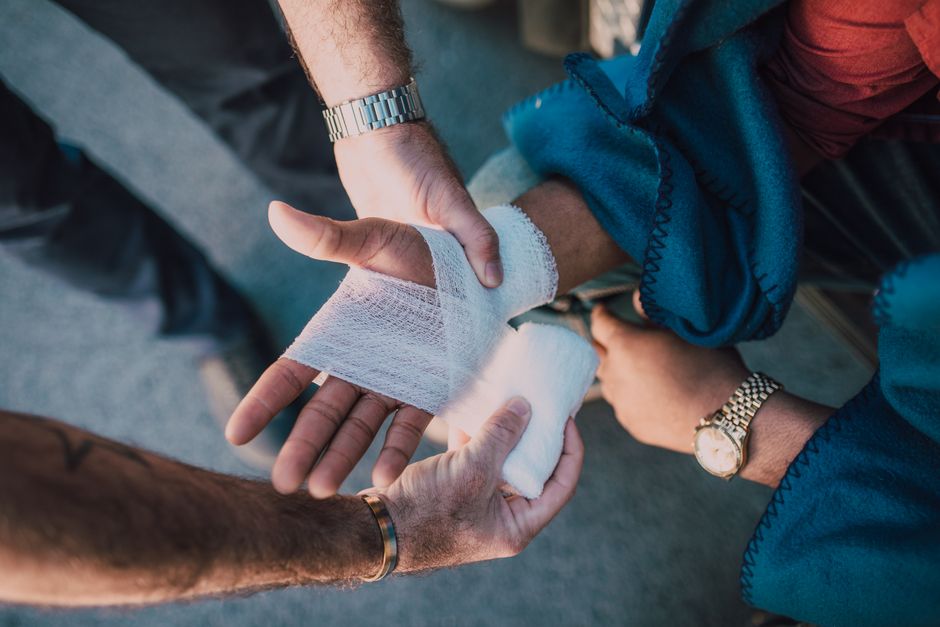
A burn on your hand hurts in a way that’s hard to ignore, and the instinct to wrap it up fast is strong. Here’s the short answer: cool the burn under cool running water for 20 minutes, remove rings and anything tight, then cover it loosely with a clean, non-stick dressing. Do not pop blisters, do not use ice, and do not wrap the hand tightly. For anything beyond a small superficial burn, get medical care rather than bandaging it yourself.
Most small hand burns heal well with simple care. The bandaging part matters more than people think. A dressing that sticks, wraps too tight, or traps dirt can turn a minor burn into a bigger problem.
How To Properly Bandage A Burn On Your Hand
First, stop the burning process. Cool running water is the single most important step, and it comes before any bandage.
Run cool (not ice-cold) water over the burn for about 20 minutes. This is the standard guidance from burn care organizations and emergency medicine sources. Cool water lowers the temperature of the tissue, which limits how deep the injury goes. It also eases pain.
Do not use ice, ice packs, or frozen food. Ice constricts blood vessels and can damage already-injured skin. It can make a burn worse.
Once the burn is cooled:
- Remove rings, watches, and bracelets from the injured hand right away. Swelling can start within minutes and a ring can become impossible to remove.
- Do not break any blisters. A blister is a sterile cushion. Opening it invites infection.
- Pat the area dry with a clean, lint-free cloth. Do not rub.
- If the skin is intact and not blistered, a thin layer of plain petroleum jelly can keep the surface moist. Skip antibiotic ointments unless a clinician recommends one — some people are allergic to them, and they are not needed for most minor burns.
- Cover with a non-stick dressing. Gauze labeled “non-adherent” or a sterile non-stick pad works well.
- Hold the dressing in place with a loose wrap of gauze or medical tape. Tape the wrap, not the pad, to the skin — and never tape in a full circle around a finger or the hand.
Change the dressing once a day, or sooner if it gets wet or dirty. Look at the burn each time you change it.
What Kind Of Bandage Should You Use On A Hand Burn?
The dressing should be non-stick, breathable, and loose. Those three traits do most of the work.
Non-stick matters because a burn weeps fluid, and ordinary gauze will dry onto the wound. Pulling it off later reopens the injury and hurts badly. Non-adherent pads and some gel-based dressings are designed to lift away cleanly.
A few common options:
- Non-adherent sterile pads — widely available, inexpensive, and fine for most superficial burns.
- Gauze roll — used as the outer layer to hold the pad in place. It should sit loosely.
- Adhesive film dressings — sometimes used for very small, dry burns. They seal the area, so they are not ideal for a burn that is still weeping.
- Hydrocolloid or gel dressings — these can help some partial-thickness burns, but they are usually applied by a clinician rather than chosen at home.
What you should not use: cotton balls, fluffy fabric, butter, toothpaste, egg whites, or any home remedy you’ve heard about. These either shed fibers into the wound, trap heat, or introduce bacteria. None of them help healing.
How Tight Should The Bandage Be?
Loose enough that you can slide a finger under the edge, and snug enough that the pad stays in place. That is the target.
A burn swells. A bandage that feels fine when you put it on can become too tight within an hour. Tight wrapping reduces blood flow, which slows healing and can cause real damage to the tissue.
Signs a bandage is too tight:
- Numbness or tingling in the fingers
- Fingers turning pale, blue, or gray
- Cool fingers below the bandage
- Throbbing pain that gets worse instead of better
- Swelling that increases after wrapping
If any of these happen, take the bandage off and rewrap more loosely. If the color or feeling does not return to normal quickly, seek medical care.
One detail people miss: never wrap tape or gauze in a complete circle around a finger. A full ring of tape can act like a tourniquet as the finger swells. Wrap in a spiral, or tape the dressing down on one side only.




When Should You Not Bandage A Burn At Home?
Some burns need a clinician, not a bandage. Getting this wrong is the main way a minor burn becomes a serious one.
Seek medical care if the burn:
- Is larger than the palm of your hand
- Looks white, waxy, brown, or charred
- Has skin that is numb or painless (a sign the burn is deep)
- Involves the face, neck, genitals, or a joint
- Wraps around the hand or fingers
- Was caused by electricity, chemicals, or a fire
- Shows signs of infection — increasing redness, swelling, pus, or fever
- Is on someone who is very young, elderly, pregnant, or has a condition that affects healing, such as diabetes
Chemical burns and electrical burns are handled differently from heat burns and should always be evaluated. For a chemical burn, flush with large amounts of water and call poison control or emergency services. Do not try to neutralize the chemical yourself.
Also get care if the burn does not look better after a few days, or if it seems to be getting worse rather than healing.
How Long Does A Hand Burn Take To Heal?
A superficial burn — red, painful, no blisters — usually settles within a few days to about a week. A partial-thickness burn with blisters typically takes longer, often one to three weeks, and can leave a scar.
Deeper burns take longer and are more likely to scar. Healing time also depends on the size of the burn, its location, your age, and your general health.
During healing, keep the area clean, keep the dressing changed, and protect the burn from sun once it closes. New skin is sensitive and burns easily.
Do not pick at peeling skin or scabs. Let them come off on their own.
What Are The Most Common Mistakes?
Most bandaging problems come down to a handful of errors.
- Using ice. Ice damages tissue. Cool water is the right choice.
- Popping blisters. This raises infection risk and slows healing.
- Wrapping too tight. Swelling turns a snug wrap into a dangerous one.
- Using sticky gauze. It tears the wound when removed.
- Leaving the same dressing on for days. Dressings should be changed daily or when soiled.
- Applying butter, oils, or toothpaste. These trap heat and bacteria and do not help.
- Waiting too long to get care. Deep or large burns need treatment, not a better bandage.
The core idea is simple. Cool the burn, keep it clean, cover it loosely, and check it often. If anything looks wrong, get help rather than adjusting the bandage again.
Frequently Asked Questions
Should I bandage a burn right away?
Cool the burn under cool running water for about 20 minutes first, then bandage it. Bandaging before cooling traps heat in the tissue.
Should I put antibiotic ointment on a hand burn?
For most minor burns, plain petroleum jelly is enough to keep the surface moist. Antibiotic ointments are not needed for small clean burns and can cause allergic reactions in some people.
How often should I change the bandage on a burn?
Change it once a day, and any time it becomes wet or dirty. Check the burn each time so you can spot signs of infection early.
Can I leave a burn uncovered instead of bandaging it?
Small superficial burns can sometimes be left uncovered if they stay clean and dry. Covering a burn generally helps protect it from dirt and friction, which is why a loose non-stick dressing is usually recommended.
