
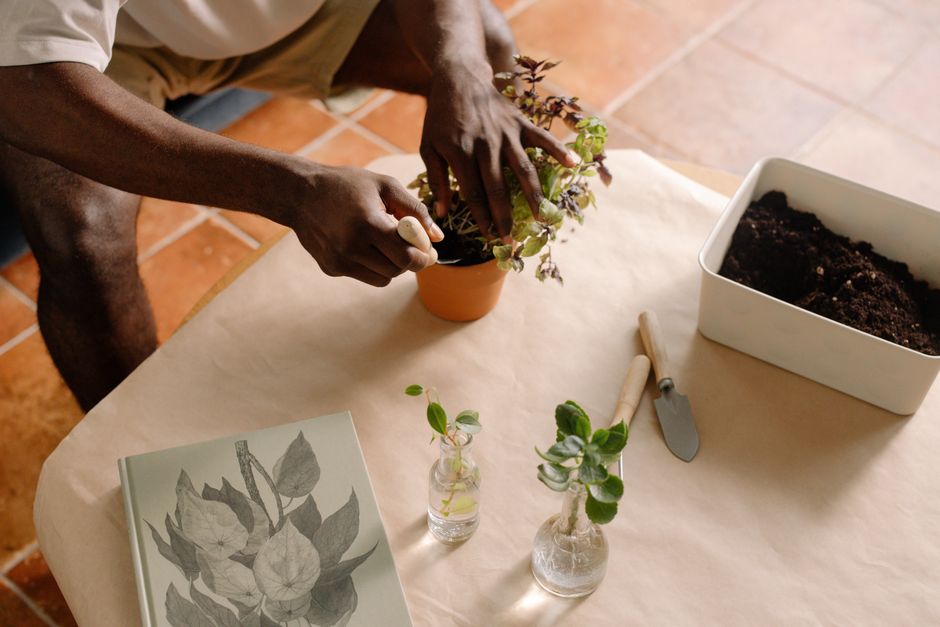
Ficus pumila, often called creeping fig or climbing fig, is a vigorous vine that clings to walls, fences, and trellises. Propagating it from stem cuttings is straightforward and reliable, and the best time to take cuttings is during the active growing season in spring or early summer. To succeed, take a 4- to 6-inch cutting from a healthy stem, remove the lower leaves, and place it in water or moist potting mix. Roots typically develop within two to four weeks, and once the root system is established, you can transplant the new plant to its permanent spot.
What You Need To Propagate Ficus Pumila
Gather a few basic supplies before you start. You will need clean, sharp pruning shears or scissors, a small pot with drainage holes, a well-draining potting mix, and optionally a clear plastic bag or a glass of water. Rooting hormone powder is helpful but not required — ficus pumila roots readily on its own in most conditions.
Choose a healthy parent plant that shows no signs of pests or disease. Look for stems that are semi-hardwood, meaning they are not brand-new and soft, but not old and woody either. These intermediate stems root more reliably than very young or very old growth.
How To Take Stem Cuttings From Ficus Pumila
Use clean, sharp scissors or pruning shears to cut a 4- to 6-inch section of stem. Make the cut just below a leaf node — the small bump where a leaf attaches to the stem. This is important because roots often emerge from these nodes.
Remove the leaves from the bottom half of the cutting. Leave two to four leaves at the top. If the remaining leaves are large, you can trim them in half to reduce water loss while the cutting has no roots to absorb moisture.
Take several cuttings at once. Not every cutting will root, and starting with three to five increases your odds of success without much extra effort.
Rooting Ficus Pumila Cuttings In Water
Water propagation is simple and lets you watch the roots develop. Place the cuttings in a clean glass or jar filled with room-temperature water. Submerge the bare stem portion but keep the leaves above the waterline.
Change the water every two to three days to prevent bacteria from building up. Put the jar in a spot with bright, indirect light — a windowsill that does not get harsh afternoon sun works well. Roots usually appear within two to four weeks. Wait until the roots are at least an inch long before transplanting to soil.
One note: roots formed in water are not identical to roots formed in soil. Water roots are more fragile and can sometimes struggle when moved to potting mix. Handle them gently during transplant.





Rooting Ficus Pumila Cuttings In Soil
Soil propagation skips the transplant shock that water-rooted cuttings can experience. Fill a small pot with a well-draining mix — a standard potting soil blended with perlite or coarse sand works well. Moisten the mix so it is damp but not soggy.
Dip the cut end of the stem in rooting hormone powder if you are using it. Tap off the excess. Insert the cutting about an inch deep into the soil, firming the mix gently around the stem.
Cover the pot with a clear plastic bag or a plastic dome to create a humid environment. This reduces water loss from the leaves while the cutting has no roots. Keep the pot in bright, indirect light and check the soil moisture every few days. Water when the top inch of soil feels dry.
After three to four weeks, gently tug on the cutting. If you feel resistance, roots have formed. You can also check by carefully lifting the cutting with a spoon — visible white roots mean it is ready to move to a larger pot.
Best Conditions For Rooting Success
Ficus pumila roots fastest when conditions mimic its natural tropical habitat. Warmth matters — aim for temperatures between 65°F and 75°F. Cooler temperatures slow rooting significantly.
Bright, indirect light is ideal. Direct sunlight can scorch the cuttings, while very low light slows photosynthesis and delays rooting. A spot near an east-facing window or a few feet back from a south-facing window usually works.
Humidity is the third factor. The plastic bag method for soil cuttings and the open water surface for water cuttings both help maintain moisture. If your home is very dry, misting the leaves once a day can help, but do not keep the soil waterlogged.
Transplanting Rooted Cuttings
Once roots are established, move the new plant to a pot with fresh, well-draining soil. Choose a pot only slightly larger than the root ball — an oversized pot holds excess moisture and can lead to root rot.
For water-rooted cuttings, be especially careful. Gently place the roots into a small hole in the soil and backfill without pressing too hard. Water lightly to settle the soil around the roots.
Keep the newly transplanted ficus pumila in the same bright, indirect light for the first week or two. Gradually introduce it to more direct light if that is where it will live permanently. Do not fertilize for the first month — the fresh soil contains enough nutrients, and fertilizer can burn young roots.
Common Mistakes To Avoid
The most common failure point is overwatering. Ficus pumila cuttings need consistent moisture, but standing water causes stem rot. If the stem turns brown and mushy at the soil line, it has rotted and will not recover.
Taking cuttings from the wrong part of the plant is another frequent error. Very young, soft green stems wilt quickly and often fail to root. Old, woody stems root slowly or not at all. Look for stems that are firm but still flexible.
Skipping the humidity step is also a common issue, especially in dry indoor environments. Cuttings lose water through their leaves faster than they can absorb it without roots. The plastic bag or regular misting addresses this directly.
How Long Until The New Plant Is Established
Roots typically form in two to four weeks, but the plant is not fully established at that point. Give the new ficus pumila another four to six weeks in its pot before moving it to a permanent outdoor location or a larger container.
Once established, ficus pumila grows quickly. In ideal conditions, it can climb and cover a wall or trellis within a single growing season. Regular watering and occasional feeding during the growing months keep it vigorous.
Be aware that ficus pumila is considered invasive in some warm regions, including parts of Florida and Hawaii. Check local guidelines before planting it outdoors. In cooler climates, it grows well as a houseplant or an annual outdoor vine.
Frequently Asked Questions
Can I propagate ficus pumila from a single leaf?
No, a single leaf will not grow into a new plant. You need a stem section with at least one node, because roots and new shoots emerge from the nodes.
How long does it take for ficus pumila cuttings to root?
Roots usually appear within two to four weeks under warm, bright conditions. Cooler temperatures or low light can slow the process to six weeks or more.
Should I use rooting hormone for ficus pumila cuttings?
Rooting hormone is optional. Ficus pumila roots readily without it, but the powder can speed up rooting and improve success rates when conditions are less than ideal.
Can ficus pumila cuttings root in winter?
Rooting is slower in winter because the plant is not actively growing. You can still try, but expect longer rooting times and a lower success rate than in spring or summer.
