
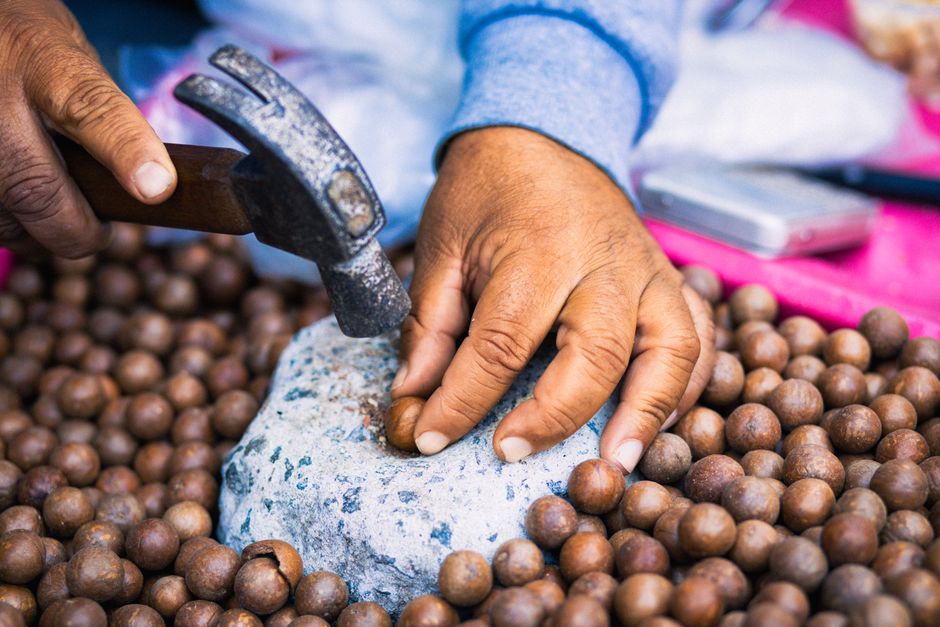
Macadamia nuts are one of the hardest nuts to crack, and the shell is the reason why. To process macadamia nuts at home, you dry the nuts first, crack the hard outer shell without crushing the kernel, then dry the kernels again to develop flavor and texture. The two-stage drying is the part most home guides skip, and it is the step that separates a bitter, rubbery nut from a rich, crunchy one.
This guide walks through each stage in order. It also covers the safety points that matter, because raw macadamia kernels can carry mold and the shells are genuinely tough on your hands.
Why Are Macadamia Nuts So Hard To Process?
The macadamia shell is one of the toughest in the nut world. A mature shell can take well over 100 pounds per square inch of pressure to fracture, which is why commercial processors use specialized rollers rather than simple presses.
That hardness is a defense mechanism. The tree evolved a shell that resists insects, birds, and rodents. It also resists you.
The kernel inside is also unusually high in fat. Depending on variety and growing conditions, macadamia kernels are roughly 70 to 75 percent fat by weight. That fat content is why the nuts turn rancid faster than most other nuts and why heat control matters during drying.
There is one more factor people rarely consider. Macadamia shells do not split along a seam the way a walnut or pecan does. There is no natural weak point to aim for. You are fracturing a solid structure, and the force has to be applied precisely or the kernel shatters with it.
How Do You Prepare Macadamia Nuts Before Cracking?
Freshly fallen macadamia nuts need to be removed from their husks quickly. The husk is the green outer layer that splits open when the nut is ripe. Leaving nuts in the husk too long invites mold.
Once husked, spread the nuts in a single layer somewhere with good airflow. A screen, a mesh tray, or a baking sheet works. Keep them out of direct sun and rain. Air drying at this stage typically takes one to three weeks depending on humidity.
The nuts are ready for the first drying stage when the shells feel light and the kernels rattle slightly inside when you shake them.
Why Drying Before Cracking Matters
Drying before cracking serves two purposes. It reduces moisture so the kernel separates from the shell more cleanly, and it lowers the risk of mold developing during storage.
Mold is not a minor concern here. Nuts left damp can develop mold that produces harmful compounds, and you cannot reliably detect all of it by sight or smell. If nuts smell musty, look discolored, or show any fuzzy growth, discard them. Do not try to salvage them by roasting.
How To Process Macadamia Nuts At Home: The Drying And Cracking Steps
The full process has four stages: dry, crack, dry again, then store or roast. Skipping the second drying stage is the most common mistake.
Stage 1: First Drying
Spread the husked, in-shell nuts in a single layer on a tray. A food dehydrator set to a low temperature works well, and so does an oven on its lowest setting with the door slightly ajar.
Low and slow is the rule. High heat at this stage can cause the oils inside to degrade before you have even cracked the shell. Aim for gentle, steady warmth rather than speed.
This first drying stage typically takes several hours to a day or more in a dehydrator, longer in open air. The goal is a shell that has lost its green, damp feel.
Stage 2: Cracking the Shell
This is where most home attempts fail. A standard nutcracker usually is not strong enough, and a hammer tends to shatter the kernel along with the shell.
Options that work better for home processing include:
- A bench vise, tightened slowly until the shell gives
- A dedicated macadamia cracker, which uses a controlled screw or lever mechanism
- A heavy-duty lever-style cracker designed for hard-shell nuts
The key is controlled, slow pressure rather than impact. Apply force gradually and stop the moment you feel the shell give. Impact tools like hammers transfer energy too fast and crack the kernel.
Work over a bowl so you catch the kernels. Expect some loss. Even experienced processors break a portion of the kernels, and home equipment breaks more.
Stage 3: Second Drying
Once the kernels are out, dry them again. This stage develops the characteristic macadamia flavor and gives the kernel its crisp texture.
A dehydrator at a low temperature for several hours is the standard home method. Oven drying works too, but keep the temperature low and check frequently. Kernels can go from perfectly dried to scorched quickly because of their high fat content.
Skip this stage and you get kernels that taste flat and feel rubbery. The flavor people associate with good macadamia nuts develops here, not in the shell.
Stage 4: Roasting (Optional)
Roasting is optional but common. Dry-roast or roast with a small amount of oil at a low to moderate oven temperature, stirring occasionally, until the kernels turn light golden.
Watch them closely. The high oil content means they burn fast and the window between done and burnt is narrow. Pull them out when they are just starting to color, because they continue to cook from residual heat.




What Is the Best Way To Store Home-Processed Macadamia Nuts?
Storage is where home-processed nuts most often go wrong. The fat content that makes macadamia nuts rich also makes them prone to going rancid.
Cool, dark, and airtight is the baseline. A sealed container in a pantry works for short-term storage. For longer storage, refrigeration or freezing slows rancidity considerably.
Signs the nuts have gone off include a stale or paint-like smell and a bitter taste. Rancid nuts are not a safety emergency in the way moldy nuts are, but they taste bad and the oils have degraded.
Keep in-shell nuts and shelled kernels separate. Shelled kernels have lost their protective layer and will turn faster.
Is It Safe To Eat Raw Home-Processed Macadamia Nuts?
Raw macadamia kernels are generally eaten as-is, and many people prefer them that way. The main safety concern is not the nut itself but the conditions it was stored in before and after processing.
Mold is the real risk. Nuts that were husked late, dried poorly, or stored damp can develop mold. Some molds produce compounds that are harmful even in small amounts, and heat does not reliably destroy all of them.
This is why the drying stages matter beyond flavor. Proper drying is a food safety step, not just a quality step.
If you are processing nuts from a tree in your yard, discard any nut that looks discolored, feels unusually light, or has a visible crack with dark material inside. When in doubt, throw it out. The cost of a few nuts is not worth the risk.
Common Mistakes When Processing Macadamia Nuts at Home
Most home failures trace back to a small number of avoidable errors.
- Using a hammer. Impact shatters kernels. Use controlled pressure instead.
- Skipping the second drying. Kernels stay rubbery and taste flat.
- Drying at high heat. Degrades the oils before the nuts are even cracked.
- Cracking too soon. Nuts that have not dried enough cling to the shell and break apart.
- Storing damp nuts. Invites mold, which is a genuine health risk, not just a quality issue.
One point worth repeating: the second drying stage is not optional if you want good results. It is the difference between a raw, chewy kernel and a proper macadamia nut.
Frequently Asked Questions
How long does it take to process macadamia nuts at home?
From husking to finished kernels, the process usually takes several weeks, most of it air drying. Active hands-on time is only a few hours.
Can you crack macadamia nuts with a regular nutcracker?
A standard nutcracker is usually not strong enough for macadamia shells. A bench vise or a dedicated macadamia cracker works far better.
Do you have to dry macadamia nuts twice?
Yes, drying twice gives the best results. The first drying prepares the shell for cracking and the second develops flavor and texture in the kernel.
How do you know when home-processed macadamia nuts have gone bad?
A stale or paint-like smell and a bitter taste mean the oils have gone rancid. Discard any nuts showing mold, discoloration, or fuzzy growth.
