
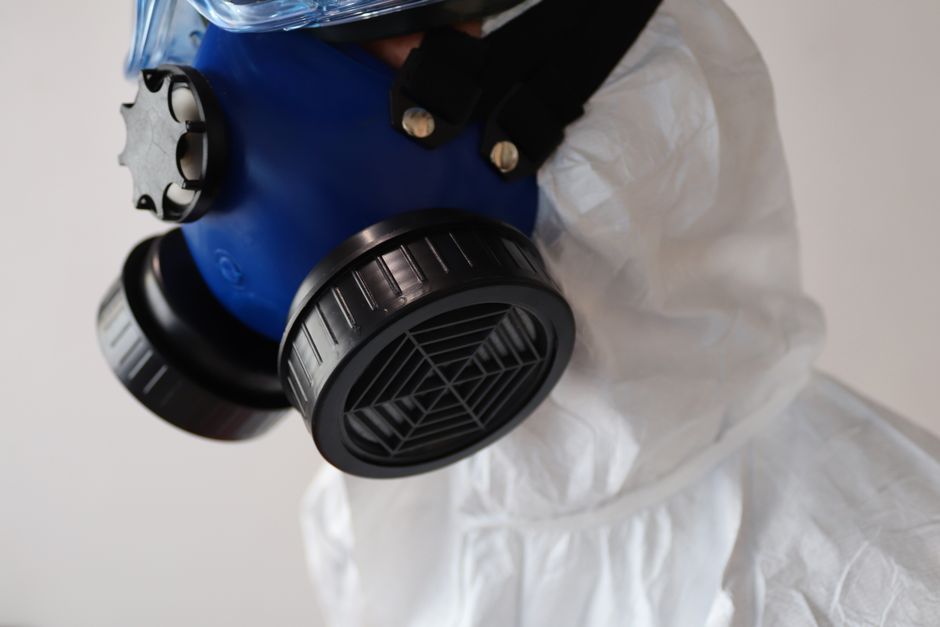
Silicosis is a permanent lung disease caused by breathing in crystalline silica dust, and it cannot be cured once it develops. The most effective way to prevent it is to stop the dust from getting into the air in the first place, using engineering controls like water suppression, local exhaust ventilation, and enclosed work areas. When dust cannot be fully controlled at the source, properly fitted respirators and other protective equipment form a second line of defense.
What Is Silicosis and Why Does Dust Control Matter?
Silicosis is a lung disease caused by inhaling fine particles of crystalline silica. This mineral is found in stone, sand, concrete, mortar, and many other materials common in construction, mining, and manufacturing.
When workers cut, grind, drill, or blast these materials, they release tiny silica particles into the air. Particles small enough to reach the deepest parts of the lungs — the alveoli — are the most dangerous. The body’s immune system responds to these particles by trying to destroy them, but silica cannot be broken down. This leads to chronic inflammation and scarring that stiffens the lungs over time.
The damage is permanent. There is no cure. That is why prevention is everything. Once scar tissue forms, it does not go away. The disease can progress even after exposure stops.
Silicosis can take years or decades to develop after exposure begins. In some cases, it develops within a few years when exposure is very intense. This faster form is sometimes called acute or accelerated silicosis and can be more severe.
What Dust Controls Actually Work?
Engineering controls are the most effective way to prevent silicosis. These are physical changes to the work environment that reduce or eliminate dust at the source. They do not depend on worker behavior, which makes them more reliable than personal protective equipment alone.
Water suppression is one of the simplest and most widely used methods. Wetting materials before cutting or grinding keeps dust particles from becoming airborne. Water-integrated tools, like wet saws and drills, are standard in many industries for this reason.
Local exhaust ventilation (LEV) captures dust at the point where it is generated. A hood or capture device is placed close to the cutting or grinding area, and a fan pulls dust away before it can spread. LEV systems are common in manufacturing and some construction settings.
Enclosure and isolation means keeping the dust-generating process inside a sealed area or using remote-controlled equipment so workers are not directly exposed. This is common in mining and tunneling operations.
Substitution means replacing silica-containing materials with safer alternatives when possible. This is not always feasible, but it is the most effective control when it can be done.
These controls are most effective when used together. A single measure rarely reduces exposure enough on its own.
How Do Respirators Fit Into a Silicosis Prevention Plan?
Respirators are the last line of defense. They should be used when engineering controls cannot reduce dust levels enough, or during tasks where dust cannot be fully controlled at the source. They are not a substitute for proper ventilation and water suppression.
Not all respirators are equal. For silica dust, a simple dust mask is not enough. Workers need a respirator with a filter rated for fine particles, such as an N95 or higher. In some cases, half-face or full-face respirators with P100 filters are required.
Fit matters as much as the filter. A respirator that does not seal properly against the face lets dust in around the edges. Workers must be fit-tested to ensure the respirator forms a proper seal. Facial hair, certain facial shapes, and even scars can prevent a good seal.
Respirators must be worn correctly for the entire time a worker is exposed. Taking a respirator off for even a few minutes in a dusty area can significantly reduce its protection.
Respirators also add burden. They make breathing harder, can be uncomfortable in heat, and may interfere with communication. That is why they should never be the primary control when engineering solutions are possible.





What Role Does Training and Work Practice Play?
Training helps workers understand why dust control matters and how to use controls correctly. But training alone does not prevent silicosis. It supports other measures.
Work practices that reduce dust include:
- Using water or dust suppressants when cutting or grinding
- Keeping work areas clean with wet sweeping or HEPA vacuums instead of dry sweeping or compressed air
- Positioning equipment and workers to avoid standing in dust plumes
- Reporting broken or poorly functioning dust controls
- Wearing respirators correctly and consistently
These practices matter, but they depend on human behavior. That is why they are considered less reliable than engineering controls. Workers may forget, take shortcuts, or work in ways that seem faster but generate more dust.
Good training also includes explaining the health effects of silica exposure. Workers who understand the risk are more likely to follow safe practices.
Are There Regulations or Guidelines for Silica Exposure?
Yes. In the United States, the Occupational Safety and Health Administration (OSHA) has set a permissible exposure limit (PEL) for respirable crystalline silica. The current PEL for general industry and maritime is 50 micrograms per cubic meter of air, averaged over an 8-hour workday. For construction, the PEL is 50 micrograms per cubic meter over an 8-hour shift.
OSHA also requires employers to take specific steps when workers may be exposed above certain levels. These steps include:
- Assessing exposure levels
- Using engineering controls where feasible
- Providing respirators when controls are not enough
- Offering medical exams to workers exposed above the action level
- Training workers on silica hazards and controls
The action level is 25 micrograms per cubic meter over an 8-hour workday. If exposure is at or above this level for 30 or more days per year, employers must offer medical exams.
Other countries have similar limits. The exact numbers vary, but the principle is the same: keep exposure as low as possible.
What About Medical Monitoring and Early Detection?
Medical monitoring can detect silicosis early, but it does not prevent the disease. It is a way to catch problems before they become severe.
OSHA requires employers to offer medical exams to workers exposed at or above the action level for 30 or more days per year. These exams typically include:
- A medical and work history
- A physical exam focusing on the lungs and heart
- A chest X-ray read by a specialist
- A breathing test (spirometry)
- A test for tuberculosis (TB) because silica exposure increases the risk of TB infection
Early silicosis may not cause symptoms. That is why monitoring matters. By the time symptoms like shortness of breath or a persistent cough appear, lung damage is often already significant.
There is no treatment that reverses silicosis. Management focuses on stopping further exposure, treating complications, and supporting lung function. This makes prevention the only effective strategy.
What Are the Most Common Mistakes in Silica Dust Control?
The most common mistake is relying on respirators alone. Respirators are important, but they are less effective than engineering controls. They also depend on correct use every time.
Another mistake is using dry sweeping or compressed air to clean up dust. These methods put dust back into the air. Wet sweeping or HEPA vacuums are safer.
Ignoring the risk is another problem. Silicosis can take years to develop, so workers may not see immediate harm. This can lead to complacency. But the damage is happening with every exposure.
Finally, some employers and workers assume that if dust is visible, it is the only problem. In reality, the most dangerous particles are often too small to see. If you can see dust in the air, you are likely breathing even more particles you cannot see.
Frequently Asked Questions
Can silicosis be cured?
No, silicosis cannot be cured. Once lung scarring develops, it is permanent, so prevention is the only effective strategy.
Is a dust mask enough to prevent silicosis?
No, a simple dust mask is not enough. Workers need a properly fitted respirator with a filter rated for fine particles, such as N95 or P100.
How long does it take to develop silicosis?
Silicosis can take years or decades to develop after exposure begins. In some cases, it can develop within a few years when exposure is very intense.
What is the OSHA limit for silica exposure?
The OSHA permissible exposure limit for respirable crystalline silica is 50 micrograms per cubic meter of air, averaged over an 8-hour workday. The action level is 25 micrograms per cubic meter.
