
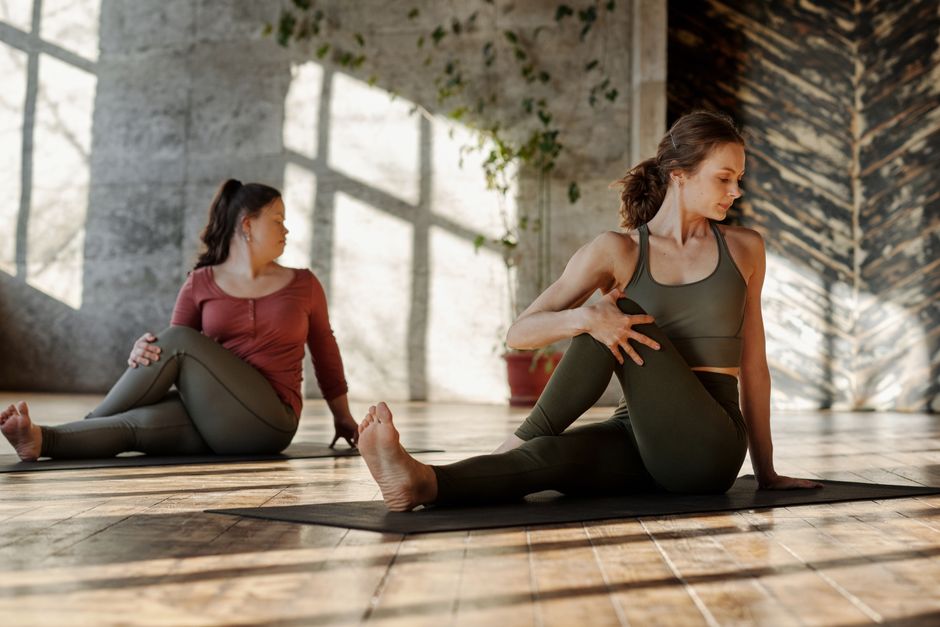
Piriformis syndrome happens when the piriformis muscle, a small muscle deep in your buttocks, irritates the sciatic nerve that runs right next to it. You cannot stretch or exercise your way to zero risk, but you can lower your odds by keeping that muscle flexible, strong, and not overworked. The habits that matter most are moving regularly, avoiding long stretches of sitting, and strengthening your hips and glutes so the piriformis does not have to compensate for weak neighbors.
What Actually Causes Piriformis Syndrome?
The piriformis is a narrow muscle that runs from your lower spine to the top of your thigh bone. The sciatic nerve passes underneath it, and in some people the nerve runs directly through the muscle. When the piriformis tightens or spasms, it can press on that nerve and cause pain, tingling, or numbness that travels down the back of the leg.
Several things can set this off. Long periods of sitting are a common trigger because they keep the muscle shortened and under pressure. Running, cycling, and other activities that repeatedly load the hips can also contribute, especially when training ramps up quickly. Direct injury to the buttocks, like a fall, is another known cause.
There is also a structural explanation that gets less attention than it deserves. In a portion of the population, the sciatic nerve passes through the piriformis muscle rather than beneath it. This is an anatomical variation, not a disease, and it may make someone more prone to symptoms because the nerve has less room to move. This variation is present from birth and cannot be changed with stretching or exercise.
It is worth saying clearly that piriformis syndrome is a diagnosis of exclusion. That means clinicians often rule out other causes of sciatic-like pain first, including disc problems in the lower back, before settling on the piriformis as the source. This matters because the same symptoms can come from different places, and the right prevention approach depends on the actual cause.
How To Prevent Piriformis Syndrome Stretches And Habits That Help
Prevention rests on two pillars: keeping the piriformis and surrounding hip muscles flexible, and keeping them strong enough to handle the demands you place on them. Stretching alone is not enough. Neither is strengthening alone. The combination is what makes a difference.
Stretches that target the piriformis and the broader hip area are the most commonly recommended. These include the figure-four stretch, the seated pigeon stretch, and lying knee-to-chest variations. The goal is not to force a deep stretch but to move the muscle gently through its range. Holding a stretch to the point of sharp pain defeats the purpose and can aggravate the nerve.
Strength work matters just as much, and this is the part many people skip. Weak glutes, especially the gluteus medius on the side of the hip, can cause the piriformis to work harder than it should. When the piriformis overworks, it tightens. Strengthening the glutes takes load off the piriformis. Exercises like clamshells, side-lying leg raises, and hip bridges are commonly used for this purpose.
Frequency matters more than intensity. A few minutes of targeted movement most days tends to work better than an aggressive session once a week. The muscle responds to consistent, moderate input, not occasional strain.
Stretches and habits worth building into your routine
- Figure-four stretch: lie on your back, cross one ankle over the opposite knee, and gently pull the legs toward your chest.
- Seated pigeon stretch: sit in a chair, place one ankle over the opposite knee, and lean forward slightly until you feel a stretch in the buttock.
- Clamshells: lie on your side with knees bent, keep your feet together, and lift the top knee without rolling your hips back.
- Hip bridges: lie on your back with knees bent, press through your heels, and lift your hips while squeezing your glutes.
- Standing hip abduction: hold a chair for balance and lift one leg out to the side, keeping it straight.
These are general movement patterns, not a prescription. If you have existing pain, a physical therapist can tailor them to your body. No single set of exercises works for everyone, and the evidence comparing one specific stretch protocol to another is limited.
Why Does Sitting Make Piriformis Syndrome Worse?
Sitting keeps the piriformis in a shortened position for extended periods. Over time, a muscle held short can become tight and less tolerant of movement. Add the direct pressure of a chair or wallet against the buttock, and you have two mechanisms working against you at once.
The type of sitting matters. Hard surfaces and thick wallets in back pockets press directly on the piriformis and the sciatic nerve. Cross-legged sitting twists the hips and can put uneven load on one side. Long drives combine prolonged sitting with vibration and limited ability to shift position.
The practical fix is not to avoid sitting entirely, which is unrealistic for most people. It is to break it up. Standing and walking briefly every 30 to 45 minutes gives the muscle a chance to lengthen and restores blood flow. Even a minute or two helps. A standing desk used part of the day can reduce total sitting time, though it introduces its own demands on the lower back and legs if used without breaks.
Removing a wallet from your back pocket before sitting is a small change with a clear rationale. It removes a direct pressure source on the muscle and nerve. This is common-sense advice rather than something tested in large trials, but the mechanism is straightforward.





Which Activities Raise Your Risk?
Activities that repeatedly load the hips and buttocks can contribute to piriformis irritation, especially when training volume increases faster than the muscles can adapt. Running, particularly on hills or uneven surfaces, is often mentioned. Cycling with a poorly fitted bike can also place sustained pressure on the area.
Sports that involve quick direction changes, like tennis, soccer, and basketball, load the hip rotators repeatedly. This does not mean these activities are harmful. It means the muscles involved need adequate preparation and recovery.
Sudden increases in activity are a common thread. Going from a sedentary routine to intense daily workouts, or adding mileage quickly before a race, gives the muscles less time to adjust. Gradual progression is the principle that reduces this risk, though it is a general training guideline rather than something proven specifically for piriformis syndrome.
Prolonged sitting combined with inactivity is another pattern. People who sit all day and then sit more in the evening give the piriformis little chance to move through its full range. The muscle stays short, and the imbalance builds.
What Habits Support Long-Term Prevention?
Consistency beats intensity. A short daily routine of stretching and strengthening does more than an occasional hard session. The muscle adapts to regular, moderate demands.
Warming up before activity prepares the hips and glutes for load. A few minutes of dynamic movement, like leg swings and hip circles, raises muscle temperature and improves readiness. This is standard practice in sports medicine, though its specific effect on piriformis syndrome has not been isolated in trials.
Paying attention to early warning signs matters. A mild ache in the buttock after a long sit or a new workout is a signal to adjust, not push through. Ignoring it can let a minor irritation build into something more persistent.
Overall activity level plays a role too. People who move regularly throughout the day, not just in one workout, tend to keep their hip muscles more balanced. Walking, taking stairs, and standing during phone calls all count.
Sleep position can also matter for some people. Sleeping on the stomach with one leg pulled up can twist the lower back and hips. Side sleeping with a pillow between the knees keeps the hips more neutral. This is commonly suggested, though direct evidence linking sleep position to piriformis syndrome is limited.
When Should You See a Professional?
If pain travels down the leg, causes numbness or weakness, or does not improve with rest and gentle movement, it is time to see a clinician. These symptoms can have causes other than piriformis syndrome, and getting the right diagnosis matters.
Red flags that warrant prompt attention include loss of bladder or bowel control, severe weakness in the leg, or pain following a significant injury. These are not typical of piriformis syndrome and need urgent evaluation.
A physical therapist or physician can assess hip strength, flexibility, and nerve involvement. Treatment often combines stretching, strengthening, manual therapy, and activity modification. Some clinicians use injections of local anesthetic or steroid into the piriformis for diagnosis or symptom relief, but this is a clinical decision and not a prevention strategy. The evidence for injections is mixed, and they are generally reserved for cases that do not respond to conservative care.
Prevention is not about eliminating all risk. It is about giving the muscle and nerve the best conditions to tolerate the demands of daily life. Move often, strengthen the hips, stretch gently, and pay attention when your body signals a problem.
Frequently Asked Questions
Can piriformis syndrome be prevented completely?
No single approach guarantees prevention, but regular movement, hip strengthening, and avoiding prolonged sitting can lower your risk. The evidence supports these habits as reasonable measures rather than proven guarantees.
How often should I stretch to prevent piriformis syndrome?
Gentle stretching most days tends to work better than occasional intense sessions. There is no established guideline for an exact frequency, so aim for consistency without pushing into pain.
Is sitting really bad for piriformis syndrome?
Prolonged sitting keeps the piriformis shortened and can press directly on the sciatic nerve, which can aggravate symptoms. Breaking up sitting every 30 to 45 minutes with brief movement helps reduce that load.
Do I need to strengthen my glutes to prevent piriformis syndrome?
Weak glutes can cause the piriformis to overwork, so strengthening the surrounding hip muscles is commonly recommended. Exercises like clamshells and hip bridges target these muscles, though individual needs vary.
