
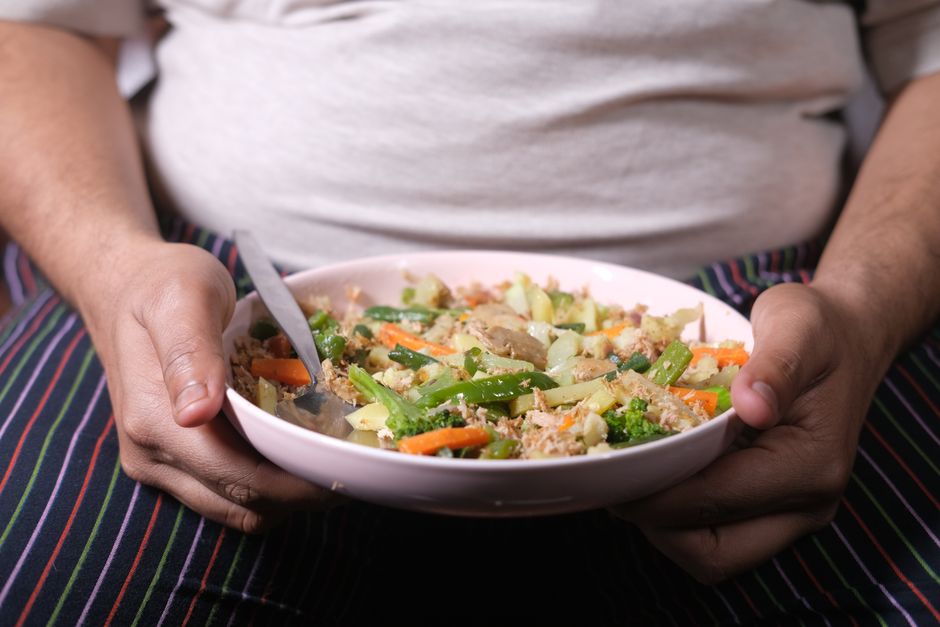
Vegetables are the most reliable tool in your kitchen for weight loss. They are low in calories and high in water and fiber, which makes them naturally filling. But how you prepare them changes everything. Frying a vegetable in oil can double its calorie count, while steaming or roasting it with minimal fat keeps it light. The goal is to make vegetables so satisfying that you eat more of them and feel full longer, without adding excessive calories.
Why Vegetables Keep You Full
Vegetables help with weight loss because of their physical structure. Most vegetables are mostly water and fiber. Fiber is a type of carbohydrate that your body cannot fully digest. It adds bulk to your meal, slows down digestion, and helps stabilize blood sugar after you eat.
This combination matters. When you eat a meal with enough fiber and water, your stomach stretches slightly, which signals fullness to your brain. Slower digestion means that fullness lasts longer. Studies consistently show that people who eat more vegetables at meals consume fewer total calories throughout the day, not because they try harder, but because the vegetables displace other, more calorie-dense foods.
Protein and fat are also important for fullness, but vegetables provide the volume. You can eat a large plate of roasted broccoli for about 100 calories. The same calories in cheese would be a tiny, unsatisfying cube. Volume matters for satiety, and vegetables are the best way to add volume to any plate.
The Best Cooking Methods For Weight Loss
Not all cooking methods are equal. Some add significant calories, while others preserve the structure of the vegetable and keep it filling.
Steaming is one of the best methods. It uses no added fat and keeps the vegetable’s water content high. Steamed vegetables retain their crunch and volume, which helps with fullness. The downside is that some people find steamed vegetables bland, which can lead to adding butter or creamy sauces.
Roasting is excellent for flavor. When you roast vegetables at high heat, their natural sugars caramelize, creating a sweet, savory taste. Use a small amount of oil — about one tablespoon per full sheet pan — and toss well so every piece is coated thinly. Roasting removes some water, which concentrates flavor but also reduces volume slightly. This is usually a fair trade because the flavor is so much better that you will not need additional toppings.
Sautéing works well but requires attention. A quick sauté in a small amount of oil or broth keeps vegetables crisp and flavorful. The key is to measure your oil. A splash can easily become two or three tablespoons, which adds about 120 to 150 calories per tablespoon. If you use broth or water instead of oil, you eliminate those calories entirely.
Raw vegetables are the most filling by volume because they retain all their water. However, some people find raw vegetables harder to digest and less satisfying as a meal. Raw vegetables work best as snacks or as a base for salads with a lean protein source.
Boiling is the least recommended method for weight loss. It leaches water-soluble vitamins into the cooking water, and the result is often mushy and bland. If you do boil, use the cooking water in a soup or sauce to retain some nutrients.
How To Add Flavor Without Adding Calories
Flavor is the difference between a diet that lasts and one that fails. Vegetables prepared without flavor will not keep you full because you will not want to eat them. The solution is to use calorie-free flavor boosters aggressively.
- Salt and pepper are the foundation. Salt brings out the natural sweetness in vegetables.
- Garlic and onion — fresh, powdered, or granulated — add depth to any vegetable dish.
- Acid — lemon juice, lime juice, or vinegar — brightens flavors and cuts through the heaviness of roasted vegetables.
- Spices like smoked paprika, cumin, chili powder, and turmeric add warmth and complexity without calories.
- Fresh herbs like parsley, cilantro, and basil add freshness at the end of cooking.
- Nutritional yeast adds a savory, cheese-like flavor with minimal calories and some protein.
One of the most effective techniques is to toss hot roasted vegetables with a splash of vinegar and fresh herbs immediately after cooking. The heat releases the herbs’ oils, and the acid brightens the entire dish. This combination makes vegetables taste rich and complete without any added fat.
If you need a sauce, make it from yogurt or a small amount of tahini rather than cream or butter. A two-tablespoon serving of plain Greek yogurt with lemon and garlic adds protein and creaminess for about 20 calories.


Pairing Vegetables With Protein And Healthy Fats
Vegetables alone are not enough for a fully satisfying meal. Protein is the most filling macronutrient, and a small amount of fat helps your body absorb fat-soluble vitamins like A, D, E, and K, which are abundant in many vegetables.
The most effective weight-loss plate follows a simple pattern: half the plate filled with vegetables, a quarter with lean protein, and a quarter with whole grains or starchy vegetables. This structure guarantees volume from the vegetables, satiety from the protein, and sustained energy from the complex carbohydrates.
Good protein pairings include grilled chicken, fish, tofu, tempeh, beans, or lentils. These can be cooked alongside your vegetables on the same sheet pan, which makes meal prep easier and reduces cleanup.
Healthy fats like avocado, olive oil, nuts, and seeds should be used in small amounts. A quarter of an avocado adds creaminess and about 60 calories. A tablespoon of olive oil adds 120 calories. These are not bad calories, but they add up quickly if you are not measuring them.
Meal Prep Strategies That Actually Work
The best vegetable preparation method is the one you will actually use on a busy weeknight. Meal prep removes the barrier of decision-making and effort when you are tired and hungry.
Start by washing and cutting vegetables immediately after you buy them. Store them in clear containers so you can see them in the fridge. Visible vegetables get eaten. Hidden ones rot.
Roast a large batch of mixed vegetables at the beginning of the week. They keep for three to four days in the refrigerator and can be eaten cold in salads, reheated as a side dish, or added to grain bowls and wraps. Roasted vegetables also freeze well, so you can make a double batch and save half.
Blanching is another useful technique. Drop cut vegetables into boiling water for two to three minutes, then transfer them to ice water. This preserves color, crunch, and nutrients. Blanched vegetables keep in the fridge for about a week and are ready to eat cold or quickly sautéed.
Pre-portion your oil. Fill a small squeeze bottle with olive oil and use it instead of pouring from the large bottle. This simple change can reduce your oil usage by half without any conscious effort.
Which Vegetables Are Most Filling
All vegetables are good choices, but some are more filling per calorie than others. Non-starchy vegetables are the most volume-dense options.
Leafy greens like spinach, kale, and Swiss chard are extremely low in calories and high in water. They shrink dramatically when cooked, so you can eat a huge volume for very few calories. Broccoli, cauliflower, cabbage, and Brussels sprouts are also excellent — they are high in fiber and have a satisfying crunch, especially when roasted or sautéed.
Zucchini, bell peppers, mushrooms, and asparagus all have high water content and pair well with almost any seasoning. Cucumbers and celery are great raw snacks but are not substantial enough to build a meal around.
Starchy vegetables like potatoes, sweet potatoes, corn, and peas are more calorie-dense but still nutritious. They are not the enemy. The key is portion control. A medium sweet potato is about 100 calories and very filling because of its fiber and water content. The problem comes when starchy vegetables are fried or served with butter and cheese.
Frozen vegetables are just as nutritious as fresh ones. They are picked at peak ripeness and flash-frozen, which locks in nutrients. They are often cheaper and always available, which makes them a practical choice for consistent vegetable consumption.
Common Mistakes That Add Hidden Calories
The most common mistake is assuming that a vegetable dish is automatically low in calories. Restaurant vegetable sides are often cooked in large amounts of butter or oil. A side of sautéed spinach at a restaurant can contain more calories than the main dish.
At home, the same problem happens with oil. People pour oil into a pan without measuring, and it is easy to add 200 or 300 calories before the vegetables even go in. Always measure your oil. Use a teaspoon or a spray bottle.
Cheese is another hidden calorie source. A sprinkle of Parmesan adds flavor, but a generous handful adds several hundred calories. If you use cheese, measure it and treat it as a flavoring, not a main ingredient.
Salad dressings are a major issue. A typical restaurant salad with creamy dressing can have more calories than a burger. Make your own dressing with olive oil, vinegar, and mustard, and use about one tablespoon per salad.
Finally, be careful with vegetable chips. Baked kale chips and zucchini chips are marketed as healthy, but they are still concentrated calories. A whole bag of vegetable chips can contain 400 or more calories, while the same weight of fresh vegetables contains less than 100.
How To Prepare Vegetables For Weight Loss And Stay Full
The most effective method is roasting with minimal oil and aggressive seasoning. Cut vegetables into uniform pieces, toss with one tablespoon of oil per full sheet pan, season generously with salt, pepper, and spices, and roast at high heat until the edges are browned and caramelized. This method produces vegetables that taste good enough to crave, which means you will eat them consistently. Serve them alongside a lean protein and a small portion of whole grains, and you have a meal that is satisfying, nutrient-dense, and calorie-controlled.
Do not skip the seasoning. The difference between a diet that works and one that fails is often whether the food tastes good. Vegetables prepared with care and flavor are not a sacrifice. They are the foundation of a sustainable eating pattern.
Frequently Asked Questions
Are frozen vegetables as healthy as fresh vegetables for weight loss?
Yes, frozen vegetables are nutritionally comparable to fresh ones because they are picked at peak ripeness and flash-frozen. They are a convenient, affordable option that makes it easier to eat more vegetables consistently.
Is it better to eat vegetables raw or cooked for weight loss?
Both raw and cooked vegetables support weight loss, but cooked vegetables are often easier to eat in larger amounts. Cooking softens the fiber and makes some nutrients more available, while raw vegetables retain the most water and volume.
How much oil should I use when cooking vegetables?
Use about one tablespoon of oil per full sheet pan when roasting, and about one teaspoon when sautéing in a skillet. Measuring your oil is essential because it is the most common source of hidden calories in vegetable preparation.
What are the best vegetables to eat every day for weight loss?
Broccoli, cauliflower, leafy greens, zucchini, bell peppers, and cabbage are excellent daily choices because they are low in calories and high in fiber and water. Rotating your choices ensures you get a variety of nutrients.
