
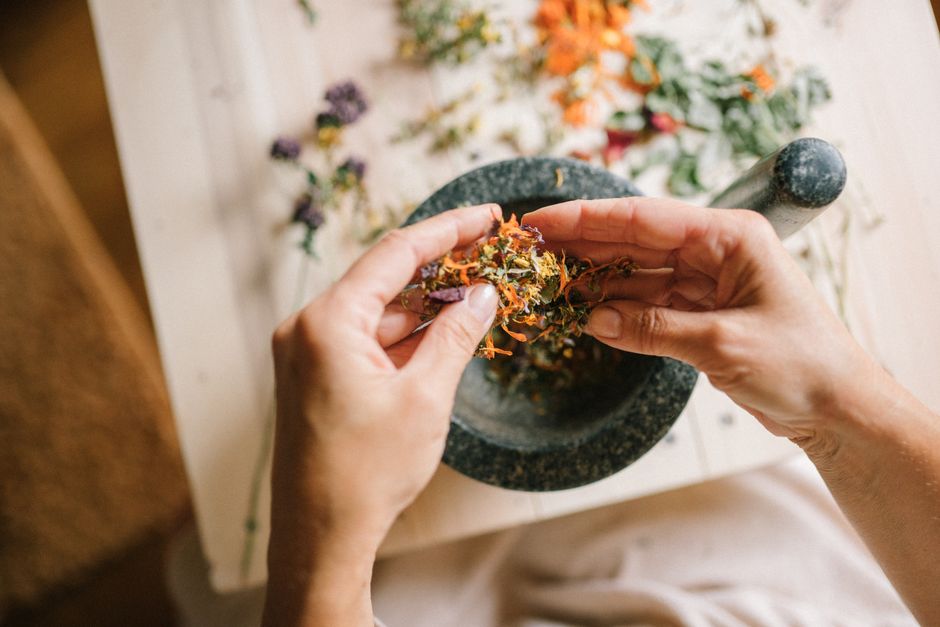
Devil’s claw is a plant native to southern Africa, and its root is used in three main home preparations: tea, tincture, and salve. Each one is made differently and used for different purposes. The tea is a simple water extraction, the tincture is an alcohol extraction that concentrates the root’s compounds, and the salve combines the root with oil and wax for topical use. None of these preparations are a proven cure for any condition, and each carries its own safety considerations.
What Is Devil’s Claw and What Does It Contain?
Devil’s claw is the common name for Harpagophytum procumbens, a plant that grows in the Kalahari region of southern Africa. The name comes from the small hooks that cover its fruit. The part used in preparations is the secondary storage root, not the large primary root.
The root contains a group of compounds called iridoid glycosides. The most studied of these is harpagoside. Other iridoids present include harpagide and procumbide. These compounds are thought to be the source of the plant’s biological activity, though the full picture is not settled.
Devil’s claw has a long history of traditional use in southern Africa for fever, pain, and digestive complaints. That traditional use is real and documented. What is less clear is how well it translates into measurable clinical benefit in modern trials.
How Do You Make Devil’s Claw Tea?
Devil’s claw tea is made by steeping dried, chopped root in hot water. The process is straightforward.
- Use roughly 1 to 2 grams of dried root per cup of water. This range reflects common traditional use and general herbal references, not a formal clinical dosing guideline.
- Bring water to a boil, add the root, and simmer gently for about 10 to 15 minutes.
- Strain the liquid and drink it warm.
Simmering rather than just steeping matters. Harpagoside is not highly water-soluble, so a longer simmer extracts more of it than a quick pour-over would. Even so, water extracts less of these compounds than alcohol does. That is a real limitation of tea compared with tincture.
A note on taste: devil’s claw tea is distinctly bitter. Many people add honey or another sweetener. That does not affect the root’s compounds, though it does add sugar.
No clinical guidelines establish a standard dose of devil’s claw tea for any condition. The range above is a general preparation reference, not a treatment recommendation.
How Do You Make Devil’s Claw Tincture?
A tincture uses alcohol to pull compounds from the root. Because harpagoside dissolves better in alcohol than in water, a tincture generally yields a more concentrated extract.
The basic method:
- Combine dried, chopped devil’s claw root with a high-proof alcohol, typically around 40 to 50 percent alcohol by volume, in a clean glass jar.
- Use roughly 1 part dried root to 5 parts alcohol by weight. This is a common tincture ratio, not a clinical standard.
- Seal the jar and store it in a cool, dark place for about 4 to 6 weeks, shaking it every few days.
- Strain through cheesecloth or a fine mesh strainer, then press the remaining liquid from the root.
- Bottle the liquid in a dark glass dropper bottle.
Alcohol-based tinctures keep for a long time, often several years, if stored away from heat and light. Water-based preparations spoil much faster.
Here is where caution matters. No established clinical guideline sets a standard tincture dose for devil’s claw. Anyone considering taking it internally should talk with a clinician first, particularly because of the medication interactions described below. This is not a preparation to use casually alongside prescription drugs.





How Do You Make Devil’s Claw Salve?
A salve is a topical preparation. It combines an infused oil with beeswax to create a spreadable balm. This is the form least likely to cause the systemic effects that internal use can, because far less is absorbed through the skin.
To make the infused oil:
- Cover dried devil’s claw root with a carrier oil such as olive or sunflower oil in a glass jar.
- Warm the jar gently in a double boiler or a low oven, around 100 to 120 degrees Fahrenheit, for 2 to 4 hours. Do not let it get hot enough to cook or smoke.
- Strain the oil through cheesecloth, squeezing the root to recover as much oil as possible.
To turn the oil into a salve, melt roughly 1 part beeswax to 4 to 5 parts infused oil over low heat, stir until combined, and pour into a clean tin or jar. It sets as it cools. Adjust the wax ratio if you want a firmer or softer balm.
The salve is used on the skin, often on joints or muscles. As with the other preparations, no clinical trials have established that a devil’s claw salve improves any specific condition. Topical use is generally considered lower risk than internal use, but skin reactions are possible.
What Does the Evidence Actually Show?
Devil’s claw has been studied most often for osteoarthritis and low back pain. The results are mixed.
Some studies suggest devil’s claw may reduce pain in people with osteoarthritis, particularly of the knee and hip. Other trials have found little or no difference compared with placebo. The evidence is not strong enough to call it an established treatment, and study quality has varied.
For low back pain, some research indicates possible benefit, but the findings are inconsistent. A common problem across this research is that different studies use different extracts, doses, and preparations, which makes them hard to compare.
One clarification worth making: a product labeled “devil’s claw” is not necessarily standardized to any particular amount of harpagoside. Two bottles can differ substantially in what they actually contain. This is a real issue with herbal products generally, not just this one.
What the evidence does not show is that devil’s claw cures arthritis, reverses joint damage, or replaces proven treatments. It has not been shown to do any of those things.
What Are the Risks and Interactions?
Devil’s claw is not risk-free, and the risks differ between internal and topical use.
For internal use, the main concern is interaction with medications. Devil’s claw may affect how the body handles certain drugs, and it has been associated with effects on stomach acid and on heart rhythm in some reports. People taking the following should be especially cautious:
- Blood thinners and antiplatelet drugs, because of possible effects on bleeding
- Medications for heart rhythm or blood pressure
- Diabetes medications, because of possible effects on blood sugar
- Proton pump inhibitors and other acid-reducing drugs
Devil’s claw can also cause digestive upset, including stomach pain, nausea, and diarrhea, especially at higher amounts.
People with stomach ulcers, gallstones, or heart conditions should avoid internal use unless a clinician says otherwise. It is not recommended during pregnancy or breastfeeding, because there is no reliable safety data for those groups. No clinical guidelines currently establish a safe dose for pregnant or breastfeeding women.
Topical salves carry a lower systemic risk, but skin irritation and allergic reactions can occur. Test a small area of skin first.
Devil’s Claw Tea vs Tincture vs Salve
The three preparations differ mainly in how they are made, how they are used, and how concentrated they are.
| Preparation | Method | Typical Use | Key Consideration |
|---|---|---|---|
| Tea | Simmer root in water | Drunk | Lower extraction of harpagoside; bitter taste |
| Tincture | Soak root in alcohol | Taken by dropper | More concentrated; higher interaction concern |
| Salve | Infuse root in oil, add beeswax | Applied to skin | Lower systemic absorption; test for skin reactions |
If your goal is topical use on a joint or muscle, the salve is the form designed for that. If your goal is internal use, both tea and tincture are options, but the tincture is more concentrated and therefore the interaction concerns are more relevant. In every case, the evidence for benefit is limited.
Frequently Asked Questions
How long should you simmer devil’s claw root for tea?
Simmer it gently for about 10 to 15 minutes using roughly 1 to 2 grams of dried root per cup of water. Simmering extracts more of the root’s compounds than a quick steep.
Is devil’s claw safe to take with blood thinners?
It may interact with blood thinners and antiplatelet drugs, so it should not be combined with them without a clinician’s guidance. Devil’s claw has been associated with possible effects on bleeding.
Can you use devil’s claw salve every day?
There is no established guideline for how often to apply a devil’s claw salve. Topical use carries lower systemic risk than internal use, but skin irritation is possible, so test a small area first.
Does devil’s claw actually work for arthritis pain?
The evidence is mixed, with some studies suggesting possible pain reduction and others finding little difference from placebo. It has not been shown to cure arthritis or reverse joint damage.
