
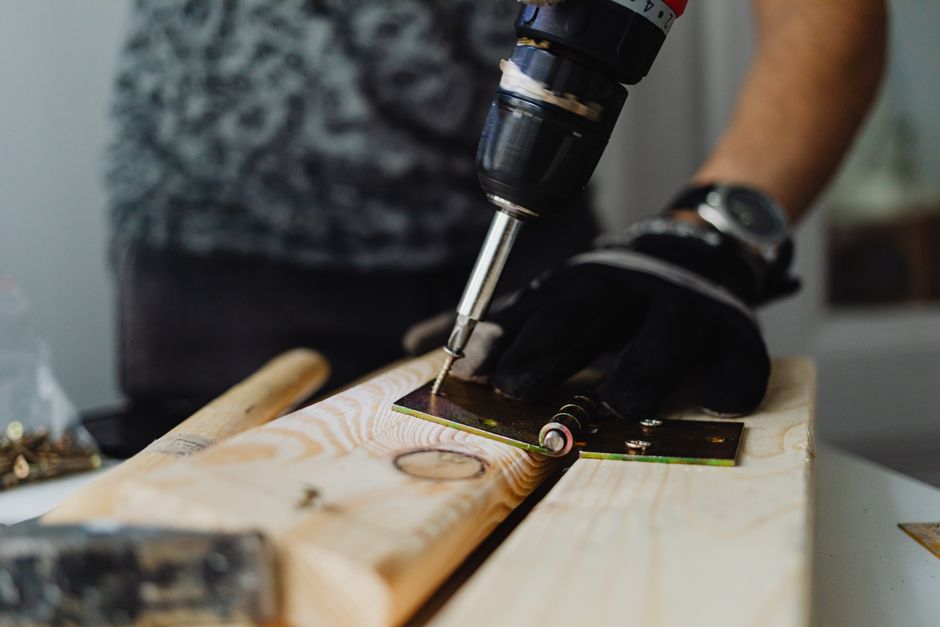
Pre-drilling a hole before driving a screw is the most reliable way to prevent wood from splitting. The trick is to drill a hole that is slightly smaller than the screw’s shaft, so the threads still bite into the wood while the body of the screw has room to pass through. If the hole is too small, the wood fibers are forced apart and can crack; if the hole is too large, the screw loses its grip and the joint becomes weak.
Why Does Wood Split When You Drive Screws?
Wood is made of long, tubular cells that run along the grain. When you drive a screw, the threads push these fibers sideways to make room for the metal. In dense or brittle wood, the fibers cannot stretch enough and they tear apart, creating a split.
The risk is highest near the end of a board, where there is less material to absorb the pressure. Driving a screw close to the edge of a piece of wood creates the same problem. The closer the screw is to the edge or end, the more likely the wood will crack.
Hardwoods like oak and maple are more prone to splitting than softwoods like pine. Dry wood is also more brittle than freshly cut wood. Knots and irregular grain patterns can redirect the pressure in unpredictable ways, making splits more likely even in the middle of a board.
How To Pre Drill Holes For Screws Without Splitting Wood?
Choose a drill bit that matches the diameter of the screw’s shaft, not the threads. The shaft is the smooth part of the screw between the head and the threads. If you hold the drill bit next to the screw, the bit should cover the shaft but leave the threads visible on both sides.
For most general-purpose screws, a bit that is about 75 to 80 percent of the screw’s overall diameter works well. This is a practical rule of thumb, not an exact formula. The correct size depends on the wood type and the screw design.
Drill straight into the wood at the exact spot where the screw will go. Keep the drill perpendicular to the surface. A slight wobble can widen the hole and reduce the screw’s holding power.
For hardwoods, drill a slightly larger hole. For softwoods, a smaller hole is fine. If the wood still shows signs of cracking, step up one drill bit size and try again on a scrap piece first.
How Deep Should the Pilot Hole Be?
The pilot hole should be at least as deep as the screw will go. If the screw is 40 millimeters long, drill the hole 40 millimeters deep. This prevents the screw from pushing against solid wood at the bottom of the hole, which can create enough pressure to split the board.
Mark the drill bit with a piece of tape at the depth you need. This gives you a visual guide so you do not drill too deep accidentally. For most projects, drilling a few millimeters deeper than the screw length is harmless.
If you are driving a screw through one board into another, the pilot hole only needs to go through the top board and partway into the bottom board. The depth should match the screw length minus the thickness of the top board.





Do You Need a Countersink Bit?
A countersink bit creates a conical recess at the top of the pilot hole so the screw head sits flush with or below the wood surface. This is useful for finished projects where you do not want screw heads sticking out.
Countersinking also prevents the wood around the screw head from splitting. When the screw head presses down, it can push the surface fibers outward. The recess gives those fibers room to move without cracking.
Combination drill and countersink bits are available at most hardware stores. They drill the pilot hole and create the recess in one step. These bits come in standard sizes that match common screw gauges.
What About Self-Drilling and Self-Tapping Screws?
Self-drilling screws have a tip shaped like a drill bit, so they can create their own hole as they are driven. These are designed for metal-to-metal applications, not for wood. Using them in wood often causes splitting because the tip is not shaped to push wood fibers aside cleanly.
Self-tapping screws have sharp threads that cut into the wood as they turn. They still benefit from a pilot hole in hardwoods or near edges. The term “self-tapping” refers to the threads, not the drilling action.
There is no screw that completely eliminates the need for a pilot hole in all situations. Even screws marketed for “no pre-drilling” work best in softwoods and fail in dense hardwoods or near edges.
What Else Can You Do to Prevent Splitting?
Blunt the tip of the screw slightly with a file or grinder. A flat-tipped screw pushes wood fibers aside rather than cutting them, which can reduce splitting. This is an old carpenter’s trick that still works today.
Lubricate the screw with soap, wax, or a commercial thread lubricant. This reduces friction as the screw enters the wood, lowering the pressure on the surrounding fibers. Do not use oil-based lubricants on wood that will be painted or finished, as they can bleed through.
Clamp the wood before drilling and driving. A clamp holds the fibers together and prevents them from separating. This is especially helpful when working near the end of a board.
Drive the screw slowly. High speed generates heat and increases friction, which raises the pressure inside the wood. A slower speed gives the fibers time to move rather than crack.
When Should You Use a Step Drill Bit?
A step drill bit creates a hole with multiple diameters in one pass. It is useful for thin wood or plywood where a standard twist bit might tear out the back face. The stepped design cuts cleanly through the material without grabbing.
For most woodworking projects, a standard twist bit is sufficient. Step bits are more expensive and are not necessary for basic pilot holes. They are most valuable when drilling through thin materials or when you need a perfectly clean hole on both sides.
If you are working with plywood, use a sharp bit and place a scrap board underneath. This prevents the drill from tearing out the bottom layer of the plywood. The scrap board acts as a backing support.
Common Mistakes to Avoid
Drilling a pilot hole that is too large is the most common mistake. The screw then has nothing to grip and the joint fails. If the screw spins freely in the hole, the hole is too big.
Using a dull drill bit is the second most common mistake. A dull bit does not cut the wood fibers; it tears them. This creates a rough hole that weakens the wood and increases the chance of splitting.
Skipping the pilot hole for small screws is a mistake. Even a 12-millimeter screw can split thin wood. The time it takes to drill a pilot hole is less than the time it takes to repair a split board.
Holding the drill at an angle is another error. An angled hole weakens the joint and can cause the screw to exit the side of the board. Always check that the drill is perpendicular before pulling the trigger.
Frequently Asked Questions
What size drill bit should I use for a #8 screw?
Use a 5/32-inch bit for softwoods and a 3/16-inch bit for hardwoods.
Can I pre-drill without a drill bit gauge?
Yes. Hold the drill bit next to the screw and choose the bit that covers the shaft but leaves the threads visible.
Do I need to pre-drill for drywall screws in wood?
Yes. Drywall screws are brittle and prone to snapping, and they often split wood because of their sharp threads.
Is it better to drill the pilot hole all the way through the board?
No. Drill only as deep as the screw will go. Drilling all the way through weakens the board and can cause tear-out on the back side.
