
If your tailbone feels stiff or achy, you might want to “pop” it for relief. The honest answer is that your tailbone, or coccyx, is not a joint that pops like your knuckles. Trying to force it can strain the ligaments and muscles around it, making the pain worse. The safest way to get relief is to use targeted stretches and gentle movements that take pressure off the area, not to force a crack.
Why Does My Tailbone Feel Like It Needs to Pop?
The tailbone is the small triangular bone at the very bottom of your spine. It is made up of three to five fused vertebrae. It does not move like a hinge joint. Instead, it has a limited range of motion that allows it to flex slightly when you sit or lean back.
When you feel the urge to pop it, you are usually feeling tension in the surrounding muscles, ligaments, and fascia. This tension often comes from sitting for long periods, especially on a hard surface. It can also come from a past injury, like a fall, or from childbirth. The feeling of pressure is rarely about the bone itself being out of place.
Attempting to crack it by twisting your hips or pushing on it forcefully rarely produces a pop. More often, it irritates the ligaments and increases inflammation. This is why the area can feel more sore after you try to force it.
How To Pop Your Tailbone Without Risking Injury
The safest approach is to stop trying to pop it and start releasing the tension around it. Gentle movement and stretching are the most effective ways to create that sense of release without the risk of injury.
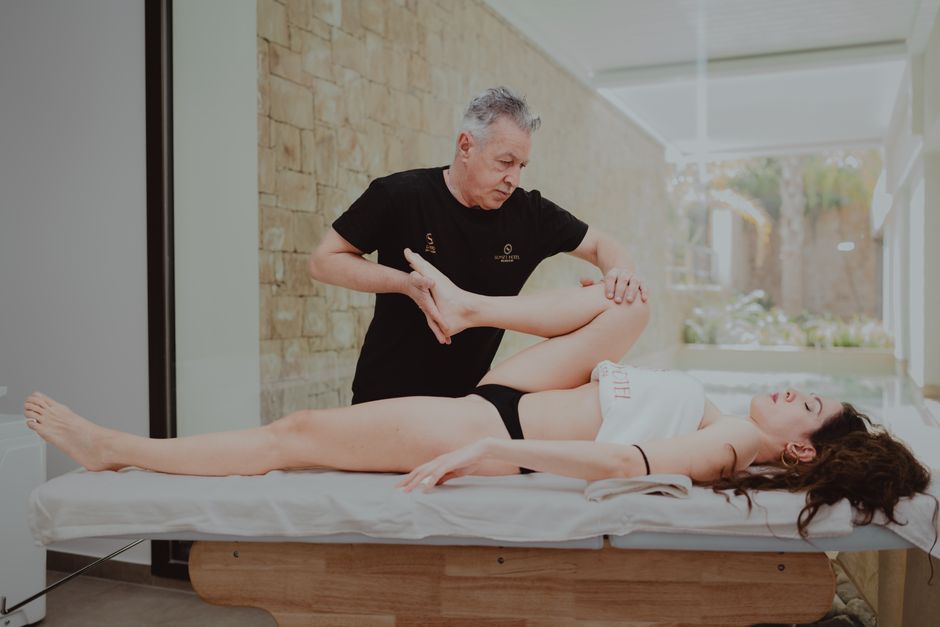
Start with the knee-to-chest stretch. Lie on your back with your knees bent and feet flat on the floor. Gently pull one knee toward your chest, holding it with your hands. Hold for 20 to 30 seconds, then switch legs. This stretches the lower back and the muscles that attach near the tailbone.
Another effective move is the figure-four stretch. Lie on your back with both knees bent. Cross your right ankle over your left knee. Gently pull your left thigh toward your chest. You should feel a stretch in your right hip and glute. Hold for 20 to 30 seconds, then switch sides. Tight glutes pull on the pelvis and can make tailbone pain worse.
You can also try a pelvic tilt. Lie on your back with your knees bent. Flatten your lower back into the floor by gently tucking your pelvis. Hold for a few seconds, then release. This movement mobilizes the lowest part of the spine without forcing anything.
These stretches do not produce a pop. They work by relaxing the muscles that grip the tailbone. When that tension releases, the pressure you felt often goes away.
Why You Should Never Force a Tailbone Pop
Forcing a pop in your tailbone area is risky. The coccyx is connected to the sacrum by a joint that allows only a small amount of movement. Pushing on it or twisting aggressively can strain this joint.
A sudden forceful movement can also sprain the sacrococcygeal ligaments. These ligaments hold the tailbone in place. A sprain here can cause pain that lasts for weeks. In rare cases, forceful manipulation can cause a fracture or a dislocation of the coccyx.
There is also the risk of bruising the periosteum, the thin layer of tissue covering the bone. The tailbone area has very little padding, so direct pressure can easily cause deep bruising. This type of injury is painful and slow to heal because you sit on it all day.
If you hear a pop, it is likely not the tailbone itself. It may be a gas bubble releasing in a nearby joint, like the sacroiliac joint. Or it may be a tendon snapping over a bone. Neither of these sounds means the tailbone has been safely adjusted.





What Actually Causes Tailbone Pain?
Tailbone pain is called coccydynia. It is more common in women than in men. The most frequent cause is prolonged sitting on a hard surface. The tailbone has little natural padding, so pressure builds up quickly.
A direct injury is another common cause. Falling backward onto a hard surface can bruise or fracture the coccyx. This type of injury usually heals with time but can leave the area sensitive for months.
Childbirth is a leading cause in women. The tailbone can be bruised or even fractured during delivery as the baby passes through the birth canal. Some women notice tailbone pain during pregnancy even before delivery because of hormonal changes that loosen the joints.
Less common causes include infections, tumors, or referred pain from the lumbar spine. If your pain is severe, comes with numbness, or does not improve with stretching, see a doctor. They can rule out more serious conditions.
How To Sit Without Hurting Your Tailbone
How you sit matters more than how you stretch. The goal is to reduce direct pressure on the coccyx. When you sit, your weight should rest on your two sitting bones, called the ischial tuberosities, not on your tailbone.
Sit with your weight shifted slightly forward. Lean into the front of the chair so your pelvis is tilted forward. This takes the coccyx off the seat surface. Keep your feet flat on the floor and your knees at a 90-degree angle.
A coccyx cushion, or donut pillow, can help. These pillows have a cutout in the back that removes pressure from the tailbone. They are available at most drugstores and online. Look for one made of firm foam rather than a soft inflatable ring, which can actually increase pressure on the surrounding area.
Stand up and move every 30 minutes. Even a short walk around the room changes the pressure on your tailbone and keeps the muscles from stiffening. Prolonged sitting is the single biggest factor in tailbone pain, so breaking up sitting time is essential.
When To See a Doctor for Tailbone Pain
Most tailbone pain resolves on its own within a few weeks. But some cases need medical attention. See a doctor if the pain is severe, if it lasts longer than a few weeks despite home care, or if it interferes with daily activities.
Seek immediate care if you have tailbone pain after a fall and you also have numbness, tingling, or weakness in your legs. This can signal nerve involvement. You should also see a doctor if you have pain with a fever, which could indicate an infection.
A doctor can diagnose the cause of your pain with a physical exam. They may order an X-ray or MRI if they suspect a fracture or another structural problem. In most cases, imaging is not needed because the cause is clear from the history and exam.
Treatment for persistent coccydynia may include physical therapy, anti-inflammatory medication, or a corticosteroid injection into the joint. Surgery to remove the tailbone, called a coccygectomy, is rare and reserved for cases that do not respond to all other treatments.
Frequently Asked Questions
Is it safe to crack your tailbone like other joints?
No, the tailbone is not designed to pop like knuckles or other joints. Forcing it can strain ligaments, cause bruising, or worsen the pain.
What is the fastest way to relieve tailbone pressure?
Stand up and walk around for a few minutes to change the pressure on the area. Then do a gentle knee-to-chest stretch while lying down to release tension in the lower back muscles.
Can a chiropractor adjust your tailbone?
Some chiropractors use internal or external techniques to mobilize the coccyx, but evidence for this treatment is limited. If you choose this route, make sure the practitioner has experience with tailbone conditions.
How long does tailbone pain last after a fall?
Most tailbone injuries from a fall heal within a few weeks to a couple of months. If pain lasts longer than two months, see a doctor for further evaluation.
