
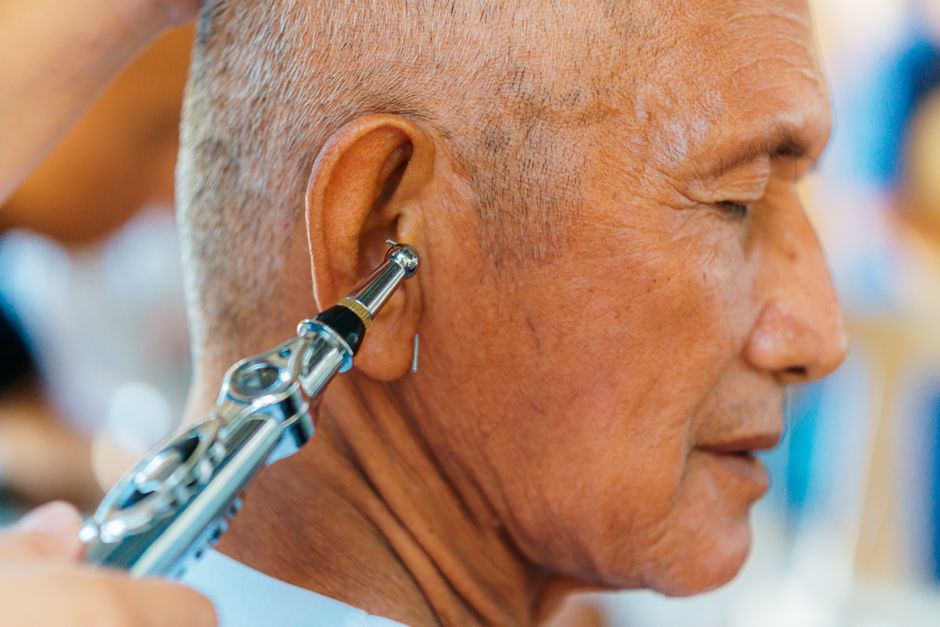
That blocked, stuffy feeling in your ears when you have a cold or allergies is caused by the eustachian tube — a small canal connecting your middle ear to the back of your throat — becoming swollen or clogged with mucus. The safest way to pop your ears when congested is to gently equalize the pressure by yawning, swallowing, or using the Valsalva maneuver (pinching your nose and blowing gently). Harsh or repeated popping can damage your eardrum, so the key is using minimal force and stopping if you feel pain.
What Causes the Blocked Feeling in Your Ears?
The eustachian tube normally opens and closes to keep air pressure equal on both sides of your eardrum. When you are congested from a cold, flu, sinus infection, or allergies, the lining of this tube swells. Mucus can also block the opening entirely. This prevents air from moving into or out of the middle ear, creating a vacuum that pulls the eardrum inward. That is the pressure you feel.
Research from the National Institutes of Health (NIH) shows that eustachian tube dysfunction affects nearly 1 in 5 adults at some point. The most common triggers are upper respiratory infections and seasonal allergies. Changes in altitude, like during a flight or driving through mountains, can make it worse because outside air pressure shifts faster than the blocked tube can adjust.
Children are more prone to this because their eustachian tubes are shorter and more horizontal. For adults, the problem is usually temporary and resolves as the congestion clears. But the pressure can be genuinely uncomfortable and sometimes painful, which is why people look for ways to pop their ears.
How To Pop Your Ears When Congested Safely: Methods That Work
The safest techniques rely on natural muscle movements that open the eustachian tube without forcing air. Start with the simplest: yawn as wide as you can. A full yawn pulls the muscles around the tube, opening it for a second. Swallowing also works because it contracts the same muscles. Chewing gum or sucking on a hard candy can trigger repeated swallowing.
If those do not work, try the Toynbee maneuver. Pinch your nose closed and swallow. This creates gentle negative pressure in the throat that helps pull the eustachian tube open. Some people find this more effective than yawning alone because the combination of swallowing and nasal closure directly targets the tube.
The Valsalva maneuver is the most commonly known method. Pinch your nostrils shut, close your mouth, and blow gently like you are trying to inflate a balloon. The goal is to push air up into the eustachian tubes, not to force it hard. Blow with just enough pressure to feel a pop. If you blow too hard, you risk rupturing the eardrum. The American Academy of Otolaryngology advises using the Valsalva maneuver only when necessary and stopping immediately if you feel sharp pain.
| Method | How to Do It | Risk Level |
|---|---|---|
| Yawning | Open mouth wide, take a deep breath | Very low |
| Swallowing | Swallow saliva or drink water | Very low |
| Toynbee maneuver | Pinch nose, swallow | Low |
| Valsalva maneuver | Pinch nose, blow gently | Moderate if done too hard |
| Lowry technique | Pinch nose, blow gently while swallowing | Moderate if done too hard |
What Does Research Say About Popping Congested Ears?
Clinical studies on eustachian tube dysfunction have tested multiple methods. A 2020 review in the journal Otolaryngology–Head and Neck Surgery found that autoinflation techniques — the Valsalva and Toynbee maneuvers — are effective for relieving pressure in about 60% of people with mild dysfunction. The success rate drops when the tube is severely blocked by thick mucus or swelling.
Research from the University of Pittsburgh Medical Center suggests that decongestants taken before using these techniques can improve success. Nasal sprays like oxymetazoline shrink swollen tissue in the nose and throat, which opens the eustachian tube opening. Oral decongestants like pseudoephedrine work systemically but take longer to kick in. The evidence is stronger for sprays than pills for this specific purpose.
One thing the research is clear on: popping your ears does not fix the underlying congestion. It relieves pressure temporarily. The tube will likely close again as soon as the surrounding tissue remains swollen. Repeated popping over a short period can irritate the tube and make inflammation worse. Most studies recommend trying a method once, waiting a few minutes, then trying again only if needed.


What To Avoid When Trying To Pop Congested Ears
Never use sharp objects. Cotton swabs, bobby pins, or fingernails inserted into the ear canal cannot reach the eustachian tube. They only risk scratching the ear canal or puncturing the eardrum. Emergency rooms see thousands of these injuries each year.
Avoid blowing too hard with the Valsalva maneuver. A ruptured eardrum causes sudden pain, hearing loss, and sometimes bloody drainage. Most small tears heal on their own within weeks, but larger ones may require surgery. The pressure needed to pop your ears is surprisingly low — about the same as blowing up a small balloon. If you feel pressure in your eyes or face, you are pushing too hard.
Do not use ear candles. The FDA has warned against them for decades. There is no evidence they remove earwax or relieve pressure. Studies show they can cause burns, ear canal blockages from wax drips, and even punctured eardrums. No legitimate medical organization recommends them.
If you have had ear surgery, a history of eardrum perforation, or a current ear infection, do not attempt any forced popping method. The pressure changes can cause serious damage. In these cases, let the congestion clear naturally or see a doctor.
When Home Methods Do Not Work
If you have tried yawning, swallowing, and gentle Valsalva for several days with no relief, it is time to see a healthcare provider. Persistent eustachian tube dysfunction can lead to fluid buildup behind the eardrum, which reduces hearing and increases the risk of infection. An ear, nose, and throat specialist (ENT) can check for underlying causes like chronic sinusitis, nasal polyps, or a structural blockage.
Doctors have options beyond home methods. A myringotomy is a small incision in the eardrum that releases trapped fluid and pressure. It is a quick procedure done in the office with local anesthesia. For recurrent cases, tiny tubes called tympanostomy tubes can be inserted to keep the eardrum open and allow continuous drainage. These are more common in children but used in adults too.
Another medical option is balloon dilation of the eustachian tube. A small balloon is inserted into the tube and inflated to widen it. A 2022 study published in The Laryngoscope found that 80% of patients with chronic dysfunction had symptom improvement after this procedure. It is not for everyone and is typically reserved for people who have not responded to other treatments for at least three months.
- See a doctor if you have ear pain lasting more than 3 days
- See a doctor if you notice hearing loss or a feeling of fullness that will not go away
- See a doctor if you have dizziness, vertigo, or ringing in the ears (tinnitus)
- See a doctor if you have diabetes or a weakened immune system — infections can escalate faster
Common Misconceptions About Popping Ears When Congested
One common myth is that you need to hear a loud pop for the method to work. The pop is just air moving through the tube. Sometimes it is silent. If the pressure feels relieved, that is enough. Chasing a pop can lead to overdoing the maneuver.
Another misconception is that holding your nose and blowing hard is the only way. Many people learn this from parents or friends and never try gentler methods. But yawning and swallowing are actually more natural and less risky. For mild congestion, they work just as well as forced techniques.
Some people believe that popping your ears will cure the congestion itself. It will not. The pressure relief is temporary. The underlying swelling or mucus needs to resolve on its own or with treatment. Popping is a symptom management tool, not a cure. That distinction matters because people who expect a permanent fix often get frustrated and resort to unsafe methods.
There is also a belief that ear pain during a flight means you already have an ear infection. Not always. Rapid pressure changes during takeoff and landing can cause pain even in healthy ears. If you are congested, that pain is worse because the tube cannot open quickly enough. Using a decongestant spray 30 minutes before landing can help prevent it.
Frequently Asked Questions
How many times a day can I safely try to pop my ears?
You can try gentle methods like yawning or swallowing as often as needed throughout the day. Limit forced techniques like the Valsalva maneuver to a few times per session and wait at least 30 minutes between attempts.
Can popping my ears cause hearing loss?
Forced popping done too hard can rupture the eardrum, which causes temporary hearing loss. Most small ruptures heal on their own, but repeated damage can lead to permanent hearing issues.
Is it safe to fly with congested ears?
Flying with congestion increases your risk of ear pain and barotrauma. Using a decongestant nasal spray 30 minutes before descent and chewing gum during landing can help equalize pressure safely.
What is the fastest way to unblock ears from a cold?
Yawning and swallowing are the fastest natural methods. If those do not work, the Toynbee maneuver (pinch nose and swallow) often provides quick relief without the risks of hard blowing.
