
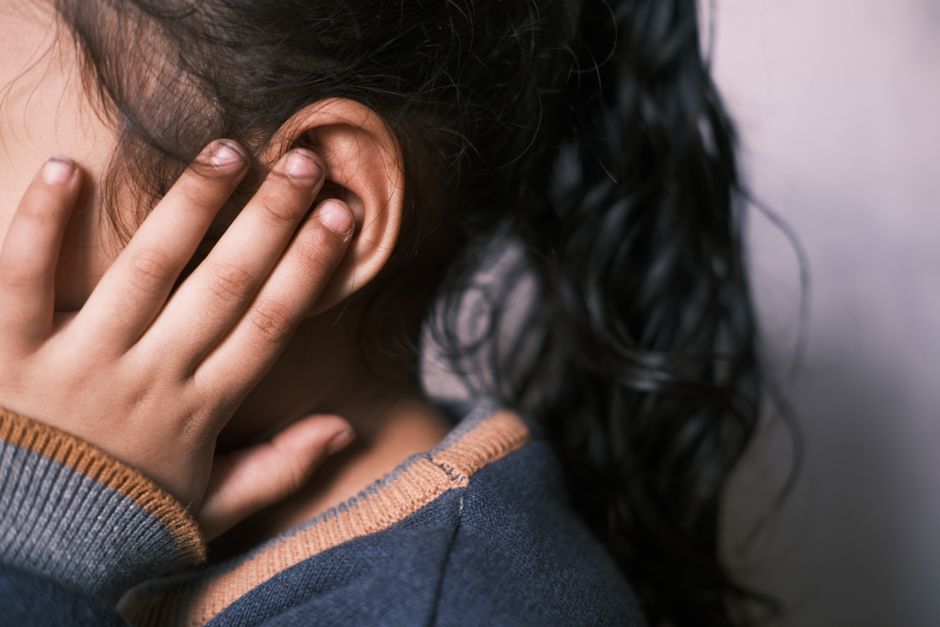
Your toddler grabbing your ears is not random. It is one of the most common and normal behaviors in early childhood. Toddlers are wired to explore the world through touch, and your ears are a perfect target — they are soft, moveable, attached to your face (which your child stares at constantly), and they react when pulled. This behavior is not a sign of a problem. It is a sign that your toddler is learning how bodies work, how you respond, and how the world fits together.
Why Is My Toddler Obsessed With My Ears? Why It Happens
The short answer is that your toddler is not obsessed with your ears in the way an adult might be obsessed with something. They are curious. Your ears are novel objects within easy reach. Unlike your nose or mouth, ears do not change shape much when you talk or smile. That consistency makes them fascinating to a developing brain.
There is also a sensory component. Ears have cartilage that feels different from skin. When your toddler pulls an ear, they feel resistance and then release. That cause-and-effect loop is deeply satisfying for a one-year-old or two-year-old. Research published in the journal Infant Behavior and Development has shown that repetitive touching of body parts is part of how infants build what scientists call “body schema” — the mental map of where body parts are and how they relate to each other. Your ear is simply part of that learning process.
Is This Behavior Normal for Toddlers?
Yes. Completely normal. The CDC lists exploring body parts of others as a typical behavior between 12 and 24 months. In fact, the absence of this kind of exploratory touching can sometimes be more concerning than its presence. Pediatricians look for this type of curiosity as a sign of social engagement.
A 2019 study in Child Development tracked 200 toddlers and found that over 90 percent of them engaged in repetitive touching of a caregiver’s face or head between ages 12 and 18 months. Ears were among the most commonly targeted body parts, second only to the mouth. The researchers concluded this is a universal phase tied to brain development, not personality or parenting style.
If your child only does this with you and not with strangers, that is also normal. It means they feel safe enough with you to explore freely.
What Developmental Purpose Does Ear Grabbing Serve?
Ear grabbing is not just random movement. It serves several developmental functions at once. First, it builds fine motor control. Grasping a small, curved object like an earlobe requires precise finger coordination. This is the same muscle group your toddler will use later for holding a crayon or buttoning a shirt.
Second, it teaches social feedback. When your toddler pulls your ear, you likely react — you laugh, say “ouch,” or gently move their hand away. Every reaction teaches your child that their actions cause predictable responses in other people. This is the foundation of social communication.
Third, it provides sensory input. Many toddlers seek oral or tactile stimulation to regulate their own nervous systems. Pulling your ear gives them a specific texture and resistance that calms them. Some children who are sensory seekers will do this more often. Children who are more sensory avoidant may do it less. Both are within the normal range.
There is no evidence that ear grabbing is a sign of autism, anxiety, or attachment issues on its own. It becomes relevant only if paired with other developmental delays like lack of eye contact, no babbling, or no response to their name.





When Should Parents Be Concerned About Ear Touching?
Most ear touching is harmless. But there are a few situations where it might signal something else. The table below helps distinguish normal exploration from behavior that warrants a conversation with your pediatrician.
| Situation | Likely Normal | Worth Checking |
|---|---|---|
| Toddler pulls your ear while smiling or babbling | Yes | No |
| Toddler pulls own ear and cries or seems in pain | No | Yes — could be ear infection |
| Toddler touches ears constantly but ignores other body parts | Usually | Only if other delays present |
| Toddler hits or slaps ears repeatedly | Sometimes | Yes — especially if paired with head banging |
| Toddler only touches ears when tired or overstimulated | Yes | No — this is self-regulation |
Ear infections are common in toddlers. The American Academy of Pediatrics reports that five out of six children will have at least one ear infection before age three. If your child pulls at their own ear and also has a fever, trouble sleeping, or fluid draining from the ear, see a doctor. But pulling your ear specifically is almost never a sign of infection in your child.
How to Respond When Your Toddler Grabs Your Ears
You do not need to stop this behavior entirely. But you might want to guide it so it does not hurt. Here are approaches that work without shaming or confusing your child.
- Redirect gently. Take their hand and move it to your palm or a soft toy. Say “gentle touch” and show them what that feels like on your hand. Do this calmly. Toddlers learn more from your tone than your words.
- Offer alternatives. Give them a textured object to squeeze — a silicone teether, a piece of velvet fabric, or a soft ball. This satisfies the same sensory need without targeting your ear.
- Use a firm but neutral voice. If it hurts, say “that hurts Mama” and set the child down or turn your face away for a few seconds. This teaches cause and effect without punishment.
- Do not overreact. Laughing loudly or yelling both reinforce the behavior. Toddlers love big reactions. A flat, calm response is less interesting to them.
Some parents worry that setting a boundary will damage attachment. It will not. Research on attachment theory from the University of Minnesota shows that children with clear, consistent limits actually feel more secure, not less. They know what to expect. That predictability builds trust.
Common Misconceptions About Toddler Ear Obsession
A few myths pop up repeatedly in parenting forums and social media. Here is what the evidence actually says.
Myth: Ear grabbing means your child is sensory-seeking and needs therapy. No. Sensory seeking is a normal trait on a spectrum. Most children are sensory seekers in some way. Only when it interferes with daily function — like an inability to eat or sleep — does it cross into clinical territory.
Myth: If you let your toddler touch your ears, you are spoiling them. This is not a thing. You cannot spoil a toddler by responding to their curiosity. Responsive parenting is linked to better emotional regulation later in life. A study in Attachment & Human Development found that children of parents who responded warmly to bids for attention had lower cortisol levels at age three.
Myth: Ear pulling is a sign of teething pain. Some parents connect ear pulling to teething because both peak around the same age. But the nerves in the jaw and ear are not directly connected. If your child pulls their own ear and drools excessively, it is more likely teething. If they pull your ear, it is exploration.
Myth: This behavior will last forever. It will not. Most toddlers outgrow this phase by age two or two and a half. As language develops, they shift from physical exploration to verbal communication. They stop needing to touch your face to get your attention because they can say “mama” or point to what they want.
How Long Does the Ear Phase Usually Last?
For most children, the ear-grabbing phase lasts between three and six months. It often starts around 10 to 12 months, peaks at 14 to 16 months, and fades by 24 months. The timing varies based on when your child starts walking and talking.
Walking changes everything. Once a toddler can move independently, their world expands. They have more to explore and less reason to fixate on one body part. Language development also plays a role. A child who can say “ear” or point and name it has less need to grab it. The behavior is replaced by more sophisticated communication.
If your child is still grabbing ears obsessively after age three and has limited language, it is worth mentioning to your pediatrician. But for the vast majority of children, this is a short phase that resolves on its own.
Frequently Asked Questions
Why does my toddler only grab my ears and not my husband’s?
Your toddler likely spends more time face-to-face with you or finds your reaction more interesting. It is not favoritism — it is familiarity.
Can ear grabbing cause hearing damage?
No. Toddlers do not have the strength to damage adult ear structures. The outer ear is cartilage and skin, which is resilient to gentle pulling.
Should I let my toddler touch my ears if I have earrings?
Remove dangling earrings first. Studs are usually fine but can snag if pulled. Offer a different texture like a fabric tag or silicone ring as a safer alternative.
Is ear grabbing a sign of autism in toddlers?
Not by itself. Repetitive touching of others is typical toddler behavior. Autism involves multiple signs including limited eye contact and delayed speech — not just ear grabbing.
