
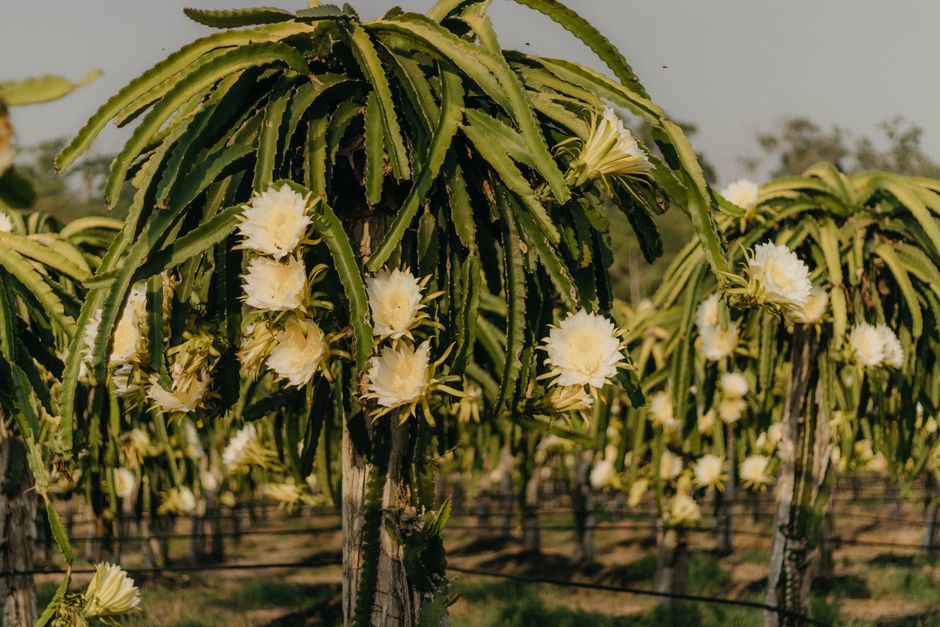
Pollinating dragon fruit by hand is simple once you know the flower’s schedule. These night-blooming cacti open their large white flowers for only one night, usually from sunset to sunrise. To hand pollinate, you take a small brush or cotton swab, collect the yellow pollen from the stamens of one flower, and gently dab it onto the central stigma of another flower. This mimics what moths and bats would do in their native habitat. For the best fruit set, transfer pollen within a few hours of the flower opening, and use pollen from a different plant variety for larger fruit.
Why Is Hand Pollination Necessary for Dragon Fruit?
Dragon fruit plants are native to Central and South America where specific night-flying pollinators like moths and bats do the work. In most US gardens, those natural pollinators are not present. Even if you have some night insects in your area, they often do not visit dragon fruit flowers reliably.
Many common dragon fruit varieties are self-incompatible. This means a flower cannot pollinate itself or another flower on the same plant. The flower structure is designed to prevent self-pollination. The stigma, which is the female part, stands above the stamens, which are the male parts. Pollen has to come from a different plant entirely.
Some varieties are self-pollinating, but even these produce more fruit and larger fruit with cross-pollination. Research from the University of Florida Extension notes that hand pollination can increase fruit set from under 50% to over 90% in some varieties. If you want a reliable harvest, hand pollination is the most dependable method.
When Is the Right Time to Hand Pollinate Dragon Fruit?
Timing is everything with dragon fruit flowers. They open at dusk and close by mid-morning. The flower is most receptive to pollen in the first few hours after opening. Pollen is also most viable during this window.
Check your plants around sunset. When you see the flower buds starting to unfurl, that is your cue. The flower will be fully open within an hour or two. You want to pollinate as soon as the flower is fully open. Waiting until morning often means the flower has started to close, and the pollen may be less effective.
Dragon fruit flowers bloom in cycles. A plant may produce several flowers over a few weeks, then pause. Each flower only opens once. If you miss that single night, that flower will not produce fruit. Mark your calendar for the bloom season, which is typically summer through early fall depending on your climate.
How To Pollinate Dragon Fruit By Hand Step by Step
Here is the practical process. You need a small, soft brush like a paintbrush or a cotton swab. Some people use a clean finger, but a brush is gentler and more precise.
- Identify a fully open flower from a different dragon fruit plant. You need a second variety for cross-pollination.
- Gently brush the stamens, which are the yellow, powder-covered structures inside the flower. The brush will collect the pollen.
- Take that pollen-loaded brush to a flower on a different plant. Find the stigma, which is the central stalk that splits into several lobes at the top.
- Dab the brush directly onto the stigma. Make sure the yellow pollen visibly coats the sticky surface.
- Repeat for each flower you want to pollinate. One flower can provide enough pollen for several others.
Use fresh pollen each time. Pollen loses viability quickly once collected. If you are pollinating many flowers, collect fresh pollen every few flowers. Do not store pollen for later use unless you are specifically experimenting with storage methods, as success rates drop sharply.
Some growers recommend pollinating the same flower multiple times over the night. This is not necessary if you apply enough pollen in one good coat. A single thorough application is sufficient.




Which Dragon Fruit Varieties Need Cross-Pollination?
Not all dragon fruit varieties behave the same way. Understanding your specific plant type helps you plan. Here is a comparison of common varieties based on their pollination needs.
| Variety Name | Pollination Type | Fruit Size with Cross-Pollination |
|---|---|---|
| Vietnamese White (Hylocereus undatus) | Self-incompatible | Significantly larger |
| American Beauty (Hylocereus guatemalensis hybrid) | Self-pollinating | Moderately larger |
| Physical Graffiti (Hylocereus hybrid) | Self-incompatible | Much larger |
| Yellow Dragon (Selenicereus megalanthus) | Self-incompatible | Required for any fruit |
| Delight (Hylocereus hybrid) | Self-pollinating | Moderately larger |
If you only have one plant, check its variety. Self-incompatible types will produce zero fruit without a second plant. Even self-pollinating types benefit from a partner. The pollen from another variety triggers stronger fruit development. This is called xenia, where the pollen source directly influences the fruit size and quality.
Common Mistakes When Hand Pollinating Dragon Fruit
The biggest mistake is using pollen from the same plant. If your variety is self-incompatible, this does nothing. The flower will drop without forming fruit. Always use pollen from a genetically different plant.
Another mistake is pollinating too late. If you wait until the flower is already closing, the stigma has stopped being receptive. The window is narrow. Set a reminder on your phone for sunset during bloom season.
Some people damage the flower while collecting pollen. The stamens and stigma are delicate. Use a soft brush and gentle pressure. Ripping the flower parts reduces the chance of successful pollination and can invite disease.
Avoid pollinating in the rain. Rain washes pollen off the brush and off the stigma. If a storm hits during your bloom night, you can try pollinating between showers, but success rates will be lower. Wait for the next bloom cycle if possible.
Do not assume all flowers on the same plant are compatible. Even if your plant is self-pollinating, flowers on the same plant are still genetically identical. Cross-pollination between different plants always produces better results.
What to Do If Hand Pollination Fails
Sometimes flowers drop even after careful hand pollination. This can happen for several reasons. The most common cause is using incompatible varieties. Not all dragon fruit varieties are cross-compatible. Some combinations simply do not work.
Temperature stress is another factor. Dragon fruit flowers abort if temperatures are above 100°F or below 60°F during bloom. The plant prioritizes survival over reproduction. If a heatwave hits during your bloom cycle, you may lose that entire flush of flowers.
Poor plant health also reduces fruit set. Dragon fruit needs well-draining soil, regular watering, and adequate nutrition. Plants that are stressed from drought, overwatering, or nutrient deficiencies produce fewer viable flowers. Check your watering schedule and consider a balanced fertilizer formulated for cacti.
If you consistently get no fruit after hand pollination, try a different pollen donor variety. Some combinations are more compatible than others. Local dragon fruit growers or online communities can tell you which varieties pair well in your climate.
Does Hand Pollination Affect Fruit Quality?
Yes, it does. Hand pollination with the right pollen donor produces larger, heavier fruit. Studies have shown that cross-pollinated dragon fruit can be 20-30% heavier than self-pollinated fruit from the same plant. The fruit also tends to be sweeter and have more consistent texture.
There is no evidence that hand pollination changes the nutritional content of the fruit. Dragon fruit is naturally rich in fiber, vitamin C, and antioxidants regardless of how it is pollinated. The main benefits are size, yield, and reliability.
Some growers report that hand-pollinated fruit has better shape. Self-pollinated fruit can be misshapen or smaller. Cross-pollination leads to more uniform, marketable fruit. If you are growing for home use, this matters less, but the difference in size is still noticeable.
There are no negative side effects to hand pollination. It does not harm the plant or the fruit. It simply replaces the work of a missing pollinator. The fruit develops exactly as it would with natural pollination, just more reliably.
Frequently Asked Questions
Can I use the same brush for all flowers?
Yes, as long as you are collecting fresh pollen from a different plant each time. The brush does not need to be cleaned between flowers.
What time of night is best for hand pollination?
The first two hours after the flower fully opens are best. This is usually between 9 PM and midnight depending on your location.
Do I need two different dragon fruit plants?
For most varieties, yes. Self-incompatible types require a second plant, and even self-pollinating types produce better fruit with cross-pollination.
How long after pollination does the fruit appear?
Fruit typically appears within two to three weeks after successful pollination. It takes another 30 to 50 days to fully ripen depending on the variety.
