
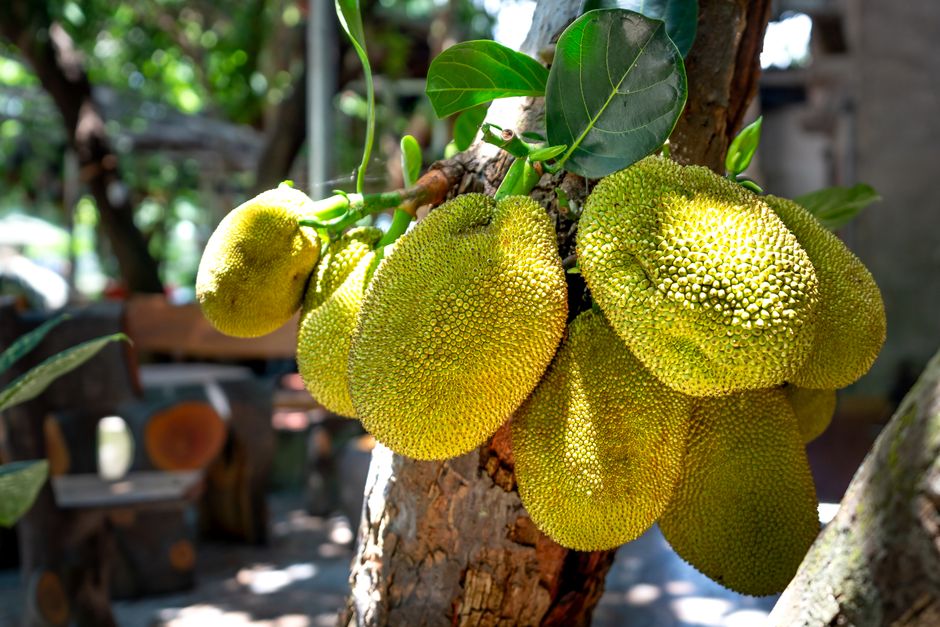
Jackfruit sap is a sticky latex that sticks to skin, knives, counters, and cloth, and water alone will not remove it. The reliable approach is to coat your hands, knife, and work surface with oil before you cut, work on newspaper or a plastic sheet, and remove the sticky inner core and fibers completely before storing the edible bulbs. Oil dissolves the resin; water spreads it.
Once you understand why the sap behaves the way it does, the whole job gets simpler. Jackfruit latex is fat-soluble, not water-soluble. That single fact shapes every step below.
Why Is Jackfruit Sap So Sticky?
Jackfruit is in the same plant family as figs and mulberries, and like those relatives it produces latex. The sap runs through a network of tubes in the rind, the core, and the stringy fibers that hold the edible bulbs in place. Cut into any of those and the latex leaks out.
Fresh jackfruit latex is a mix of resins, proteins, and natural rubber compounds suspended in water. As it dries, the water evaporates and the resin sets into a tacky film that behaves much like tree sap or a light adhesive. On skin it can feel glued on within minutes.
This is also why the sap is so hard to wash off. Water thins it and spreads it across a wider area without dissolving it. Soap helps somewhat because it can break up oils, but a thin film often remains. Oil works better because the resin dissolves directly into it.
One clarification worth knowing: the sap is not the same thing as the edible fruit. The bulbs themselves are fine to eat raw once cleaned. The latex is a handling nuisance, not a poison, though it can irritate skin and eyes in sensitive people.
What Should You Prepare Before Cutting a Jackfruit?
Set up before you cut. Once the latex starts flowing, you do not want to be searching for a cloth or a bottle of oil with sticky hands.
Have these ready:
- A large, sharp knife. A longer blade gives you cleaner cuts with less tearing, and tearing releases more sap.
- A bottle of cooking oil, such as vegetable or coconut oil, plus a small bowl of it.
- Disposable gloves if you have them. Coated or nitrile gloves work better than thin latex-free food gloves, which the sap can grip.
- Newspaper, a plastic sheet, or a large cutting board you do not mind scrubbing.
- A second bowl for the cleaned bulbs and a separate bag or bin for the rind, core, and fibers.
- Paper towels, not cloth. Cloth towels that touch sap are difficult to salvage.
Work outside or in a well-ventilated space if you can. A whole jackfruit can weigh anywhere from a few pounds to well over 30 pounds depending on variety and maturity, and a large one is awkward to handle on a small counter.
How To Peel Jackfruit Without Getting Sap On Everything?
The core method is oil first, everywhere the sap will touch. Rub a thin layer of cooking oil on your gloved hands, both sides of the knife blade, and the cutting surface. Re-oil the blade every few cuts, because the resin builds up and starts dragging.
Then follow this sequence:
- Lay the jackfruit on its side on the covered surface. Cut it crosswise into thick rounds, roughly two to three inches wide, rather than trying to halve it lengthwise. Rounds expose the bulbs in a neat pattern and are easier to work with.
- As you cut, wipe the blade with an oiled paper towel whenever it starts to feel tacky.
- Take one round and cut away the outer rind, following the curve. The rind is where much of the latex sits.
- Cut out the central core. It is dense, fibrous, and full of sap. Discard it.
- Pull the bulbs free by hand or with a small knife. Each bulb may have a seed inside; the seed is edible when cooked but should be removed for raw eating or set aside.
- Peel the thin white or pale membrane off each bulb and pull away the stringy fibers attached to it. Those fibers hold latex.
If the fruit is very ripe, the bulbs come away easily and the sap is thinner. If it is less ripe, expect more latex and firmer bulbs that need more trimming.




What Is the Best Way to Get Jackfruit Sap Off Your Hands?
Oil first, then soap. Rub cooking oil into the sticky area and work it in for a minute or two. The resin lifts into the oil and the surface stops feeling glued. Wipe the oil and sap off with a paper towel, then wash with warm water and soap.
Repeat if a film remains. For stubborn patches, some people find that a little additional oil left on the skin for a few minutes loosens things further. Avoid harsh solvents on skin. Products like acetone or paint thinner can damage skin and are not appropriate for this.
If sap gets on your skin and you also have a cut or scrape there, wash the area thoroughly with soap and water afterward. Jackfruit latex can irritate broken skin, and people with a latex allergy should be cautious, since there is some cross-reactivity between plant latexes. If you have a known latex allergy, wear gloves and consider having someone else do the cutting.
How Do You Clean Sap Off Knives, Counters, and Cloth?
Oil lifts sap from hard surfaces too. On a knife or counter, rub a little cooking oil over the sticky patch, wipe with a paper towel, then wash normally with hot water and soap. Do this before the sap dries if possible, since dried resin takes more work.
For cloth, the honest answer is that sap-stained fabric is difficult. Scrape off what you can, then rub oil into the stain before laundering. Many towels and cloths will not come fully clean. This is why paper towels and newspaper are worth using in the first place.
Do not put a sap-covered knife in the dishwasher with other dishes. The resin can transfer. Wash it by hand first.
Does the Sap Ruin the Fruit You Plan to Eat?
No. Sap on the outside of a bulb can be wiped or trimmed away. The edible flesh underneath is unaffected. Just make sure each cleaned bulb has no sticky film left on it before you eat or store it.
Store cleaned bulbs in a sealed container in the refrigerator. Ripe jackfruit is highly perishable once cut, and it is best eaten within a few days. If you have more than you can use, the cleaned bulbs freeze reasonably well, though the texture softens after thawing.
Ripe jackfruit is a source of carbohydrate and provides some vitamin C and potassium, though amounts vary by variety and ripeness. It is not a low-calorie fruit; a portion is fairly energy-dense. Unripe, starchy jackfruit is used as a meat substitute in cooking and behaves very differently from the ripe fruit, both in texture and in how much sap it releases when cut.
What Mistakes Make the Sap Problem Worse?
Rinsing with water first is the most common mistake. It spreads the latex and makes a small sticky patch into a large one. Oil, not water, is the first move.
Other things that backfire:
- Using a dull knife. It crushes the fibers and releases more sap than a clean slice.
- Cutting on a bare wooden board. Sap works into the grain and is hard to remove.
- Reaching for a cloth towel. It bonds to the fabric and is often ruined.
- Skipping gloves. Bare hands work, but cleaning them takes longer and the sap can irritate skin.
- Letting cut surfaces sit. Sap that dries is harder to remove than fresh sap.
One more point: a jackfruit that feels very firm and smells green is underripe and will be far more sappy and difficult to open than a ripe one. If you can, let it ripen until it gives slightly to pressure and smells sweet before you cut into it.
Frequently Asked Questions
Does hot water remove jackfruit sap?
Hot water alone does not dissolve jackfruit sap and can spread it. Use cooking oil to lift the resin first, then wash with warm water and soap.
Can I use dish soap to get jackfruit sap off my hands?
Soap helps after you have loosened the sap with oil, but it is not very effective on its own. Oil first, then soap and water, is the reliable order.
Is jackfruit sap dangerous to touch?
For most people it is a sticky nuisance rather than a hazard, though it can irritate skin and eyes. People with a latex allergy should take extra care and wear gloves.
Can you eat jackfruit bulbs that have sap on them?
Yes, once you wipe or trim the sap away. The edible flesh underneath is not affected by latex on the surface.
