
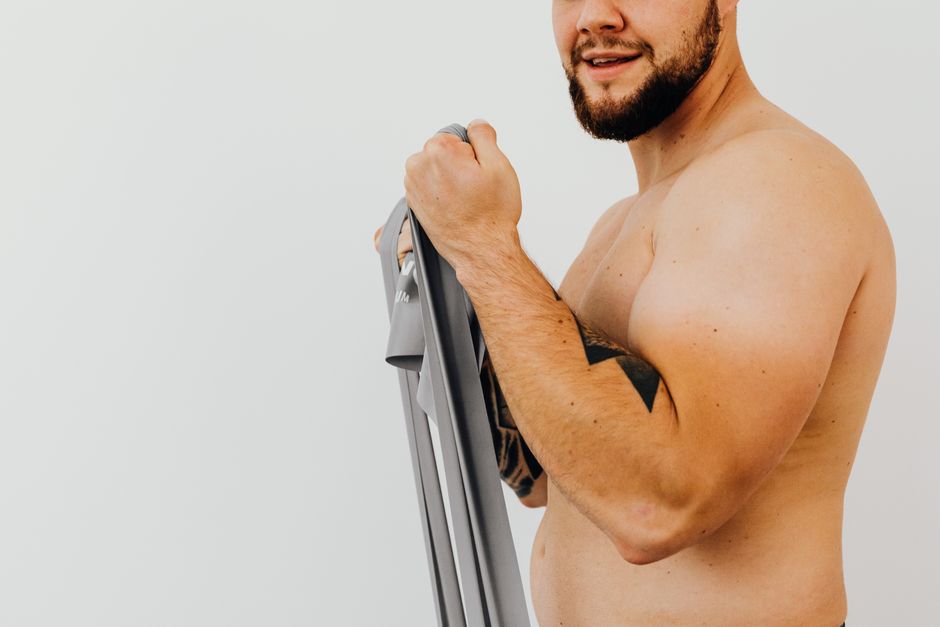
“Shredding” is a bodybuilding term for losing fat while keeping as much muscle as possible, so the muscles you’ve built become visible. It is not a separate fat-loss method. It is the same energy deficit anyone uses to lose weight, done with extra attention to protein, resistance training, and how fast you lose.
The word comes from competition culture. Bodybuilders “get shredded” before a show by dropping body fat to very low levels over weeks or months. What works for that goal is well understood. What gets lost in social media is the cost — and how different a healthy lean-out is from a stage-ready physique.
What Is Shredding Fat Loss Muscle And Getting Lean?
Shredding is fat loss with muscle preservation as the main priority. The physiology is straightforward: fat is stored energy, and your body releases it when you take in fewer calories than you burn. Muscle is active tissue your body will break down for energy if you don’t give it a reason to keep it.
Two signals tell your body to hold onto muscle during a calorie deficit. The first is resistance training — lifting weights or doing other work against resistance. The second is adequate protein intake. Without both, a large share of the weight you lose can come from muscle rather than fat.
That distinction is the whole point. The scale can drop fast while your body composition barely changes, or even gets worse. A person who loses ten pounds of mixed fat and muscle looks softer, not leaner. A person who loses eight pounds of mostly fat looks noticeably different.
How Is Shredding Different From Ordinary Weight Loss?
Ordinary weight loss focuses on the number on the scale. Shredding focuses on what that number is made of. Both require a calorie deficit. The difference is in the details that protect lean mass.
Someone trying to lose weight might cut calories hard, do mostly cardio, and eat less protein. That approach can work for scale weight. It tends to cost muscle, especially when the deficit is aggressive or protein is low.
Shredding takes the opposite emphasis:
- Keep the calorie deficit moderate rather than extreme
- Keep protein intake relatively high
- Keep resistance training in place, even while eating less
- Lose weight slowly enough that muscle has a reason to stay
None of this is exotic. It is the standard approach used in sports nutrition for athletes who need to make a weight class or lean out without losing performance.
Why Does Muscle Matter So Much During Fat Loss?
Muscle is metabolically expensive tissue. Your body maintains it only when it’s being used. In a calorie deficit, the body is looking for energy from anywhere it can find it — fat stores, but also muscle protein.
Resistance training sends a signal that the muscle is needed. Protein provides the raw material to repair and maintain it. When both are present, the body tends to spare muscle and pull more energy from fat. When either is missing, muscle loss climbs.
There is a second reason muscle matters. Muscle is denser than fat. Two people at the same body weight can look very different depending on how much of that weight is muscle. This is why some people lose inches without losing much scale weight during a well-run shred — and why the mirror and tape measure can be more useful than the scale alone.



How Fast Should You Lose Fat to Stay Lean and Keep Muscle?
Slower is generally better for preserving muscle. A common guideline in sports nutrition is to aim for roughly 0.5 to 1 percent of body weight lost per week. For a 180-pound person, that’s about 0.9 to 1.8 pounds per week.
Faster loss is possible, but the trade-off is usually more muscle loss, more hunger, and a harder time training well. Very lean people have less fat to lose and generally need to go slower to protect what muscle they have. People carrying more body fat can often sustain a larger deficit with less muscle cost.
These are general ranges used in practice, not a universal prescription. Individual response varies with training history, age, sleep, stress, and how long someone has been dieting.
What Role Does Protein Play in Getting Lean?
Protein does two jobs during a shred. It supplies the building blocks to maintain muscle, and it is the most filling of the three macronutrients. Higher protein intake is consistently linked with better muscle retention during calorie restriction.
General sports nutrition guidance for people doing resistance training suggests protein intakes in the range of about 1.6 to 2.2 grams per kilogram of body weight per day, which is roughly 0.7 to 1 gram per pound. During a calorie deficit, some guidance leans toward the higher end of that range to protect muscle.
That range comes from position stands and reviews in sports nutrition, not from a single trial. It is a reasonable target for healthy adults. People with kidney disease or other medical conditions should get individual guidance from a clinician rather than applying general sports nutrition numbers.
Does Cardio Help or Hurt When Shredding?
Cardio helps create the calorie deficit and supports heart health. It does not build or protect muscle the way resistance training does. The risk is doing so much cardio that recovery suffers and lifting quality drops.
A practical balance is to keep resistance training as the anchor and use cardio as a tool to widen the deficit or support cardiovascular fitness. Walking is often used because it adds calorie burn with low recovery cost. High-intensity cardio can be useful but is harder to recover from when calories are low.
The evidence does not show that cardio is required for fat loss. Diet drives the deficit. Cardio is one way to increase energy expenditure, not a mandatory piece.
What Are the Risks of Getting Very Lean?
Moderate fat loss with muscle preservation is generally well tolerated in healthy adults. Extreme leanness is a different matter. The body fat levels bodybuilders reach for competition are not meant to be held long-term.
At very low body fat, some people experience hormonal changes, reduced libido, poorer sleep, low mood, constant hunger, and reduced training performance. Some research in physique athletes has documented changes in testosterone and other hormones during contest prep, with recovery taking time after the event. These are not trivial side effects, and they are the reason competitive lean-outs are usually temporary.
There is also a psychological cost. Chronic dieting, rigid food rules, and preoccupation with leanness can slide into disordered eating patterns. If food and body image start to dominate daily life, that is a signal to step back and talk to a professional.
What Does a Realistic Shred Look Like?
A realistic shred is unglamorous. It looks like a modest calorie deficit, consistent lifting, enough protein, decent sleep, and patience. Progress is measured over weeks, not days.
Most people do not need to reach competition-level leanness to look and feel better. A moderate reduction in body fat, combined with maintained muscle, changes appearance and health markers meaningfully. The “shredded” physiques on social media often reflect favorable lighting, dehydration for a shoot, and sometimes pharmacological assistance that is rarely disclosed.
One clarification worth knowing: being “lean” and being “shredded” are not the same thing. Lean means low but sustainable body fat. Shredded means very low body fat, usually for a short window. Confusing the two leads people to chase a look that isn’t meant to last.
Frequently Asked Questions
How long does it take to get shredded?
It depends on how much fat you need to lose and how lean you already are. At a moderate pace of about 0.5 to 1 percent of body weight per week, most people need several months, not weeks.
Can you build muscle while shredding?
Some people can gain or maintain muscle in a deficit, especially those new to training or carrying more body fat. Experienced lifters usually maintain rather than build while in a calorie deficit.
Do you need supplements to get shredded?
No. Fat loss depends on a calorie deficit, resistance training, and adequate protein. Supplements are optional and most have limited evidence behind them.
Is getting shredded healthy?
Moderate fat loss with muscle preservation is generally healthy for most adults. Extreme leanness can cause hormonal changes, poor sleep, low mood, and reduced performance, and is not meant to be maintained long-term.
