
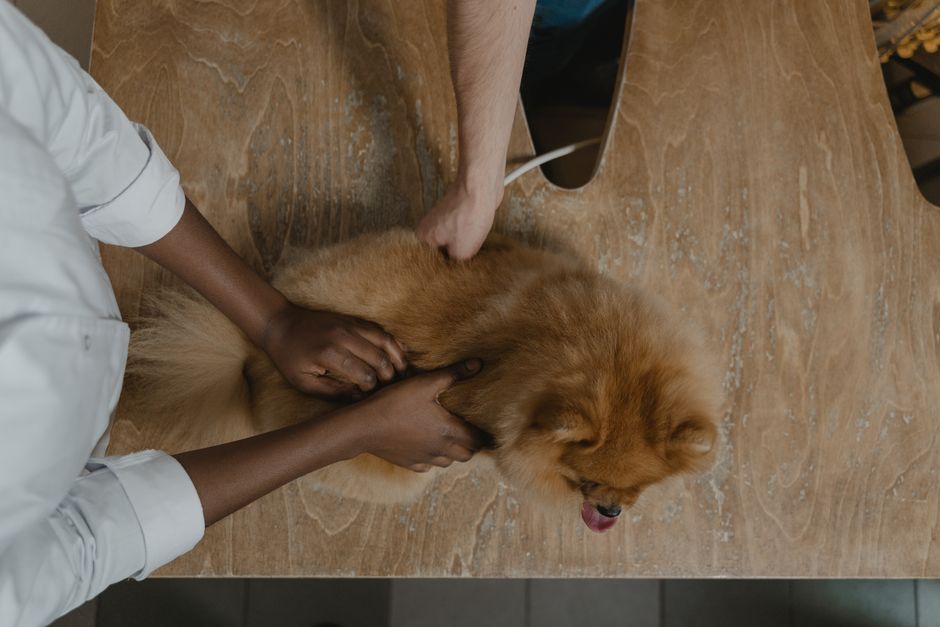
Feeling for puppies by palpation is a skill a veterinarian performs, not something you should try to do aggressively at home. The safest technique involves gently cupping the abdomen between your thumb and fingers to feel for fluid-filled, marble-sized swellings. The best timing is between days 21 and 35 of the pregnancy, with days 28 to 30 offering the most reliable results. Attempting this too early or too late makes it easy to miss the puppies or confuse them with other organs.
What Is Abdominal Palpation in a Pregnant Dog?
Palpation means using your hands to feel internal structures through the skin and muscle. In a pregnant dog, the goal is to feel the fetal swellings inside the uterus. The uterus sits in the abdomen, and during early pregnancy it fills with fluid that surrounds each developing puppy.
These fluid-filled sacs feel like small, firm balls. They are usually arranged in a line along the belly. A skilled veterinarian can distinguish these from a full bladder, kidneys, or intestines by their size, shape, and location.
Palpation is not a pregnancy test. It is a physical examination technique. It works best in certain breeds and becomes much harder in others.
When Is the Best Time to Palpate for Puppies?
Days 21 to 35 of gestation is the window for palpation. The most accurate results come between days 28 and 30. At this stage, the fluid-filled sacs are large enough to feel but the uterus is still positioned where a hand can reach it.
Before day 21, the sacs are too small to detect reliably. The uterus may also be tucked up under the spine, making it nearly impossible to feel anything.
After day 35, the fetuses grow and the uterus drops deeper into the abdomen. The individual sacs become harder to distinguish because the puppies are larger and the uterus is heavier. By the end of the pregnancy, palpation is not a useful method at all.
An experienced veterinarian can detect pregnancy by palpation around day 21 in some dogs. But even experienced hands miss it. Missing a pregnancy on palpation does not mean the dog is not pregnant.
The Correct Palpation Technique Step by Step
The dog should be standing. She needs to be relaxed and comfortable. A tense dog tightens her abdominal muscles, which makes palpation much harder.
The veterinarian places one hand on each side of the abdomen, just behind the ribs. The hands cup the belly gently. The fingers and thumbs press inward slowly and carefully, feeling for the uterine horns.
The uterus is located in the mid-to-cranial abdomen. The veterinarian moves the hands backward toward the pelvis in a slow, sweeping motion. The goal is to feel for a series of firm, round structures along the length of the uterus.
The pressure used is light. Heavy pressure can injure the puppies or the mother. This is why palpation is a veterinary skill, not a home technique.
In small or thin dogs, the sacs may be felt easily. In large breeds, overweight dogs, or dogs with thick abdominal walls, palpation is unreliable. The sacs may be too deep to feel through layers of fat and muscle.




What Do the Puppies Feel Like During Palpation?
Each puppy sits inside a fluid-filled sac. The entire unit feels like a small, tense balloon. Think of a marble or a small plum, depending on the breed size.
The sacs are firm but slightly compressible. They are not hard like bone. They feel distinct from the surrounding organs because they are round and evenly shaped.
In a medium-sized dog, the sacs are roughly 1.5 to 2.5 centimeters in diameter at day 28. They are spaced along the uterine horn, often in a row. Feeling two or more of these in a line is a strong sign of pregnancy.
The uterus itself feels like a soft tube connecting the sacs. A single sac is harder to confirm as pregnancy because it could be confused with a kidney or a loop of intestine.
Why Palpation Is Not the Most Reliable Method
Palpation has limits. It depends heavily on the skill of the person doing it, the size of the dog, and the exact day of pregnancy. Even under ideal conditions, palpation can miss a pregnancy or produce a false positive.
Ultrasound is far more accurate. An ultrasound can detect a pregnancy as early as day 21 and can also show fetal heartbeats by day 28. It does not require guessing by feel.
X-rays are useful after day 45, when the puppies’ skeletons have calcified. An X-ray can count puppies, but it cannot detect pregnancy before the bones are visible.
For a breeder who needs certainty, ultrasound is the preferred method. Palpation is a quick, inexpensive screening tool, not a definitive diagnosis.
Risks of Palpating at Home
Doing this at home without training carries real risk. Pressing too firmly can injure the developing puppies. The sacs are fragile in early pregnancy, and excessive force can cause trauma or even abortion.
A dog that is anxious or in pain may react defensively. A bite is a realistic risk when an untrained person attempts to palpate an uncomfortable animal.
Another risk is misinterpretation. A full bladder, a fecal-filled colon, or a kidney can feel similar to a pregnancy sac to an untrained hand. You might believe the dog is pregnant when she is not, or miss a real pregnancy entirely.
No responsible veterinarian recommends home palpation. If you suspect your dog is pregnant, schedule a veterinary exam. The vet can confirm the pregnancy and check the health of the mother at the same time.
Other Ways to Confirm Pregnancy in Dogs
There are several reliable methods beyond palpation. Each has a specific window when it works best.
- Ultrasound: Detects pregnancy from day 21 onward. Can confirm fetal heartbeats around day 28. Does not reliably count puppies.
- Relaxin test: A blood test that detects a pregnancy-specific hormone. Accurate from day 28 onward. A negative result before day 28 may be a false negative.
- X-ray: Detects fetal skeletons after day 45. This is the best method for counting puppies.
- Abdominal palpation: Best between days 28 and 30. Useful as a screening tool but not definitive.
Each method has a role. Many breeders use ultrasound for early confirmation and an X-ray late in pregnancy for a count.
No method is perfect. Ultrasound can miss a pregnancy if done too early. An X-ray cannot count puppies accurately if the litter is very large because the puppies overlap. A relaxin test is reliable but takes a few days to return from the lab.
When Should You See a Veterinarian?
If you think your dog might be pregnant, the best move is a veterinary visit. The vet can confirm the pregnancy and estimate the due date. This matters for planning whelping care.
You should also see a vet if your dog shows signs of illness during a suspected pregnancy. Vomiting, lethargy, fever, or vaginal discharge are not normal pregnancy symptoms. These could indicate an infection or a complication.
A vet can also guide you on nutrition, exercise, and vaccination schedules during pregnancy. These decisions affect the health of both the mother and the puppies.
Pregnancy in dogs lasts about 63 days from ovulation. Timing can vary by a few days depending on when mating occurred and the breed. A vet can help narrow down the due date with ultrasound or hormonal testing.
What to Expect at the Veterinary Exam
During the exam, the vet will take a history and may perform palpation as part of a full physical. They will likely recommend an ultrasound for confirmation. The ultrasound is painless and takes only a few minutes.
The vet will also check the mother’s overall health. This includes listening to her heart, checking her temperature, and looking at her eyes, ears, and skin. A healthy mother is more likely to have a smooth pregnancy.
If the pregnancy is confirmed, the vet will discuss a whelping plan. This includes what supplies you need, what signs to watch for during labor, and when to call for help. Having this plan in place before the due date reduces stress for everyone.
Frequently Asked Questions
Can I palpate my dog at home to check for puppies?
No, home palpation is not recommended because it can injure the puppies and is highly unreliable without training. A veterinarian can perform palpation safely and will usually confirm the result with an ultrasound.
What day of pregnancy is best for palpation?
Days 28 to 30 of gestation offer the best chance of feeling the puppies. Palpation can be attempted from day 21, but results are less reliable before day 28.
How many puppies can you feel during palpation?
Palpation does not reliably count puppies. It can confirm that a pregnancy exists, but the sacs are too similar to each other to count accurately by feel.
Is palpation painful for the pregnant dog?
When performed correctly by a veterinarian, palpation is not painful. It requires light pressure and a relaxed dog. Heavy pressure from an untrained person can cause pain or injury.
