
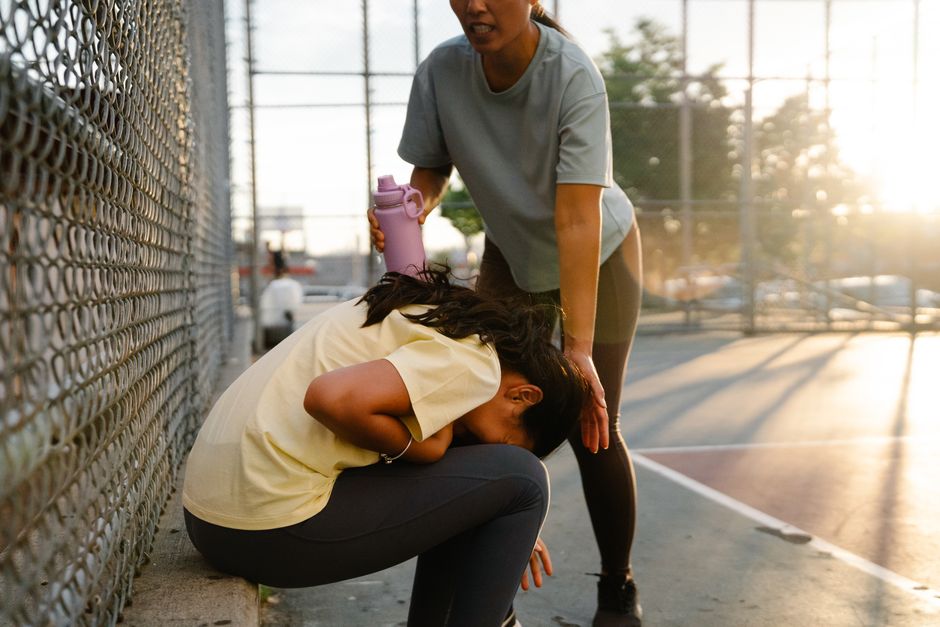
The bystander effect is the reason good people sometimes walk past someone who needs help. It is not cruelty. It is a well-documented psychological response where the presence of other people makes each individual less likely to act. The more people around, the less personal responsibility any single person feels. Overcoming it requires understanding this mechanism and using specific mental tricks to bypass it. The direct answer is to narrow your focus: single out one person, speak directly to them, and give yourself a specific action. You can train yourself to do this before an emergency happens.
What Is the Bystander Effect and Why Does It Happen?
The bystander effect was named after the 1964 murder of Kitty Genovese in New York. Reports at the time claimed 38 witnesses did nothing. Later investigations showed those reports were exaggerated and some neighbors did call police. But the case sparked research that confirmed a real effect.
Psychologists Bibb Latané and John Darley ran experiments in the 1960s and 1970s that established the core finding. In one study, people were more likely to report smoke filling a room when they were alone than when others were present. The effect has been replicated many times since.
Two main psychological processes drive it. The first is diffusion of responsibility. When others are present, people assume someone else will act. The second is social influence. People look at others to decide what is happening. If everyone looks calm, each person concludes nothing is wrong.
These processes are not conscious choices. They happen quickly and automatically. That is why knowing about them matters. Awareness alone does not always override them, but it gives you a starting point.
How To Overcome The Bystander Effect And Take Action
The most reliable way to break the bystander effect is to make the situation feel personal and specific. When you feel anonymous, you feel less responsible. When you feel seen, you act.
Here is what to do in the moment:
- Name the problem out loud. Say what you see. “That person has fallen.” This interrupts the social influence process because others hear a clear signal that something is wrong.
- Single out one person. Point at someone and speak directly to them. “You in the blue jacket, call 911.” This removes their excuse for inaction.
- Assign a specific task. Do not say “someone help.” Say “you, check his breathing” or “you, get water.” Specific instructions are harder to ignore.
- Move toward the person in need. Physical movement changes your mental state. It shifts you from observer to participant.
If you are the one needing help, you can use the same principle in reverse. Do not shout “help me” to a crowd. Point at a specific person and say “you in the red shirt, call an ambulance.” This works because it directly counters diffusion of responsibility.
Research consistently shows that people who have thought about these steps in advance are more likely to act in an emergency. Mental rehearsal matters. Picture yourself stepping forward. It makes the behavior more automatic when it counts.
Why Knowing About the Effect Is Not Always Enough
There is a common belief that simply being educated about the bystander effect makes you immune to it. The evidence does not support that. Studies have shown that people who know about the effect still fail to act in simulated emergencies.
Why? Because the processes happen fast and below conscious awareness. By the time you think “this is the bystander effect,” the moment may have passed.
What works better is a pre-commitment strategy. Decide now, before any emergency, that you will be the one who acts. Tell yourself: “If I see someone in trouble, I will move toward them.” This is a decision made in a calm state, not in the chaos of the moment.
Another useful technique is to practice the “if-then” plan. If I see someone collapse, then I will walk over and ask if they are okay. If I hear a crash, then I will go look. These simple plans create a mental shortcut that bypasses the hesitation.
Some research suggests that even a few seconds of hesitation can be enough for the bystander effect to take hold. The longer people wait, the less likely they are to act. Moving quickly is not just about speed. It is about interrupting your own hesitation before social influence kicks in.





When Action Means Calling for Help, Not Jumping In
Taking action does not always mean physically intervening. In many situations, the most helpful thing is to call emergency services or get a trained professional.
This is an important distinction. The bystander effect research is about failing to respond at all. The response itself can take many forms. Calling 911 is a valid and often the best response. So is finding someone with medical training or directing traffic away from an accident.
A common barrier is fear of doing the wrong thing. People worry they will make the situation worse. This fear is often overstated. In most emergencies, any response is better than no response. A call to emergency services provides trained dispatchers who can guide you through what to do next.
If you are unsure whether someone needs help, approach them and ask. A person who is fine will tell you. A person who is not fine needs you to ask. The cost of a brief awkward interaction is far lower than the cost of ignoring a real emergency.
Can the Bystander Effect Be Prevented in Groups and Workplaces?
The bystander effect does not only happen among strangers on the street. It happens in workplaces, families, and friend groups. It can affect how teams respond to problems, how colleagues respond to harassment, and how friends respond to someone in crisis.
Organizations can reduce the effect by assigning clear roles. When everyone knows who is responsible for what, diffusion of responsibility has less room to operate. For example, a workplace that designates a specific person to respond to medical emergencies will get faster responses than one that relies on “someone” to handle it.
In friend groups, the same principle applies. If you are worried about a friend, say so directly to one other person. “I am worried about Sarah. Can we check on her together?” This creates a specific plan with a specific person.
In workplaces, speaking up about problems is a form of bystander action. The same psychological barriers apply. People assume someone else will report the safety issue or the unethical behavior. Organizations that explicitly invite employees to speak up, and that respond without punishment, see more reporting.
There is also evidence that group training can help. When teams practice emergency scenarios together, they build shared expectations about who does what. This reduces the ambiguity that feeds the bystander effect.
What the Research Does and Does Not Show
The core findings of the bystander effect are well established. The effect is real, it is reproducible, and the underlying mechanisms are understood. That is the confident part.
What is less certain is how strong the effect is in real-world emergencies compared to laboratory settings. Real emergencies are chaotic and unpredictable. Some researchers have argued that the effect may be smaller in real life than in controlled studies. A 2019 analysis of real-world surveillance footage, published in the American Psychologist, found that bystanders intervened in over 90 percent of public conflicts. That finding does not disprove the bystander effect, but it suggests the effect may be stronger in some situations than others.
No large clinical trials have tested specific training programs for bystander intervention. Some studies suggest that brief educational interventions can increase willingness to help, but the evidence base is not strong enough to claim a specific program works.
The honest position is this: the bystander effect is real, the mechanisms are understood, and simple strategies like singling out individuals and assigning tasks are widely recommended by psychologists. But no one can guarantee a specific technique will work in every situation.
Practical Steps to Build Your Personal Response Plan
You can prepare without becoming paranoid. The goal is not to see danger everywhere. The goal is to be ready to respond if you see it.
Start with these steps:
- Decide your default response now. Your default should be “approach and assess,” not “wait and see.”
- Learn basic emergency skills. CPR training and first aid courses build confidence. People with training are more likely to act because they know what to do.
- Practice the language of direct action. Say the words out loud: “You, call 911.” “You, help me lift this.” Familiarity makes it easier in the moment.
- Notice your hesitation. If you catch yourself thinking “someone else will handle it,” treat that thought as a warning sign. It means the bystander effect is working on you.
- Remember the pluralistic ignorance trap. If you are unsure whether something is an emergency, others are probably unsure too. Acting to check is never a mistake.
No one wants to be the person who walks past. The good news is that the bystander effect is not a fixed personality trait. It is a situational response. Change the situation, even mentally, and you change the response.
Frequently Asked Questions
What is the best way to overcome the bystander effect?
The best way is to single out one person and give them a specific task, such as calling 911. This directly counters diffusion of responsibility because that person can no longer assume someone else will act.
Why do people not help when others are present?
People fail to help because of diffusion of responsibility and social influence. When others are present, each person feels less personal responsibility and looks to others for cues about whether action is needed.
Does knowing about the bystander effect make you more likely to help?
Knowing about the effect helps but is not enough on its own. Pre-committing to a specific response, like “if I see trouble, I will approach,” is more effective than general awareness.
Is calling 911 enough to count as taking action?
Yes. Calling emergency services is a valid and often the most appropriate form of action. Dispatchers can provide instructions and send trained responders who are better equipped than untrained bystanders.
