
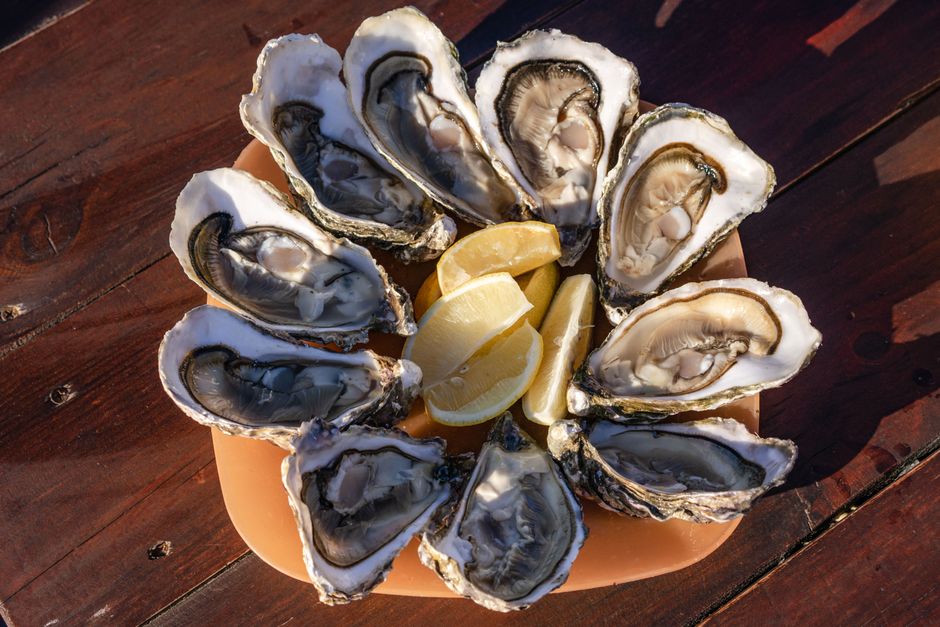
You can open oysters without a knife by applying gentle heat that causes the shell to relax and separate on its own. The most reliable method is to place the oysters in a covered pot or on a sheet pan in a moderately hot oven for a few minutes, then check them one by one. As the internal moisture heats and expands, the adductor muscle — the small muscle that holds the two shell halves together — releases its grip, and the shell opens at the hinge. You do not need to pry, stab, or force anything.
This method works, but it comes with real trade-offs. Heat changes the texture and flavor of the oyster, and it is not the same as serving them raw on the half shell. It also does not make spoiled oysters safe to eat. Understanding how the process works — and where it can go wrong — matters more than the technique itself.
How To Open Oysters With Heat Without A Knife
The heat method relies on a simple physical principle. A live oyster holds its shell closed using the adductor muscle, which attaches the meat to both shell halves. When the oyster is exposed to heat, that muscle loses tension and the shell opens.
Here is the basic approach:
- Preheat your oven to 400°F (204°C). This is a common temperature for this method, though some cooks use a slightly cooler or hotter setting.
- Rinse the oysters under cold running water and scrub the shells with a stiff brush to remove mud and grit.
- Discard any oyster that is already open and does not close when you tap the shell. A live oyster should stay shut.
- Arrange the oysters cup-side down on a rimmed baking sheet or in a single layer in a covered pot.
- Bake for roughly 5 to 8 minutes, checking frequently. The exact time depends on the size of the oyster and your oven.
- Remove oysters as soon as their shells gape open. Do not leave them in longer than needed.
The moment a shell opens, take it out. Overcooking turns the meat rubbery and dries it out. If an oyster has not opened after about 8 to 10 minutes, it is likely dead or was already dead before cooking. Discard it. A dead oyster does not open because the muscle has already decomposed, and eating it carries a risk of foodborne illness.
You can also use a grill or a steamer. On a grill, place oysters directly over medium heat and cover. In a steamer, arrange them in a single layer and steam for a few minutes. The principle is the same — gentle, even heat until the shell releases.
Why Does Heat Make an Oyster Shell Open?
Heat causes the adductor muscle to relax and lose its hold on the shell. This is a physical and physiological response, not a chemical trick.
A live oyster keeps its shell clamped shut as a defense mechanism. The adductor muscle works continuously to maintain that seal. When the oyster is heated, the proteins in the muscle begin to denature — the same process that happens when you cook any meat. As the muscle tissue breaks down, it can no longer generate the force needed to keep the shell closed. The two halves separate at the hinge.
There is also a small amount of moisture inside the shell. As that moisture heats, it turns to steam and creates slight internal pressure. This pressure helps push the shell apart once the muscle has weakened. The combination of muscle relaxation and internal steam pressure is what makes the shell open without any prying.
This is different from shucking, where you manually cut the adductor muscle with a knife. With heat, the muscle releases on its own. That is why you do not need a knife at all.
Does Heat Change the Taste and Texture of Oysters?
Yes, and the change is significant. Heat cooking alters both the texture and the flavor of the oyster meat.
A raw oyster is soft, briny, and slippery, with a clean taste of the sea. Once heated, the meat becomes firmer and more opaque. The proteins coagulate, the texture turns from silky to somewhat rubbery if overcooked, and the flavor becomes milder and less briny. Some people prefer this. Others find it loses exactly what makes an oyster worth eating.
If you are used to raw oysters on the half shell, the heat method will give you a different food. It is closer to a steamed clam or mussel in texture. That is not a flaw — it is simply a different preparation. Many cooked oyster dishes, such as Oysters Rockefeller or grilled oysters with butter and garlic, rely on heat and are popular for good reason.
The trade-off is clear. You gain convenience and safety from not handling a knife. You lose the raw texture and delicate flavor that some people value most.





Is the Heat Method Safe?
Heat kills many of the bacteria and viruses that can cause illness, but it does not make a bad oyster good. Safety depends on the oyster being alive and fresh before you cook it.
Oysters can carry Vibrio bacteria, which occur naturally in coastal waters. These bacteria can cause serious illness, especially in people with liver disease, diabetes, or weakened immune systems. Cooking to an internal temperature that kills Vibrio reduces this risk. The CDC advises that people at higher risk avoid eating raw or undercooked oysters entirely. For those individuals, thoroughly cooked oysters are the safer choice.
However, heat does not destroy every possible hazard. If an oyster has been sitting at room temperature for too long or was dead before cooking, bacteria may have multiplied to dangerous levels. Cooking may kill the bacteria, but it does not remove the toxins some bacteria produce. Those toxins can survive heat and cause illness.
This is why the rule about dead oysters matters. Before cooking, tap any open shell. If it does not close, throw it out. After cooking, discard any oyster that did not open. Do not eat it.
Also, do not assume that cooking makes an oyster safe for everyone. People with certain medical conditions should follow medical advice about avoiding oysters altogether, cooked or raw. If you are pregnant, have a compromised immune system, or have liver disease, talk to your doctor before eating oysters in any form.
What Are the Alternatives to Opening Oysters Without a Knife?
Heat is not the only way to open an oyster without a knife, though it is the most common. Each method has trade-offs.
Freezing briefly: Placing oysters in the freezer for a short time can cause the adductor muscle to relax slightly, making them easier to open. The problem is that freezing also affects texture and can kill the oyster. This method is unreliable for raw consumption.
Microwaving: Some people microwave oysters for a few seconds until the shell opens. This works on the same principle as oven heat but is harder to control. Oysters can overcook quickly, and the results are inconsistent. It is not a recommended method for quality.
Steaming: Steaming is gentler than oven heat and keeps the oysters moist. It takes a few minutes, and the shells open similarly. This is a good option if you plan to use the oysters in a cooked dish.
Grilling: Grilling adds smoky flavor and opens the shells through direct heat. It requires attention because the oysters can dry out or burn.
None of these methods preserve the raw oyster experience. If you want raw oysters, you need a knife and practice. There is no way around that. The heat method is for cooked preparations.
What Should You Do With the Oysters After They Open?
Once the shells open, use the oysters right away. They are fully or partially cooked and should not sit out at room temperature.
If you plan to eat them as is, loosen the meat from the shell with a small fork or spoon and serve immediately. If you are using them in a recipe, proceed with the recipe right away. Do not let cooked oysters sit for more than a short time before eating or refrigerating.
If you need to hold them briefly, keep them covered and warm, but not for long. Cooked seafood is perishable and should be refrigerated within a reasonable time if not eaten promptly. Reheating cooked oysters tends to make them tougher, so it is best to cook only what you plan to eat.
The liquid inside the shell is flavorful and can be saved for sauces, soups, or broths. It is essentially oyster liquor — salty, briny, and useful in cooking. Strain it if there is any grit.
Common Mistakes to Avoid
The biggest mistake is cooking oysters too long. The difference between perfectly cooked and rubbery is a matter of a minute or two. Stay close to the oven and check often.
Another mistake is assuming all oysters will open at the same time. They will not. Remove each one as it opens and leave the rest to continue cooking. This means you need to be present and paying attention.
Do not eat oysters that fail to open. This is not a suggestion. An oyster that stays shut after cooking was likely dead before it went in, and eating it can make you sick.
Finally, do not use the heat method if you want raw oysters. It will not give you that result. If raw oysters are the goal, learn to shuck with a proper oyster knife and cut-resistant glove, or buy them already shucked from a reputable source.
Frequently Asked Questions
Can you open oysters with heat without a knife?
Yes. Heating oysters in an oven, steamer, or grill causes the adductor muscle to relax, and the shell opens on its own. You do not need a knife for this method.
How long does it take to open oysters in the oven?
Most oysters open in about 5 to 8 minutes at 400°F, though the exact time varies with size and your oven. Check frequently and remove each oyster as soon as it opens.
Is it safe to eat oysters that do not open after cooking?
No. An oyster that stays closed after cooking was likely dead before it was heated, and eating it can cause foodborne illness. Discard any oyster that does not open.
Does heating oysters kill bacteria?
Cooking to a sufficient internal temperature kills Vibrio and many other bacteria, which reduces risk. However, heat does not remove toxins that may already be present, so freshness before cooking still matters.
