
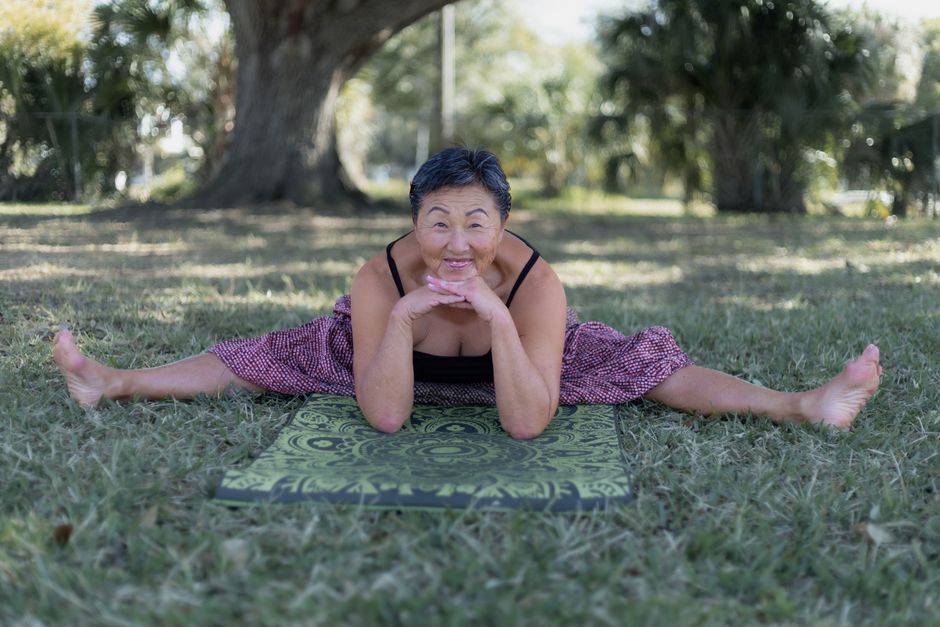
Graceful movement is not a talent you are born with. It is the visible result of three things working together: enough strength to control your body weight, enough flexibility to move through a full range, and daily habits that keep both from fading. Tension quietly undermines all three. When muscles stay tight, your joints cannot travel their normal path, and your body finds a workaround. Do that for years and the workaround becomes your posture. The fix is not a single stretch or a special program. It is a set of small, repeatable habits that address tension, build core control, and keep your movement smooth over time.
What Does It Actually Mean to Move Gracefully?
Graceful movement is efficient movement. It means your joints move through their natural range, your muscles share the workload, and you do not waste energy bracing against yourself.
Watch someone walk who moves well. Their hips rotate, their spine counter-rotates slightly, and their arms swing in opposition to their legs. Nothing looks forced. Now watch someone with chronic tension in the lower back or shoulders. The movement is stiffer, the steps shorter, and the body seems to hold itself in place rather than flow. That stiffness is not a personality trait. It is a pattern built from repeated habits.
Grace also depends on something less obvious: your nervous system. Movement quality is partly a matter of coordination — the brain sequencing muscle contractions in the right order at the right time. That sequencing improves with practice and deteriorates with disuse. This is why people who move well often do not look like they are trying. Their nervous system has learned the pattern.
Why Does Muscle Tension Interfere With Graceful Movement?
Muscle tension restricts range of motion. A tight hip flexor pulls on the pelvis. Tight chest muscles round the shoulders forward. Tight hamstrings limit how far the hip can extend during a stride.
Some tension is normal and necessary. Muscles need a baseline level of tone to hold you upright and respond to demand. The problem is sustained tension that never fully releases — the kind that builds from hours of sitting, repetitive work, or chronic stress. When a muscle stays shortened for long periods, the surrounding connective tissue adapts and becomes less pliable. That change does not happen overnight, and it does not reverse overnight either.
There is a useful distinction here that gets lost in fitness marketing. Stretching a tight muscle feels good and temporarily increases tolerance to stretch, but research on static stretching suggests the lasting change in muscle length is modest. What often helps more is strengthening the opposing muscle and teaching the nervous system to relax the overactive one. In other words, tension is often a control problem as much as a length problem.
Stress plays a direct role. When you are under pressure, muscles in the neck, jaw, and shoulders tighten as part of a normal stress response. If that response is switched on most of the day, those muscles never get the signal to let go. Slow breathing and deliberate relaxation are not soft add-ons — they address the nervous system driver behind a lot of everyday stiffness.
How Do You Build a Core That Supports Smooth Movement?
A functional core stabilizes your spine while your arms and legs move. It is not about crunching. It is about control under load and during motion.
The muscles that matter most for graceful movement are the deep ones that wrap around your trunk — the transverse abdominis, the internal obliques, the pelvic floor, and the diaphragm working together. These muscles create internal pressure that stiffens the spine from the inside. When they engage at the right moment, your movement is stable and smooth. When they lag, your lower back takes the strain.
You can feel this yourself. Stand up and place one hand on your lower belly. Breathe in, then breathe out slowly and notice the gentle tension that comes as you exhale. That is your deep core switching on. Now try lifting one foot off the floor while keeping your pelvis level and your trunk still. If your hip drops or your body sways, your core control needs work.
Good core training looks like this:
- Holding a stable position while a limb moves — such as a bird-dog or a dead bug
- Resisting rotation or side-bending rather than creating it
- Carrying weight while walking with an upright trunk
- Practicing slow, controlled breathing that keeps the ribcage and pelvis aligned
These patterns train the core the way it actually works in life: holding you steady while something else moves. Crunches train a different quality — trunk flexion — and do little for the stability that graceful movement depends on.




How To Move Gracefully Tension Core And Daily Habits
The habits that shape how you move are the ones you repeat without thinking. Sitting posture, how you carry bags, how you stand in line, how you bend to pick something up — these accumulate. Changing a few of them matters more than any single workout.
Start with awareness. Most people do not know they are holding tension until someone points it out. A simple check a few times a day helps: notice your jaw, your shoulders, and your lower back. Are they tight right now? Can you let them soften without collapsing? That small reset, repeated often, gradually retrains the resting level of tension.
Break up long periods of stillness. The human body is not built to hold one position for hours. Getting up and moving every so often — even briefly — keeps joints lubricated and muscles from locking into a shortened position. There is no single correct interval that applies to everyone, but the principle is well supported: frequent small breaks beat one long stretch session.
Build movement variety into your week. Walking, carrying, reaching, squatting, and rotating through your spine are all patterns the body expects. If your day only involves sitting and walking on flat ground, add some of the others. A few minutes of reaching overhead, squatting to pick something up, and turning to look behind you covers ground that most modern days miss.
Protect your sleep and manage stress where you can. Muscles recover and tension resets during sleep. Chronic stress keeps the nervous system in a guarded state, which shows up as tight shoulders and a stiff back. These are not separate from movement quality — they feed directly into it.
Does Stretching Alone Make You More Graceful?
Stretching helps, but it is not enough on its own. Flexibility without strength and control produces range you cannot use.
Think about someone who can touch their toes easily but cannot control their spine when lifting something heavy. Their flexibility is real, but their movement is not graceful because they lack the strength to stabilize through that range. Grace needs both. The most useful approach combines mobility work with strengthening in the same range — moving slowly through a full range under control rather than only pulling on a muscle and holding.
Dynamic movement before activity — leg swings, arm circles, gentle spinal rotations — prepares the body for motion. Static holds tend to work better after activity or as a separate session. Some research suggests long static holds right before explosive activity can temporarily reduce power output, so timing matters. For everyday movement quality, the difference is small, but it is worth knowing.
What Role Does Posture Play in Moving Well?
Posture is not a rigid position you hold. It is how you distribute load through your body from moment to moment. Good posture is variable — you shift, adjust, and reset throughout the day.
The idea that there is one perfect posture to maintain is not well supported. Holding any single position for too long, even a “good” one, creates stiffness. What matters more is that you change position often and that your muscles can support the positions you choose. A person who slumps for a while and then moves freely is often better off than someone who rigidly holds an upright posture and never varies it.
That said, some postural habits do create predictable tension. Rounded shoulders from prolonged screen use tighten the chest and weaken the muscles between the shoulder blades. A forward head position increases load on the neck. These patterns are worth addressing, not by forcing a posture but by strengthening the muscles that hold you well and loosening the ones that pull you out of line.
How Long Does It Take to See Change?
Small improvements in how you feel often come within a few weeks of consistent practice. Visible changes in movement quality and posture take longer — commonly several months of regular habit.
That timeline is general, not a promise. Connective tissue adapts slowly. Nervous system coordination improves faster than tissue length. The people who see the most change are usually the ones who keep at it without expecting quick results. Consistency matters more than intensity. Ten minutes most days will do more for movement quality than one long session a week.
It also helps to measure something real. Notice whether bending down feels easier, whether your neck is less tight at the end of the day, or whether you can reach higher. These everyday markers tell you more than how far you can stretch in a single test.
Frequently Asked Questions
Can you improve graceful movement at any age?
Yes. Muscle strength, flexibility, and coordination all respond to training at any adult age. Progress may be slower after 60, but the direction of change is the same.
How often should you work on mobility and core control?
Most days is better than a few long sessions. Short, frequent practice fits the way the nervous system and connective tissue adapt.
Is it normal to feel stiff all the time?
Some stiffness is common, especially after long periods of stillness or stress. Stiffness that is persistent, painful, or limits daily activity is worth discussing with a clinician.
Does yoga make you move more gracefully?
Yoga can improve flexibility, balance, and body awareness, which support graceful movement. It does not automatically build the strength and control that grace also requires, so pairing it with resistance or stability work helps.
