
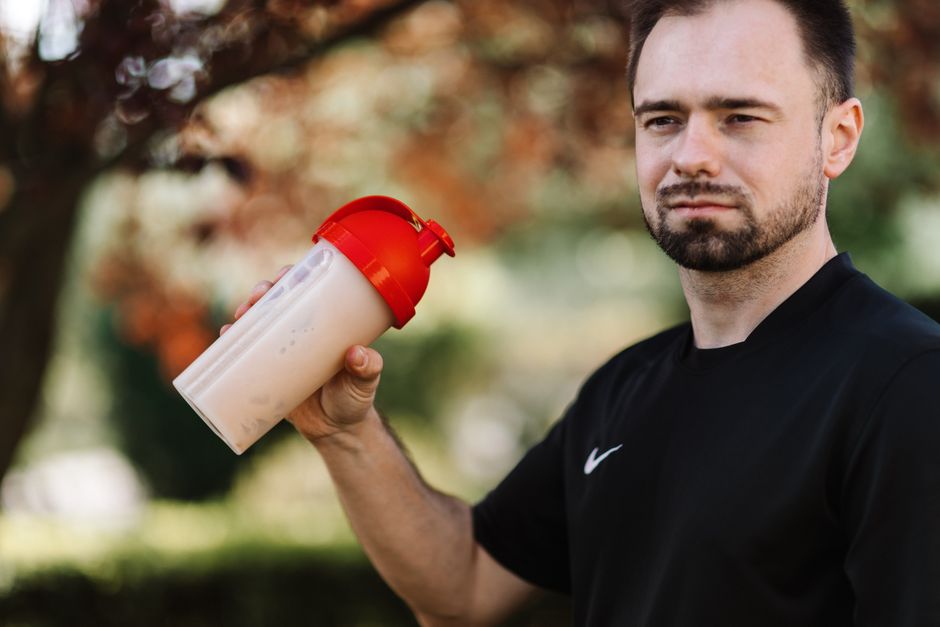
To mix protein powder into a smooth, clump-free shake, the key is to always add your liquid first, then the powder, and use vigorous mixing. A shaker bottle with a wire whisk ball works best for most powders. If you have time, let the shake rest for a minute after shaking, then shake again. For stubborn clumps, use a blender on low speed with a splash of oil or lecithin granules.
Why Does Protein Powder Clump?
Protein powder clumps because of how its particles interact with liquid. The powder is mostly fine particles that are hydrophilic — they attract water. When dry powder hits liquid, the outer layer of each particle hydrates quickly and forms a sticky gel barrier. This barrier traps dry powder inside, creating a clump.
Think of it like flour in water. The surface of each granule swells and becomes sticky before the liquid can reach the center. Shaking or stirring can break some clumps, but the gel barrier makes them tough to fully dissolve.
Temperature also matters. Cold liquids make the clumping worse because they slow the hydration process. The powder partially dissolves on the outside but the center stays dry, forming a harder clump. Warm liquids help break down the gel barrier faster, but they can also denature some proteins if too hot.
Different protein types clump differently. Whey protein is generally easier to mix than casein or plant proteins because it is more soluble in water. Casein forms a thick, creamy mixture that can easily turn into lumps if not mixed properly. Plant proteins — such as pea, rice, or hemp — often have lower solubility and may need extra effort or a blender.
How To Mix Protein Powder Smooth Clump Free Shakes
Use this order: liquid first, then powder, then mix. This simple sequence prevents powder from sticking to the bottom or forming dry pockets.
For a shaker bottle: Fill with cold or room-temperature liquid — water, milk, or a milk alternative — leaving about an inch of space at the top. Add your scoop of protein powder. Close the lid tightly. Shake vigorously for 15 to 20 seconds. Let the bottle sit for 30 seconds to allow foam and any remaining clumps to break down. Shake again for another 10 seconds. This rest-and-shake method dissolves most clumps.
For a blender: Add liquid first, then powder. Blend on low speed for 5 seconds to combine, then increase to medium speed for 15 seconds. Avoid blending on high from the start — it can trap air and create foam without fully dissolving clumps. If you are adding ice or frozen fruit, add them after the powder is fully mixed.
For a hand blender (immersion blender): Place the liquid in a narrow cup or jar, add powder, and blend in an up-and-down motion. The narrow container forces the mixture through the blades repeatedly, breaking clumps efficiently.
For a milk frother: Works well with smaller amounts — one scoop in 6 to 8 ounces of liquid. Froth for 15 seconds. This method is quiet and produces a very smooth shake, but it does not work for thick shakes with fruit or peanut butter.
The Best Tools for Clump-Free Shakes
Not all shaker bottles are equal. The standard plastic shaker with a metal wire whisk ball — sometimes called a BlenderBall — is the most reliable for everyday use. The ball helps break clumps mechanically as it rattles inside. Look for bottles with wide mouths for easy cleaning.
Electric shaker bottles have built-in motors that mix automatically. They can be effective but are harder to clean and more expensive. Some models have separate blending compartments for adding powder later.
Personal blenders — like those designed for single-smoothie-making — are excellent for heavy mixtures with ice or fruit. They break up clumps thoroughly but require more cleanup time than a shaker bottle.
Immersion blenders are a good middle ground. They are easy to clean, but you need to hold the blade at an angle to create a vortex that pulls powder down into the blades. If the blade sits flat on the bottom, powder can stick to the container wall and not get mixed.
A whisk or fork is not effective for protein powder. They cannot create enough turbulence to break the gel barrier around clumps. You will end up with lumpy liquid and a lot of arm fatigue.




Does the Type of Protein Matter?
Yes. Whey protein isolate mixes more easily than whey protein concentrate because the filtering process removes most fat and lactose, leaving smaller, more soluble particles. Concentrate can still work well, but you may need a little more shaking or a slightly warmer liquid.
Casein protein, often taken before bed, forms a gel-like texture in the stomach. In the shaker bottle, it tends to clump and thicken quickly. Use more liquid — about 12 ounces per scoop — and shake immediately. Letting it sit makes the clumps harder to break.
Plant-based proteins — pea, rice, hemp, soy — are naturally less soluble. Many brands add sunflower lecithin or xanthan gum to improve mixing. Even then, you may need to shake harder or use a blender. Some plant powders have a gritty texture that never fully dissolves regardless of mixing method. Check the label for “instantized” versions, which have undergone processing to improve dispersion.
Collagen peptides dissolve easily in both hot and cold liquids. They are an exception — they typically do not clump at all because of their small particle size and high solubility. This makes them a good option if clumping bothers you, but note they do not provide the same amino acid profile as whey or soy for muscle building.
Temperature Tricks: Hot and Cold
Using warm — not boiling — liquid can help dissolve protein powder more completely. Heat between 80°F and 120°F (about 30°C to 50°C) works best. Temperatures above 160°F may start denaturing proteins, changing their structure and potentially reducing some biological activity. For whey, this matters less for practical purposes, but for some plant proteins it can create a lumpy, curdled texture.
If you want a cold shake, try this: Mix the powder with a small amount of warm water (about 1/4 cup) first, whisk until smooth, then add the cold liquid and ice. This two-step method prevents the cold liquid from triggering clumps before the powder is fully hydrated.
For freezing or meal prep, mix the shake thoroughly first, then freeze. Thawing a frozen protein shake can cause clumps if the powder had not fully dissolved before freezing. Better to freeze liquid-only and add powder fresh.
Additives That Prevent Clumping
Some protein powders already contain anti-clumping agents like lecithin (often sunflower or soy) or silicon dioxide. These ingredients coat particles and keep them from sticking to each other. If your powder does not have them, you can add a small amount yourself.
Xanthan gum is a common thickening agent used in many brands. It can help prevent clumping by keeping particles suspended in the liquid. However, it absorbs water and can make the shake very thick if you add too much. A tiny pinch — about 1/8 teaspoon per shake — is enough. More than that can cause digestive upset in some people.
Using milk instead of water also reduces clumping. The fat and proteins in milk act as natural emulsifiers, helping the powder disperse. This is an easy fix if you can tolerate dairy.
Some people add a small amount of oil — like coconut or MCT oil — to the shaker before adding liquid. The oil coats the powder particles and slows hydration, reducing the chance of a gel seal forming. Use about one teaspoon. This works especially well with plant proteins.
Common Mistakes and How to Fix a Clumpy Shake
Mistake 1: Adding powder first. This traps dry powder under the lid and at the bottom of the bottle. Even with vigorous shaking, these dry pockets never fully mix. Always pour liquid first.
Mistake 2: Using too little liquid. For most powders, use at least 8 to 10 ounces per scoop. Thicker shakes for meal replacements need more liquid to stay smooth.
Mistake 3: Shaking only once. One round of shaking often leaves clumps. The rest-and-shake method (shake, rest 30 seconds, shake again) gives time for the powder to absorb liquid and for clumps to soften.
Mistake 4: Using ice when shaking. Ice cubes can jam the wire whisk ball in a shaker bottle, preventing it from moving freely. Add ice after the powder is fully mixed, or crush the ice first.
How to fix a clumpy shake: Pour the shake through a fine-mesh strainer into another container. Press the clumps with a spoon to break them up, then stir back in. Alternatively, re-blend the shake in a blender or use an immersion blender to break the clumps. If you add a splash of warm liquid and re-shake vigorously, it often works too.
Frequently Asked Questions
Why does my protein powder clump when I use cold milk?
Cold milk slows the hydration of the powder, allowing a sticky gel layer to form on the outside of particles before the interior dissolves. The solution is to warm the milk slightly or use the two-step method: mix with a small amount of warm water first, then add the cold milk.
Can I use a fork to mix protein powder?
A fork is not effective because it cannot create enough turbulence to break through the gel barrier around clumps. A shaker bottle with a wire whisk ball or a blender works far better.
Is it better to use a blender or a shaker bottle?
Both work, but they serve different needs. A shaker bottle is faster and easier to clean, making it best for on-the-go use. A blender gives a smoother texture and is better for shakes with added fruit, nut butter, or ice, but takes more time to clean.
How do I fix a clumpy protein shake after making it?
Pour the shake through a fine-mesh strainer and press clumps through with a spoon. Or re-blend the shake in a blender or with an immersion blender. Another quick fix is to add a splash of warm liquid and shake vigorously again.
