
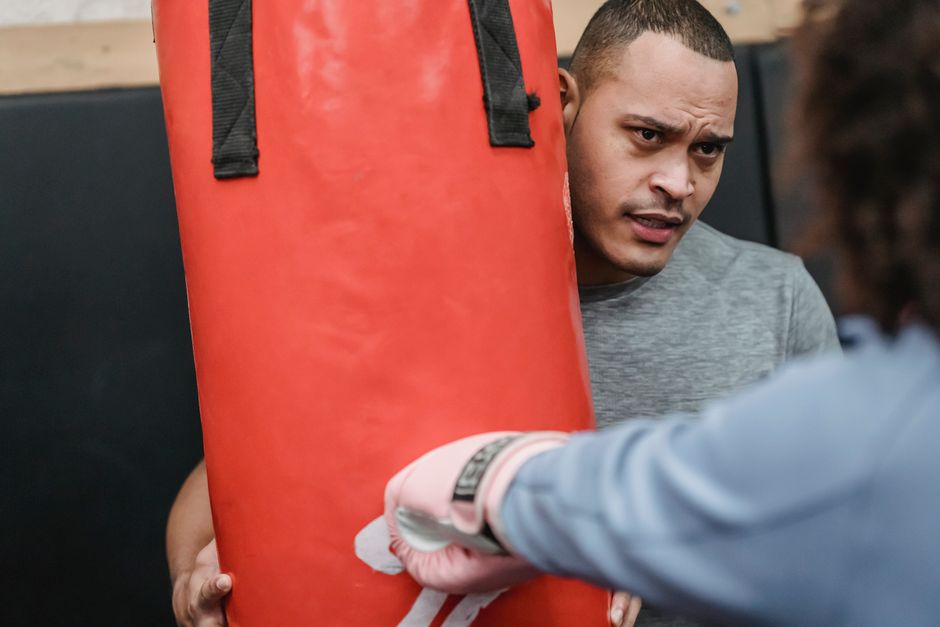
Measuring punching power is not about how hard it feels or how loud the impact sounds. It comes down to physics: force, mass, and acceleration. The most accurate way to measure it is with a force plate or a specialized punching dynamometer, which records the peak force of a strike in pounds or Newtons. For most people, a commercial punching bag sensor or a simple accelerometer-based device provides a practical benchmark, but the numbers vary widely depending on the device and how you throw the punch.
What Units Are Used To Measure Punching Power?
Punching power is most often reported in pounds of force (lbf) or Newtons (N). Force is a direct measurement of the impact. Some devices report velocity (feet per second or meters per second) and then calculate force using the mass of the fist and arm.
Momentum is another metric used in boxing analytics. It combines the mass of the striking limb with its velocity at impact. While force tells you the peak impact, momentum tells you how much “push” the punch carries. Both are valid, but they measure slightly different things.
One important note: no consumer device measures the same way. A reading of 500 on one brand of punching bag sensor may not equal 500 on another. The numbers are only useful for tracking your own progress on the same device.
What Is The Most Accurate Way To Measure Punching Power?
The gold standard is a laboratory-grade force plate. These are the same devices used in biomechanics research to study jumping, running, and striking. A boxer punches a padded target mounted on the plate, and the plate records the ground reaction force of the impact. This gives a clean, direct measurement of peak force.
Research settings also use instrumented punching bags with embedded load cells. These are more realistic than a flat force plate because they allow a full boxing technique with body rotation and follow-through. Load cells measure the force transmitted through the bag at the moment of impact.
These systems are expensive and not practical for home use. If you are a serious athlete working with a sports science team, this is the standard. For everyone else, the options below are more realistic.
How Do Consumer Punching Bag Sensors Compare?
Several consumer devices claim to measure punching power. Most use accelerometers or pressure sensors built into a target pad or a bag-mounted unit. They connect to a smartphone app and give you a number after each punch.
These devices are useful for tracking relative progress. If you consistently score higher over weeks of training, you are likely getting stronger or faster. But do not compare your numbers to a friend’s numbers on a different device. The calibration is not standardized.
Some devices also calculate punch speed. Speed is a major component of power. A faster punch with the same mass produces more force. Training that improves hand speed often shows up as higher power readings, even without added muscle mass.




What Are Realistic Punching Power Benchmarks?
Published research on punching force varies widely because of different measurement methods. Some studies report peak forces between 2,500 and 5,000 Newtons for trained male boxers. That range converts to roughly 560 to 1,100 pounds of force. But these figures come from specific lab setups and do not translate directly to consumer devices.
For untrained individuals, peak punch force is significantly lower. Most untrained men produce less than half the force of a trained boxer. Technique matters as much as muscle mass. A 150-pound boxer with excellent hip rotation can generate more force than a 250-pound untrained person throwing a wild swing.
The key benchmark is not comparing yourself to a professional. It is tracking your own improvement. A good starting goal is to see consistent increases over 8 to 12 weeks of focused training.
How Does Body Weight Affect Punching Power?
Body weight plays a role, but it is not the only factor. Heavier fighters generally produce more force because they have more mass behind the punch. However, the ability to transfer that mass into the target depends on technique, timing, and speed.
Research on combat sports consistently shows that technique and punch velocity are stronger predictors of punching force than body weight alone. A well-coordinated punch using the legs, hips, and core transfers more energy than a punch thrown with only the arm.
This is why strength training alone does not guarantee a harder punch. Power training — movements that combine strength with speed — is more effective. Medicine ball throws, rotational cable work, and plyometric push-ups are examples of power-focused exercises.
Can You Measure Punching Power Without Equipment?
Without any device, you cannot get a numeric measurement. But you can measure progress indirectly. A heavy bag that swings more violently with the same effort suggests more force. A timer that shows faster punch combinations suggests improved speed, which contributes to power.
Video analysis is a practical alternative. Recording your punches in slow motion lets you see whether you are rotating your hips, extending your arm fully, and staying balanced. Fixing technique flaws often increases power more than any strength gain.
Some coaches use a simple test: how far a heavy bag travels after a punch. This is not precise, but it is a free way to notice big changes in power over time.
What Training Methods Actually Increase Punching Power?
Evidence supports a combination of strength training and ballistic (explosive) movements. Heavy compound lifts like squats and deadlifts build the base. Then you convert that strength into speed with exercises like kettlebell swings, jump squats, and rotational throws.
Punching technique itself matters most. Shadowboxing with focus on form, pad work with a coach, and slow-speed heavy bag work all reinforce the movement pattern. Power is a skill, not just a physical trait.
No supplement or special equipment has been proven to increase punching power. Marketing claims that a specific glove, wrap, or device adds force are not supported by reliable clinical evidence. The gains come from training, not gear.
Frequently Asked Questions
What is a good punching power number for a beginner?
There is no universal number because devices measure differently. A beginner should focus on consistent improvement on the same device rather than a specific target.
Do heavier people punch harder?
Heavier people often punch harder because they have more mass, but technique and speed matter more. A skilled lighter fighter can out-punch an untrained heavier person.
Can punching power be increased with training?
Yes. Strength training combined with explosive movements and proper technique consistently increases punching force in research studies.
Are phone apps accurate for measuring punching power?
Apps that use the phone’s accelerometer are not reliable for absolute measurements. They can track relative changes but do not match laboratory accuracy.
