
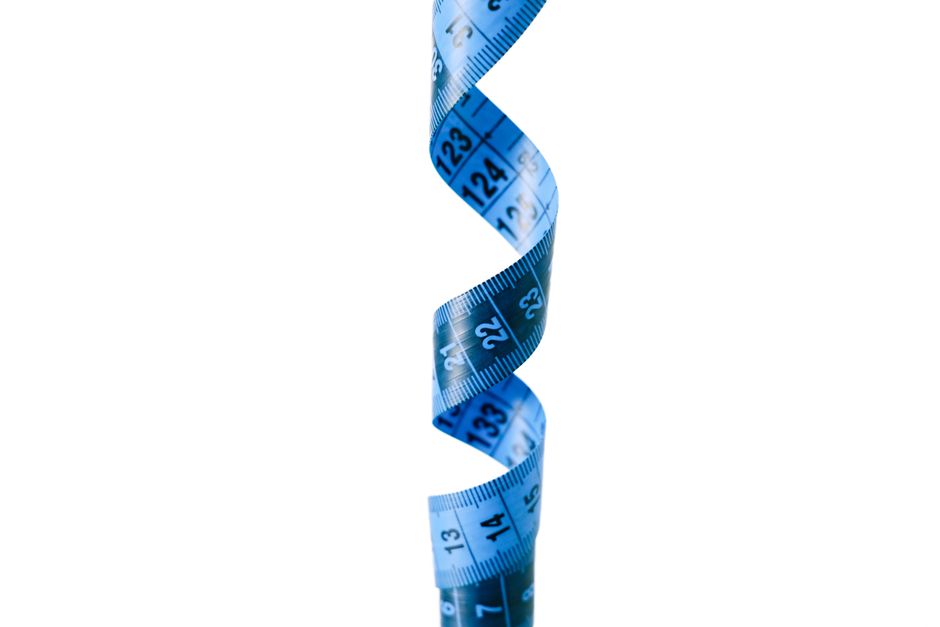
Measuring an object means finding its length, width, and height with a ruler, tape measure, or caliper, then combining those numbers with the right formula. For a box-shaped object, volume is length × width × height and surface area is the sum of all six faces. For a cylinder or sphere, different formulas apply. The method you use depends on the object’s shape and on what you actually need to know.
What Is the Difference Between Dimensions, Volume, and Area?
Dimensions are the individual measurements of an object — its length, width, and height. Volume is the three-dimensional space the object occupies. Area is the two-dimensional surface it covers.
These three ideas get mixed up constantly. A shipping box might be 12 inches long, 8 inches wide, and 6 inches tall. Those are its dimensions. The volume tells you how much it can hold inside. The surface area tells you how much cardboard it takes to build.
One clarification that trips people up: surface area and cross-sectional area are not the same thing. Surface area is the total area of the outside of a 3D object. Cross-sectional area is the area of a single slice through it. A pipe’s cross-section is a circle; its surface area includes the inside and outside walls along the full length.
Knowing which one you need matters. Paint coverage depends on surface area. Flow through a pipe depends on cross-sectional area. Storage capacity depends on volume.
How To Measure An Object Dimensions Volume Area?
Start by identifying the shape. Most everyday objects fall into a handful of categories: rectangular boxes, cylinders, spheres, and irregular shapes. Each has its own approach.
For a rectangular object, measure length, width, and height with a ruler or tape measure. Keep all measurements in the same unit. If you measure length in inches and width in centimeters, convert before calculating.
For a cylinder — a can, a pipe, a candle — measure the diameter of the circular end and the height. The radius is half the diameter.
For a sphere, measure the diameter at the widest point. A soft measuring tape wrapped around the middle gives you the circumference if you cannot reach across the object.
For irregular objects, volume is harder. One common method is water displacement: submerge the object in a graduated container and measure how much the water level rises. This works for objects that will not dissolve or absorb water. It does not work for objects that float without being fully submerged, and it introduces error for very small or very porous items.
What Formulas Do You Use for Common Shapes?
Each shape has a standard formula. These are well established and used across engineering, construction, and science.
- Rectangular box: Volume = length × width × height. Surface area = 2(lw + lh + wh).
- Cylinder: Volume = π × radius² × height. Surface area = 2πr² + 2πrh.
- Sphere: Volume = (4/3) × π × radius³. Surface area = 4πr².
- Cone: Volume = (1/3) × π × radius² × height.
- Circle (2D): Area = π × radius².
- Rectangle (2D): Area = length × width.
Pi (π) is approximately 3.14159. For most everyday calculations, 3.14 is close enough. For engineering or science, use more decimal places.
Notice the pattern: volume formulas for 3D shapes always involve three dimensions multiplied together. Area formulas involve two. That is not a coincidence — it reflects the geometry of space itself.




How Do You Measure Irregular or Oddly Shaped Objects?
Irregular objects — a rock, a piece of fruit, a machine part — do not fit neat formulas. You need indirect methods.
Water displacement is the most common approach. Fill a graduated cylinder with water, record the level, submerge the object completely, and record the new level. The difference is the object’s volume. This method assumes the object does not absorb water, dissolve, or react with it.
For objects that float, you can push them under with a thin rod and account for the rod’s own volume, though this adds measurement error.
3D scanning is increasingly used in manufacturing and medicine. A scanner captures the object’s surface geometry and software calculates volume and surface area. Accuracy depends on the scanner and the object’s surface properties.
For very large or fixed objects — a room, a swimming pool — break the shape into smaller regular pieces, calculate each, and add them together. This is called decomposition. A pool with a shallow end and a deep end, for example, can be treated as two rectangular sections.
Some clinicians use body volume measurement techniques based on water displacement or air displacement to estimate body composition. These methods exist in clinical research settings and have specific protocols. They are not something to attempt at home without training, and their accuracy varies with the population being measured.
What Tools Do You Need for Accurate Measurements?
The right tool depends on what you are measuring and how precise you need to be.
- Ruler or tape measure: Good for flat surfaces and everyday objects. Accuracy is typically within 1/16 of an inch or 1 millimeter.
- Caliper: Used for small objects where precision matters. Digital calipers can measure to 0.01 millimeters.
- Graduated cylinder or measuring cup: For water displacement. Choose one wide enough to fully submerge the object.
- Laser distance meter: For rooms or large objects where a tape measure is impractical.
- 3D scanner: For complex shapes. Not necessary for most household measurements.
Whichever tool you use, the same rule applies: measure twice. Small errors multiply when you cube a number for volume. A 5% error in radius becomes roughly a 16% error in volume for a sphere, because the radius is cubed.
How Do Units Affect Your Calculations?
Units must be consistent. If you measure length in inches, width in inches, and height in inches, your volume is in cubic inches. If you mix inches and feet, your answer will be wrong.
Converting between unit systems is a common source of error. One foot equals 12 inches. One inch equals 2.54 centimeters. One cubic foot equals 1,728 cubic inches.
For volume, the unit is always cubed: cubic centimeters (cm³), cubic meters (m³), cubic inches (in³), cubic feet (ft³). For area, the unit is squared: square centimeters (cm²), square feet (ft²).
Liquid volume uses different units. One milliliter is the same as one cubic centimeter. One liter equals 1,000 cubic centimeters. In the US, one gallon equals 231 cubic inches.
If you are calculating a dose of liquid medication, never convert between household spoons and milliliters by estimation. Use the dosing cup or syringe that came with the medication, because teaspoon and tablespoon measures vary widely between actual utensils. This is a well-documented source of medication errors, particularly in children.
Why Does Measurement Accuracy Matter?
In most everyday situations, close is good enough. A rough volume estimate for a storage container or a paint job will not cause problems.
In some situations, precision matters a great deal. Medication dosing, structural engineering, and laboratory work all depend on accurate measurement. In these settings, the tools and methods are standardized for good reason.
For health-related measurements — waist circumference, body mass index inputs, blood pressure cuff sizing — the general principles are the same. Use the right tool, keep units consistent, and measure more than once. A cloth tape measure stretched around the waist can give a different reading than a rigid one, and the position of the tape matters. Clinical guidelines for waist circumference specify measuring at the top of the hip bone, after exhaling normally, with the tape snug but not compressing the skin.
Measurement error is real and well studied. It is not a reason to avoid measuring. It is a reason to measure carefully and to understand that any single measurement has some uncertainty attached to it.
Frequently Asked Questions
How do you find the volume of a rectangular box?
Multiply length by width by height. Make sure all three measurements use the same unit before multiplying.
What is the difference between area and volume?
Area measures a flat surface in two dimensions, like square feet. Volume measures the space inside a three-dimensional object, like cubic feet.
Can you measure the volume of an irregular object?
Yes, by water displacement. Submerge the object in a graduated container and measure how much the water level rises.
Why do you cube the units for volume?
Because volume involves three dimensions multiplied together. Each dimension contributes one factor of the unit, so the result is unit × unit × unit, or cubic units.
