
Measuring a curved line seems tricky, but five reliable methods make it straightforward. You can use a string and ruler, a measuring wheel, a flexible tape, digital tools like a curved path wand, or mathematical formulas for regular curves like circles and arcs. Each method works best for different situations, and understanding their strengths ensures you get an accurate measurement every time.
How To Measure A Curved Line 5 Reliable Methods? Key Facts
The five reliable methods for measuring a curved line are the string method, the measuring wheel (or surveyor’s wheel), the flexible tape method, digital curve measurement tools (such as digital calipers with curve attachments or software measuring tools), and mathematical formulas for geometric curves. These methods cover nearly every need — from simple household projects to engineering work. Key facts to remember: the string method is the simplest and most accessible; a measuring wheel is best for long outdoor curves; flexible tapes are ideal for gentle curves on soft surfaces; digital tools provide high precision; and mathematical formulas are the only way to measure a perfect geometric curve without physical contact. Choose the method that matches your curve’s length, shape, and the accuracy you need.
What Is the String Method for Measuring Curves?
The string method is the most basic and widely used technique. You take a piece of non‑stretch string and lay it along the curve, following every bend. Mark the string where the curve ends, then straighten the string and measure the marked length against a ruler or tape measure. This method works on any surface and requires no special tools. Its accuracy depends on how carefully you follow the curve and whether the string slips. For curves with tight bends, use a thin string or thread to get closer to the true path. The string method is reliable for most household and craft uses.
How Does a Measuring Wheel Work on Curves?
A measuring wheel (also called a surveyor’s wheel or distance wheel) uses a wheel that rolls along the curve. As the wheel turns, it records the distance traveled. This method is excellent for long, smooth curves on flat surfaces such as roads, sidewalks, or floors. The wheel must stay in contact with the surface the entire time, and sharp bends can cause the wheel to skid or lift, reducing accuracy. For curves with a gentle radius, a measuring wheel gives fast results with minimal effort. For tight or irregular curves, use a different method.




Can You Use a Flexible Tape Measure for Curves?
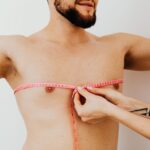
Yes, a flexible tape measure — like a sewing or tailor’s tape — works well for measuring curves on soft or contoured surfaces. You can bend the tape to match gentle curves on fabric, foam, or body shapes. For precise results, hold the tape flat against the curve without twisting. Flexible tapes are less accurate on very tight bends because the tape cannot conform to sharp corners. They are also not suitable for measuring long distances because they can stretch over time. For home sewing, upholstery, or body measurements, a flexible tape is the standard choice.
How to Measure Curves with Digital Tools
Digital tools include handheld curve‑tracing devices and software‑based measurement tools. A digital curve tracer uses a rotating wheel or optical sensor to record the path as you move it along the line. Some models display the length on a screen instantly. These tools are common in industrial design, automotive body work, and graphic design. For digital files — such as images or computer‑aided design (CAD) drawings — you can measure a curved line using software tools that automatically calculate the length. Digital methods offer high repeatability and precision, often within fractions of a millimeter. However, they require a power source and can be expensive for occasional use.
When Should You Use Mathematical Formulas?
Mathematical formulas are the only way to measure a curved line without touching it. This method applies only to curves that follow a known geometric shape — such as a circle, ellipse, parabola, or helix. For example, the length of a circular arc is calculated using the formula arc length = (θ/360) × 2πr, where θ is the central angle in degrees and r is the radius. For an ellipse, the full circumference requires an approximation formula. Using formulas is reliable when you have accurate measurements of the curve’s defining parameters (radius, angle, axis lengths). It is not useful for irregular, free‑form curves — those are best measured with physical tools.
Key Facts About Measuring Curved Lines
Several factors affect which method you should choose:
- Curve type: Regular geometric curves (circles, arcs) can be calculated. Irregular curves require physical tools.
- Curve length: A measuring wheel is fast for long curves. The string method is better for short to medium lengths.
- Surface: On soft or uneven surfaces, a flexible tape or string works better than a rigid wheel.
- Accuracy needed: Digital tools and careful string measurement can achieve high accuracy. Mathematical formulas give the theoretical exact value if your measurements are perfect.
- Accessibility: The string method is the cheapest and requires no purchase. Digital tools are the most expensive.
| Method | Typical Accuracy | Best Used For |
|---|---|---|
| String and ruler | Good, ±1–2 mm with care | Short to medium curves, any surface |
| Measuring wheel | Fair to good, ±5 mm per meter | Long smooth curves on hard surfaces |
| Flexible tape | Good, ±1 mm on gentle curves | Soft surfaces, tailoring, upholstery |
| Digital tools | Excellent, ±0.1 mm | Industrial design, repeated measurements |
| Mathematical formulas | Exact (if inputs are correct) | Perfect geometric curves (circle, ellipse) |
Frequently Asked Questions
Which method is the most accurate for measuring a curved line?
Digital curve‑tracing tools provide the highest accuracy, often within 0.1 mm. For most everyday tasks, the string method done carefully is accurate enough.
Can I measure a curved line using a standard ruler?
No, a straight ruler cannot follow a curve. You must use an intermediate tool like string, flexible tape, or a measuring wheel to capture the curved path first.
How do I measure a curved line on a photo or digital image?
Use image‑measurement software or online tools that let you trace the curve digitally. These tools calculate the path length based on pixel coordinates and a known scale.
Is the string method accurate for long curves?
For very long curves (over 10 meters), the string method becomes less practical because the string can stretch and is hard to handle. A measuring wheel is better for long distances.
