
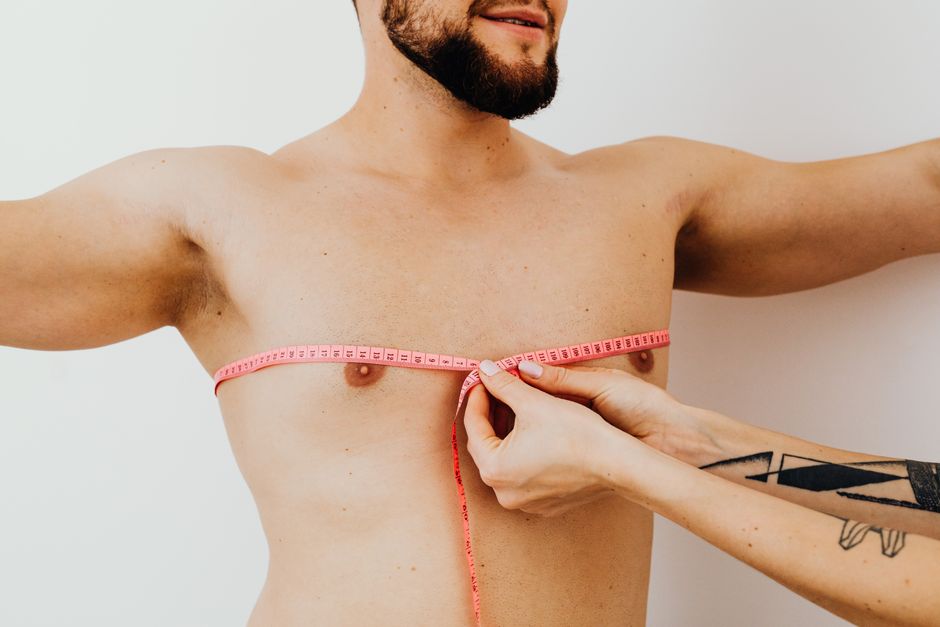
Measuring your chest for bodybuilding is not the same as measuring it for a shirt. A tailor measures around the fullest part of the chest with the tape resting on the surface of the body. For bodybuilding, you want the tape pulled snug against the muscle so you are tracking the size of the tissue itself, not the tissue plus a loose layer of fabric or a puffed-out ribcage. Stand relaxed, arms down at your sides, breathe out normally, and wrap a flexible tape around the chest at nipple level. Keep the tape level all the way around, pull it snug but not tight, and read the number at the point where the tape meets itself. Do it the same way every time and you have a number worth tracking.
How To Measure Your Chest For Bodybuilding The Right Way?
The right way is to standardize everything except the muscle. Same tape, same time of day, same posture, same breathing point, same spot on the chest. Change any of those and the number moves for reasons that have nothing to do with training.
Here is the sequence that works:
- Use a flexible cloth or vinyl tape. A stiff construction tape will not follow the curve of the ribcage and will read wrong.
- Stand tall with arms relaxed at your sides. Do not flex, do not pull your shoulders back, do not hold your breath.
- Wrap the tape around the chest at nipple level. For most men this is the fullest point. For most women, a chest measurement for muscle tracking is taken at the same level, though the bust measurement used in clothing is a different number.
- Check the tape is level in front and in back. A tape that rides up in the back will read smaller than reality.
- Breathe out normally and read the number at the end of a normal exhale. Do not force the last bit of air out — that is a different measurement.
- Pull snug. The tape should touch the skin all the way around with no gap and no compression of the muscle.
- Take three readings and average them. Tape measures slip, and a single reading is easy to fumble.
That is the whole method. It takes about thirty seconds once you have done it a few times.
Where Exactly Should The Tape Sit On Your Chest?
At nipple level for most people. That is the standard landmark because it tends to be the widest point of the chest in a relaxed stance, and it is easy to find consistently.
There is a catch. Nipple position varies from person to person, and it can shift with body fat changes. If your chest is lean and the nipple sits high, the widest point of your chest may be an inch or two lower. If you carry more fat on the chest, the widest point may sit lower still.
Pick one landmark and never change it. Nipple level is the easiest to repeat. Some lifters mark the spot with a faint dot or a small mole they already have, so they hit the same line every time. If you use a different landmark, that is fine — just use the same one forever.
What you should not do is move the tape around looking for the biggest number. That is not a measurement. That is a search for a flattering result, and it destroys your ability to track anything.
Should You Measure Flexed Or Relaxed?
Relaxed, for the chest. Flexed measurements belong to the arms, where the biceps peak is a defined point you can hit the same way every time.
The chest does not have that. When you flex your pecs, the muscle shortens and the chest actually gets smaller around, not bigger. You also change your posture, which changes the ribcage position, which changes the reading. Two variables move at once and the number becomes meaningless.
A relaxed chest measurement at nipple level is reproducible. A flexed one is not, even for the same person on the same day.
If you want to track how the chest looks flexed, that is a job for photos, not a tape. Take them in the same lighting, same pose, same distance from the camera. Photos catch shape changes that a circumference number will never show.




What Time Of Day Should You Measure?
Morning, before you eat or drink, after you use the bathroom, is the most consistent window. Body weight fluctuates through the day with food, fluid, and sodium, and chest circumference moves a little with it.
You do not have to measure in the morning. You do have to measure at the same time every time. If evening works better for your schedule, measure every evening. The absolute number matters less than the trend across weeks.
Two more things that affect the reading:
- Skin temperature and pump. A chest measurement taken right after a workout will read larger because of blood flow into the muscle. That is a temporary swelling, not growth. Measure on a rest day or well before training.
- Hydration. Being dehydrated can shrink the reading slightly. Being well hydrated does the opposite. Neither reflects muscle tissue.
Measure once a week at most. Muscle growth happens slowly. Daily readings bounce around for reasons that have nothing to do with training, and watching that noise is a good way to lose motivation.
What Is A Good Chest Measurement For Bodybuilding?
There is no universal number. Chest size scales with height, frame, and body fat, and a measurement that looks impressive on one person is unremarkable on another.
What matters more is the ratio between your chest and your waist. A chest that is several inches larger than the waist reads as a V-taper, which is the shape most bodybuilders are chasing. Two lifters can have identical chest measurements and look completely different because their waists differ.
If you want a reference point, track your own chest-to-waist difference over time. Measure your waist at the navel, relaxed, at the end of a normal exhale. Then subtract. A growing difference means the chest is gaining relative to the waist, which is usually the goal.
Be careful with waist measurements, though. Sucking in, measuring over a belt line, or measuring at the wrong spot will throw the ratio off. Same rules apply: same spot, same time, same posture, every time.
Common Mistakes That Ruin Chest Measurements
Most bad measurements come from a short list of errors. Check yourself against these.
- Measuring over clothing. A t-shirt can add a half inch or more depending on the fabric. Measure on bare skin.
- Letting the tape sag in back. This is the most common error. Have someone check the back line, or use a mirror.
- Pulling the tape tight. Compressing the chest tissue gives a smaller number that does not reflect the muscle. Snug, not tight.
- Holding your breath. A full inhale can add an inch or more. Breathe out normally.
- Measuring at different times. Morning one week, evening the next, and the trend line is garbage.
- Measuring after training. The pump inflates the number and then deflates. You will think you lost size when you did not.
- Chasing the biggest number. If you move the tape to find a better reading, you are no longer measuring anything.
One more point worth making. A tape measure cannot tell you where the size is coming from. A chest measurement can grow because you added muscle, because you added fat, or because you gained water weight. The tape sees all three the same way. That is why circumference numbers work best alongside photos, body weight, and how your clothes fit. No single number tells the whole story.
Frequently Asked Questions
Where do you measure your chest for bodybuilding?
Measure at nipple level with the tape level all around and snug against bare skin. This is the most repeatable landmark for most people. If your widest point sits elsewhere, pick one spot and use it every time.
Should you measure your chest flexed or relaxed?
Relaxed. Flexing shortens the chest muscle and changes your posture, so the number is not repeatable. Use photos if you want to track how the chest looks flexed.
How often should you measure your chest?
Once a week is enough. Muscle growth is slow, and daily readings swing with food, fluid, and training. A weekly number at the same time of day gives you a trend worth watching.
Does a bigger chest measurement mean more muscle?
Not necessarily. The tape cannot tell muscle from fat or water retention. Use it alongside photos, body weight, and how your clothes fit to get the full picture.
