
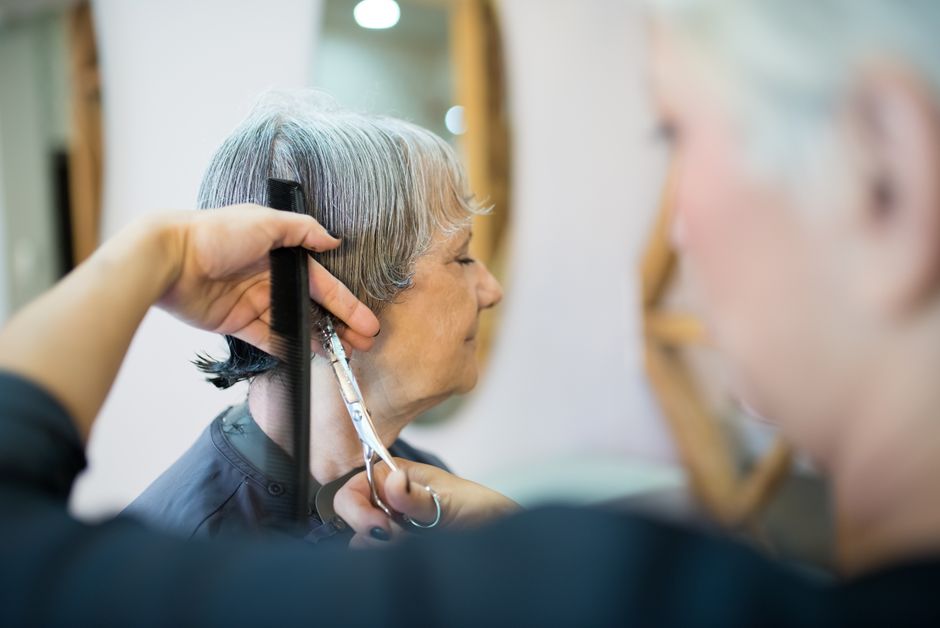
Thin hair cuts are about technique, not product. The right haircut creates the look of more volume by shaping the hair so it sits with more body. Products then support that shape, but no product can fix a cut that does not work for fine or thinning hair.
The key is understanding how weight and length affect fine hair. Long, blunt hair pulls down and looks flat. Layered cuts remove weight and let the hair spring up. This is why stylists often recommend shorter cuts with internal layers for people with thin hair.
Why Does Thin Hair Look Flat So Easily?
Each strand of fine hair is smaller in diameter than medium or coarse hair. That means there is simply less structural support in the hair mass. Fine hair also lacks the natural wave that gives coarse hair its body.
Gravity is the main enemy. When hair is long and heavy, it weighs itself down. The scalp oils also travel down the shaft faster on fine hair because there is less surface area to absorb them. Within a day of washing, many people with fine hair see their roots look greasy and flat.
The cut directly controls how much weight the hair carries. Removing length and adding layers reduces the downward pull. This is not cosmetic theory — it is basic physics applied to hair.
What Cut Makes Thin Hair Look Thicker?
A blunt cut at the ends with soft internal layers is a common approach. The blunt perimeter creates the illusion of density at the hemline. The internal layers remove bulk from the middle so the hair does not sit like a heavy curtain against the scalp.
Shoulder-length or shorter works best for most people with fine hair. Hair that falls past the collarbone usually loses its ability to hold shape. The extra length adds weight without adding actual thickness.
Face-framing layers are helpful. They add movement and make the hair appear fuller around the face. Avoid heavy, chunky layers. Those remove too much density and make thin hair look stringy.
Ask for point cutting rather than blunt scissor cutting through the interior. Point cutting removes small amounts of hair at an angle, which softens the weight without creating visible gaps.
Should You Get Bangs With Thin Hair?
Bangs can work well for thin hair if they are cut correctly. Side-swept bangs add volume at the front and draw attention to the eyes. They also reduce the visual size of the forehead, which balances the overall look.
Blunt, heavy bangs are risky. They sit directly on the forehead and can look sparse if the hair is very fine. If you want blunt bangs, keep them short and dense-looking. A stylist can cut them with a slight inward curve so they do not part and expose the scalp underneath.
Curtain bangs are a popular middle ground. They frame the face and blend into the layers. Because they are longer, they do not require as much density to look intentional.





How To Make Your Hair Thin Cuts Products More Effective
Products cannot create hair that is not there. But the right products can make the hair you have hold the shape your cut provides.
Volume mousse is one of the most effective products for fine hair. Apply it to damp hair at the roots before blow drying. The mousse lifts the cuticle and creates a scaffold that keeps the hair away from the scalp. Look for lightweight formulas that do not contain heavy oils or silicones, which can flatten hair within hours.
Root lifting sprays and powders work differently. They add grip at the scalp so the hair does not lie flat. Apply these directly to the roots, then use your fingers or a brush to distribute. A little goes a long way. Too much leaves a visible white residue.
Dry shampoo is not just for refreshing hair between washes. Sprayed at the roots after styling, it adds texture and grit. That grit gives the hair something to grip onto, which helps volume last longer.
Texturizing sprays and sea salt sprays add roughness to the hair shaft. This roughness makes individual strands catch on each other instead of sliding flat. The effect is more perceived density without adding weight.
Avoid heavy creams, butters, and oils. These coat the hair and pull it down. Even a small amount of a heavy product can undo the work of a good cut.
How Should You Blow Dry Thin Hair?
How you dry your hair matters as much as what you put on it. Blow drying upside down is a simple technique that lifts the roots while they dry. The hair sets in that lifted position.
Use a round brush to pull sections upward and away from the scalp. Direct the heat from the roots toward the ends. This smooths the cuticle while maintaining lift at the root.
Finish with a blast of cool air. Cool air sets the hair in place. The style will hold longer because the hair has been cooled into position rather than left warm and flexible.
Letting fine hair air dry rarely produces volume. As the hair dries, water weighs it down. The result is flat, stretched-out hair. If you must air dry, apply mousse first and flip your head upside down periodically while it dries.
What Haircut Mistakes Make Thin Hair Look Worse?
Several common mistakes exaggerate the appearance of thin hair. Knowing what to avoid is as useful as knowing what to ask for.
Too many layers is the most frequent error. Over-layering removes density that thin hair cannot spare. The result looks wispy and see-through, especially at the ends.
Very long hair is another problem. Past the shoulders, fine hair loses its shape entirely. The weight stretches the hair and exposes the scalp at the part line.
Razor cutting is generally not recommended for fine hair. A razor frays the ends, which can make them look thinner and more damaged. Scissor cutting keeps a cleaner edge.
Blunt cuts with no layers at all can also fail. While the perimeter looks dense, the hair sits like a heavy block against the head. There is no internal movement to create the appearance of volume.
Center parts can make thin hair look sparser. The part line exposes the scalp directly. A zigzag part or a deep side part covers more scalp and adds instant lift at the root.
Do Hair Thickening Products Actually Work?
Some thickening products genuinely change the appearance of hair. Others are marketing with little behind them.
Products containing polymers or proteins coat the hair shaft and make each strand slightly thicker. This is a temporary, cosmetic effect. It washes out. But for the hours after application, the hair genuinely measures as thicker under a microscope.
Products that claim to grow hair are a different matter. No topical product applied to the hair shaft can change what happens at the follicle. If a product claims to regrow hair, it must contain an active ingredient that reaches the scalp. Most styling products do not.
Minoxidil is the exception. It is an FDA-approved topical treatment for hair loss. It works at the follicle level and takes months to show results. It is a medication, not a styling product, and it has side effects that some people find unacceptable.
Be wary of shampoos that promise dramatic thickening. Shampoo stays on the scalp for a minute at most. The active ingredients do not have time to work. Some thickening shampoos contain ingredients that coat the hair, but the effect is modest and temporary.
How Often Should You Get Thin Hair Cut?
Fine hair shows damage and split ends faster than coarse hair. The ends are more fragile because each strand is thinner. Regular trims keep the ends looking dense and healthy.
Every six to eight weeks is a reasonable schedule for most people with fine hair. This prevents split ends from traveling up the shaft, which would require cutting off more length later.
Between cuts, pay attention to the ends. If they look see-through or frayed, the hair needs a trim even if it has only been a few weeks. Waiting too long makes the problem worse.
Frequently Asked Questions
What is the best haircut for very thin hair?
A shoulder-length cut with soft internal layers and a blunt perimeter is a reliable choice. The blunt ends create density while the layers remove weight that pulls hair flat.
Do layers make thin hair look thicker or thinner?
Layers make thin hair look thicker when they are soft and internal. Heavy or widely spaced layers remove too much density and make hair look stringy.
What products add the most volume to thin hair?
Volume mousse applied at the roots before blow drying and dry shampoo sprayed at the roots after styling are the most effective. Both add lift without heavy weight.
Can a haircut actually make hair grow thicker?
No. A haircut cannot change the diameter of individual strands or the number of follicles. It only changes how the existing hair sits and reflects light.
