
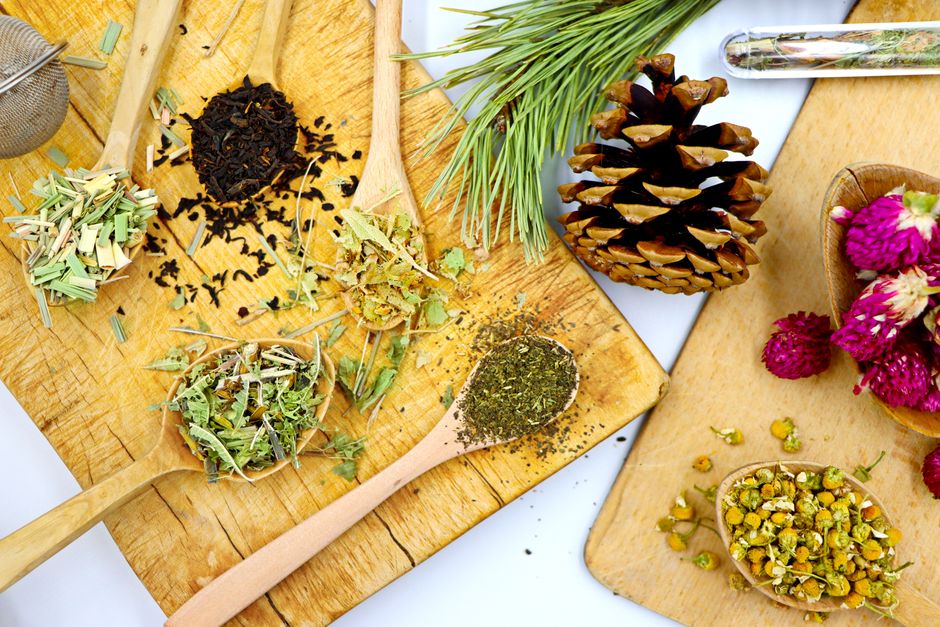
Yarrow infused oil is made by covering dried yarrow flowers and leaves with a carrier oil, then either letting the mixture sit at room temperature for several weeks or warming it gently over low heat for a few hours. Both methods pull plant compounds into the oil. The cold method takes longer but needs almost no attention. The heat method is faster but requires careful temperature control to avoid cooking the plant material.
Yarrow (Achillea millefolium) is a common perennial herb with a long history of topical use. People make infused oil from it to use in salves, balms, and massage oils. Whether those uses hold up to modern testing is a separate question, and one worth answering honestly.
What Is Yarrow Infused Oil?
Infused oil is not essential oil. That distinction matters because people mix them up constantly.
An infused oil is a carrier oil — olive, sunflower, jojoba, sweet almond — that has spent time in contact with dried plant material. Over that time, fat-soluble compounds from the plant migrate into the oil. The result is a mildly active oil that smells and feels like the plant.
An essential oil is a concentrated volatile extract, usually made by steam distillation. It can be many times stronger than an infused oil and carries real risk of skin irritation or toxicity when undiluted.
Yarrow infused oil sits firmly in the first category. It is gentle, it carries the plant’s aroma, and its strength depends heavily on how much plant material you use and how long you infuse it.
Yarrow contains a range of compounds, including flavonoids, sesquiterpene lactones, and volatile oils. Some of these dissolve in fat. That is the basic reason infusion works at all. It is not a precise extraction — you are not measuring how much of anything ends up in the oil — but the principle is sound.
How To Make Yarrow Infused Oil: Two Simple Methods
Both methods use the same starting materials. What changes is time and temperature.
What you need
- Dried yarrow flowers and leaves (fully dry, not fresh)
- A carrier oil: olive, sunflower, safflower, or jojoba all work
- A clean glass jar with a lid
- A fine mesh strainer, muslin cloth, or cheesecloth
- A dark glass bottle for storage
- A slow cooker or double boiler, if using the heat method
Dried plant material is not optional. Fresh yarrow still holds water, and water in oil creates a breeding ground for mold and bacteria. If you are using yarrow you grew or foraged, let it dry completely first — stems should snap, not bend.
Method one: cold infusion
This is the traditional approach and the one with the least chance of going wrong.
- Fill a clean glass jar about three-quarters full with dried yarrow.
- Pour carrier oil over the plant material until it is fully covered, with roughly an inch of oil sitting above the top of the herbs. Plant material exposed to air can mold.
- Seal the jar and place it in a cool, dark spot.
- Shake the jar once a day for the first week, then every few days after that.
- Let it steep for four to six weeks.
- Strain through muslin or a fine strainer, squeezing the plant material to recover as much oil as possible.
- Bottle the strained oil in dark glass and store it away from heat and light.
Some people leave the herbs in the oil for months. There is no strong evidence that longer steeping produces a meaningfully stronger oil, and past a point the plant material starts to break down. Four to six weeks is the common range.
Method two: warm infusion
This method trades patience for attention. It produces a finished oil in a few hours.
- Combine dried yarrow and carrier oil in a slow cooker or a heat-safe bowl set over a pot of simmering water.
- Keep the temperature low. You want the oil warm to the touch, not hot. If you can hold your finger in it comfortably, you are in the right range. If it sizzles or smokes, it is too hot.
- Hold that temperature for two to four hours, stirring occasionally.
- Remove from heat and let it cool.
- Strain and bottle the same way as the cold method.
The main risk with heat is overheating. High heat can degrade the oil itself and damage the plant compounds you are trying to capture. Gentle and slow is the goal. A slow cooker on its lowest setting is usually fine, but check it the first time you use it — some models run hotter than expected.
Cold Infusion vs Warm Infusion: Which Should You Use?
The two methods differ in ways that matter for planning, though not as much as people assume in terms of final quality.
| Factor | Cold infusion | Warm infusion |
|---|---|---|
| Time required | 4–6 weeks | 2–4 hours |
| Attention needed | Minimal, occasional shaking | Regular monitoring |
| Risk of overheating | None | Present if temperature is not controlled |
| Risk of spoilage | Low if plant material is fully dry | Low if plant material is fully dry |
| Best for | People in no hurry | People who want oil the same day |
If you are new to making infused oils, start with the cold method. It is forgiving. You cannot scorch the oil, and the main failure mode — mold from damp plant material — is easy to avoid by drying your herbs properly.
The warm method is not better or worse. It is faster. That is the trade.




What Does Yarrow Infused Oil Actually Do?
Here is where honesty matters more than tradition.
Yarrow has a long history of topical use in European and North American herbal practice, often for minor skin irritation and wound care. That history is real. What is much thinner is modern clinical evidence that yarrow infused oil produces specific, measurable outcomes when applied to skin.
Some laboratory research has examined yarrow extracts for antimicrobial and anti-inflammatory activity. Lab findings are not the same as results in people. A compound that slows bacterial growth in a petri dish does not automatically treat an infection on human skin, and it does not mean an infused oil contains enough of that compound to matter.
No large human trials have confirmed that yarrow infused oil treats any specific skin condition. That is the accurate position. Anyone telling you otherwise is ahead of the evidence.
What can be said: infused oils in general are used as carriers in salves and balms, they can soften and moisturize skin, and yarrow infused oil carries the plant’s characteristic scent. Those are reasonable expectations. Claims about healing wounds, clearing rashes, or replacing medical treatment are not supported.
Safety and Storage
Yarrow belongs to the Asteraceae plant family, which includes ragweed, chrysanthemums, marigolds, and daisies. People with allergies to those plants may react to yarrow. A patch test on a small area of skin before wider use is a sensible precaution.
Do not apply infused oil to broken skin, open wounds, or burns without checking with a clinician first. Oil-based products can trap bacteria and moisture in a wound.
Yarrow infused oil is for external use. It is not meant to be swallowed.
Pregnant and breastfeeding women should be cautious with yarrow products. Established guidance on topical yarrow use during pregnancy is limited, and no clinical guidelines currently exist for this population specifically. Ask a clinician before using it.
For storage:
- Keep in dark glass, away from direct sunlight and heat.
- A cool cupboard is better than a windowsill.
- Oils made with olive or jojoba tend to keep longer than those made with more fragile oils like flaxseed.
- Smell the oil before each use. A rancid, crayon-like, or sharp smell means it has gone off. Discard it.
There is no fixed shelf life that applies to every batch. It depends on the carrier oil, how well you strained the plant material, and how you stored it. Checking smell and appearance is more reliable than trusting a date.
Common Mistakes That Ruin a Batch
Most failed batches come down to a few avoidable problems.
Using fresh yarrow. Water content is the single biggest cause of mold. Dry it fully first.
Not covering the plant material. Any herb poking above the oil surface can grow mold. Add more oil.
Overheating the warm infusion. If the oil is too hot to touch comfortably, it is too hot. Turn it down.
Straining poorly. Leftover plant bits continue to break down and shorten shelf life. Strain thoroughly and squeeze the cloth.
Storing in clear glass on a shelf. Light degrades oils. Dark glass, dark cupboard.
None of these require special equipment to fix. They require attention at a few specific steps.
Frequently Asked Questions
Can I use fresh yarrow instead of dried?
No, fresh yarrow should not be used for infused oil because its water content can cause mold and bacterial growth. Dry it completely until the stems snap before infusing.
How long does yarrow infused oil last?
There is no single shelf life that applies to every batch, since it depends on the carrier oil and storage conditions. Store it in dark glass away from heat and light, and discard it if the smell turns rancid or sharp.
Is yarrow infused oil the same as yarrow essential oil?
No, they are very different products. Infused oil is a carrier oil that has absorbed plant compounds and is relatively gentle, while essential oil is a highly concentrated extract that can irritate skin when undiluted.
Can I use yarrow infused oil on wounds?
You should not apply it to open wounds, burns, or broken skin without checking with a clinician first, because oil-based products can trap bacteria and moisture. No large human trials have confirmed that yarrow infused oil heals wounds.
