
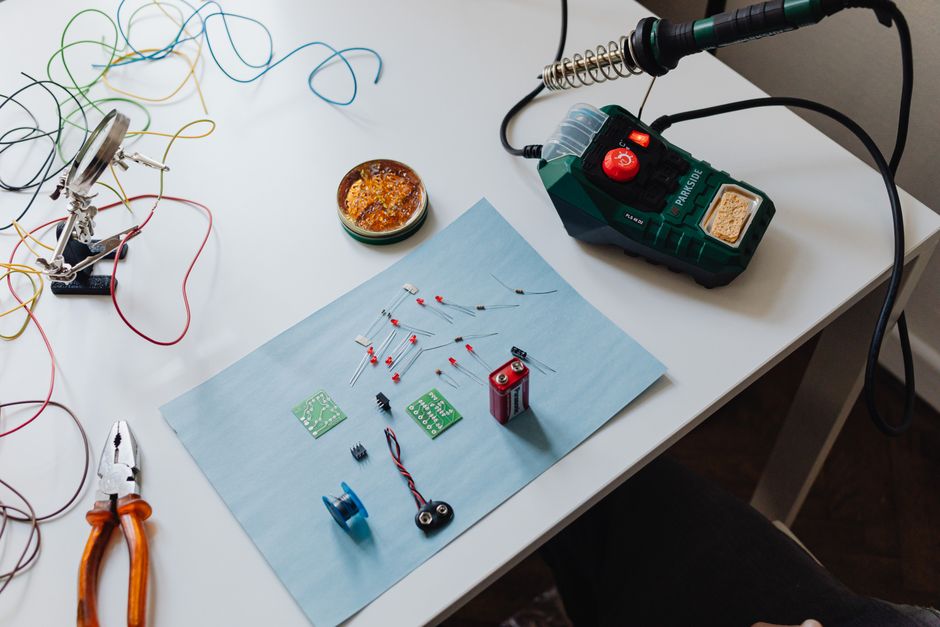
Soldering joins metal parts by melting a filler metal, called solder, that flows into the gap between them and hardens as it cools. The solder alloy is the metal that does the joining, and flux is a chemical agent that cleans the surfaces and helps the molten solder wet them. You do not make solder by melting random metals together at home; the useful alloys are made in controlled conditions with exact ratios, and the process that matters most for a beginner is how to use solder and flux correctly, not how to manufacture them.
This article covers what solder alloys are, how they are made industrially, what flux does, and how the soldering process actually works. It also explains why homemade solder and homemade flux are a bad idea for anything that matters.
What Is a Solder Alloy Made Of?
A solder alloy is a mixture of metals chosen so the blend melts at a lower temperature than the parts being joined. The two base metals in most electronics solder are tin and lead, though lead has been largely removed from consumer electronics for health reasons.
Tin melts at about 232°C (450°F) and lead melts at about 327°C (621°F). Mixed together in the right proportions, the alloy melts lower than either metal alone. The classic tin-lead solder at 63% tin and 37% lead has a melting point of about 183°C (361°F). That single fact explains why solder alloys exist: a lower working temperature protects the components and the board.
Lead-free solders replace lead with metals such as silver, copper, bismuth, or antimony. A common lead-free blend is roughly 96% tin with small amounts of silver and copper, often called SAC solder. These alloys generally melt at higher temperatures than tin-lead solder, which changes how the whole process behaves.
Other elements are sometimes added in small amounts. Antimony can improve strength. Bismuth lowers the melting point. Copper can reduce how quickly the solder dissolves the copper traces on a circuit board.
How Are Solder Alloys Made?
Industrial solder alloys are made by melting the base metals together under controlled conditions and casting them into the shapes you buy. It is a metallurgy process, not a kitchen project.
The metals are weighed to precise ratios because small changes in composition shift the melting point and the physical properties. They are melted in a furnace, stirred to distribute the elements evenly, and sometimes held at temperature to let impurities separate out. The molten alloy is then cast into ingots, wire, or preformed shapes.
The reason this matters to a reader is simple. You cannot reliably reproduce a solder alloy by melting scrap metal at home. You have no way to measure the exact composition, no way to control impurities, and no way to verify the melting point. The result is a metal of unknown behavior that may not flow, may not bond, and may contain harmful elements.
For almost everyone, the practical answer is to buy solder. It is inexpensive, consistent, and made to standards that tell you exactly what you are getting.
What Does Flux Do in Soldering?
Flux removes oxidation from the metal surfaces and prevents new oxidation while the solder is molten. Without it, solder tends to bead up and refuse to bond, because metal that has reacted with air forms a thin oxide layer that solder cannot wet.
Wetting is the key idea. For a strong joint, molten solder has to spread across the surface and into the gap, the way water spreads on clean glass but beads on a greasy pan. Flux makes the metal behave more like clean glass.
There are several broad categories of flux:
- Rosin-based flux comes from pine resin. It is the traditional choice and is relatively mild.
- Water-soluble flux is designed to be cleaned off with water after soldering.
- No-clean flux leaves residue that is intended to be safe to leave in place.
- Acid flux, often based on zinc chloride, is aggressive and used for plumbing and sheet metal, not electronics.
The distinction between flux types is not cosmetic. Acid flux residues can corrode electronics over time, which is why plumbers’ flux should never be used on a circuit board. This is one of the most common mistakes beginners make.





Can You Make Flux at Home?
People do make simple flux from rosin, and the general idea is to dissolve rosin in a solvent such as isopropyl alcohol to make a liquid flux. That is a real technique and it is described in hobbyist literature.
What you should understand is that homemade flux is not equivalent to commercial flux. Commercial formulations include activators, solvents, and additives that are chosen and tested for specific soldering jobs. A homemade rosin flux may work for some hobby soldering, but its performance and residue behavior are not characterized.
There is also a safety issue. Rosin flux and its fumes are a known respiratory sensitizer. People who work with it regularly can develop an allergy that makes future exposure cause asthma-like symptoms. This is why ventilation and fume extraction matter when soldering, regardless of which flux you use.
For anything beyond casual hobby work, buying flux is the safer and more reliable choice.
How To Make Solder Alloys Flux And The Process: Step by Step
The practical process most people actually need is how to make a solder joint using bought solder and flux. Here is how it works.
Prepare the surfaces. The metal must be clean. Wipe away oil, dirt, and heavy corrosion. Flux can handle light oxidation but not a dirty surface.
Apply flux. A small amount is enough. More flux does not make a better joint; it makes more residue to clean.
Heat the joint, not the solder. This is the step beginners get wrong. Touch the iron to the metal parts you are joining and let them heat up. Then feed solder into the heated joint. The solder should melt on contact with the hot metal, not on the iron tip.
Let it flow. A good joint looks smooth and shiny, with a slight concave curve where the solder meets the metal. A dull, blobby, or balled-up joint usually means the metal was too cold or too dirty.
Hold still while it cools. Moving the parts while the solder solidifies creates a cracked, grainy joint called a cold joint.
Clean if needed. If you used a flux that requires removal, clean the residue according to the product instructions.
Why Homemade Solder Is Risky
Melting scrap metal to make your own solder introduces hazards that are easy to underestimate.
Scrap metal often contains lead, cadmium, or other toxic metals. Heating them releases fumes and creates dust. Without proper ventilation and protective equipment, you can be exposed to metals that accumulate in the body and cause harm over time.
You also cannot control the alloy. Even if the metal melts, it may not wet surfaces properly, may form brittle joints, or may have a melting point far from what you expect. A joint that looks fine can fail later.
For electronics, plumbing that carries drinking water, and anything structural, use solder made for that purpose. The standards exist for good reasons.
Lead-Free vs Leaded Solder
Leaded solder flows more easily and melts at a lower temperature, which makes it forgiving for beginners. Lead-free solder is required for most consumer electronics sold in many countries because of lead’s toxicity, and it generally needs higher temperatures and slightly different technique.
If you are soldering for a hobby, either can work. If you are soldering anything that touches drinking water, lead-free is the correct choice. If you are working with leaded solder, wash your hands afterward and keep it away from food and children.
Frequently Asked Questions
Can I make my own solder at home?
You can melt metal at home, but you cannot reliably make a usable solder alloy without precise composition control and safety equipment. Buying solder is safer and produces more predictable results.
What is flux used for in soldering?
Flux cleans the metal surface and prevents oxidation so molten solder can wet and bond to it. Without flux, solder often beads up instead of forming a joint.
Is rosin flux dangerous to breathe?
Rosin flux fumes can sensitize the airways and cause asthma-like symptoms with repeated exposure. Always solder with good ventilation or fume extraction.
Can I use plumbing flux on electronics?
No. Acid-based plumbing flux leaves residues that can corrode electronic components and cause failures over time. Use flux made for electronics instead.
