
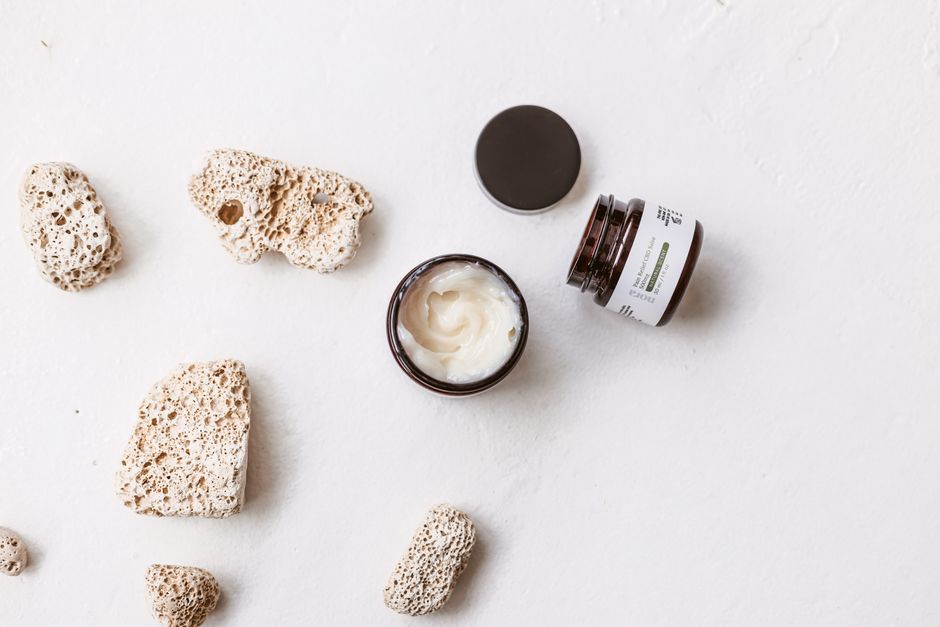
You cannot make a true lysine ointment at home. Lysine is a water-soluble amino acid, and water-soluble ingredients do not dissolve into oils, petroleum jelly, or waxes. Any homemade blend of crushed lysine tablets and a fatty base will be gritty, uneven, and unable to deliver lysine into the skin in a reliable way. The store-bought creams and gels that contain lysine are made with specific formulation methods that a kitchen cannot copy.
Cold sores are caused by herpes simplex virus type 1 (HSV-1). The virus lives in nerve cells near the face and reactivates from time to time, usually at the lip border. Lysine is an amino acid the body needs but cannot make, so it must come from food. The idea behind lysine products is that lysine may interfere with how HSV-1 uses a different amino acid, arginine, to replicate. That idea is reasonable in a lab dish. Whether it works on a cold sore on a real person is a separate question, and the human evidence is limited.
Why You Cannot Make Lysine Ointment at Home
Lysine dissolves in water, not in oil. This is the single fact that makes a homemade lysine ointment impossible in any meaningful sense.
Ointments are built from fats: petroleum jelly, beeswax, oils, lanolin. If you stir powdered lysine into melted petroleum jelly, the powder does not dissolve. It stays as suspended particles. As the base cools and firms up, those particles sit in the mixture like sand in candle wax. The result is a grainy paste with lysine scattered unevenly through it.
Even if you ground the tablets into a fine dust, the lysine still cannot cross the outer layer of skin in any predictable amount. The skin’s outer barrier, the stratum corneum, is designed to keep water-soluble molecules out. That is why drug companies spend years developing delivery systems for topical products. A kitchen blender does not solve that problem.
There is also a practical issue with tablets. Most lysine supplements contain fillers, binders, and coatings. Crushing them and applying the powder to broken or irritated skin adds ingredients that were never meant for topical use.
What the Evidence Says About Lysine and Cold Sores
The evidence for lysine against cold sores is weak and mixed. This is the honest position, and it has not changed much despite decades of use.
The theory rests on the relationship between lysine and arginine. HSV-1 needs arginine to build its proteins and replicate. In laboratory studies, high levels of lysine appear to reduce the availability of arginine and slow viral activity. That is a real observation in cells grown in a dish.
Human studies are a different story. Some small trials of oral lysine supplements have reported fewer outbreaks or faster healing. Others have found no clear benefit. The trials tend to be small, and results vary. A review of the research concluded that the evidence does not firmly support lysine for preventing or treating cold sores, though it noted the studies were limited in quality.
Topical lysine has been studied even less. Some creams and gels sold for cold sores contain lysine along with other ingredients, which makes it hard to know what, if anything, the lysine contributes. No well-designed trial has shown that applying lysine to a cold sore changes how long it lasts or how often outbreaks return.
None of this means lysine is useless. It means the proof is not there. A plausible mechanism is not the same as demonstrated benefit in people.
What Actually Helps a Cold Sore
Cold sores usually heal on their own within one to two weeks. Treatment aims to shorten that time and ease discomfort, and the options with the strongest evidence are antiviral medications, not amino acids.
Prescription antivirals include acyclovir, valacyclovir, and famciclovir. Taken as pills or applied as creams, they target the virus directly. They work best when started at the first tingle, before the blister fully forms. Over-the-counter acyclovir cream is available in the United States, and prescription-strength options exist as well.
For symptom relief, cool compresses and over-the-counter pain relievers can help. Lip balm with a sun protection factor may reduce outbreaks triggered by sun exposure, since ultraviolet light is a common trigger for reactivation.
Things that do not have strong evidence behind them include ice applied directly for long periods, toothpaste, nail polish remover, and other home remedies that circulate online. Some of these can irritate or damage the skin and make matters worse.




Can You Buy a Lysine Product Instead?
You can buy lysine creams and gels, but you should know what you are getting. These products are cosmetics or supplements in most cases, not drugs reviewed for effectiveness.
In the United States, a product that claims to treat or prevent a disease is regulated as a drug and must show evidence to the Food and Drug Administration. A product that only claims to “support” lip health or “soothe” skin is regulated as a cosmetic, and it does not have to prove it works. Many lysine lip products fall into the second category.
If you want to try one, read the label. Look at whether lysine is listed as an active ingredient or buried in a long list of inactive ones. Understand that even if lysine is present, no strong trial evidence shows it shortens a cold sore. The product may still feel soothing, which has value, but soothing is not the same as treating the virus.
Is Oral Lysine Worth Trying?
Oral lysine is the form most studied, and even that evidence is not strong. Some people take it daily to try to reduce how often cold sores appear.
Doses used in studies have generally ranged from about 1,000 to 3,000 milligrams per day, often split into smaller amounts. These are the amounts researchers have used, not a proven recommendation. Lysine from food and supplements is generally considered safe for most healthy adults at these levels, though high doses can cause stomach upset in some people.
People with kidney disease should be cautious with high-dose amino acid supplements, and anyone taking prescription medication should check with a clinician or pharmacist first. Lysine can interact with certain drugs, including some antibiotics.
If you decide to try oral lysine, treat it as a personal experiment, not a proven treatment. Keep track of your outbreaks. If it does not seem to help after a few months, there is little reason to continue.
When to See a Doctor
Most cold sores are a nuisance, not a danger. But some situations need medical attention.
- Cold sores in newborns, infants, or anyone with a weakened immune system
- Sores that spread widely or appear on the eyes, which can threaten vision
- Outbreaks that last longer than two weeks or keep returning frequently
- Sores near the eyes, nose, or genitals
- Signs of a secondary bacterial infection, such as spreading redness, warmth, or pus
- Severe pain or trouble eating or drinking because of the sore
People with frequent outbreaks may benefit from a prescription antiviral taken daily to reduce how often the virus reactivates. This is a well-established approach, and it is worth discussing with a clinician if cold sores disrupt your life.
Understanding the Limits of Home Remedies
Home remedies for cold sores are popular because the condition is common, uncomfortable, and stubborn. That combination creates demand for anything that sounds like it might help.
Lysine has a real biochemical story behind it, which is why it persists as a remedy. But a story is not proof. When researchers have tested lysine in people, the results have not been consistent enough to call it effective. The same is true of many other popular cold sore remedies.
The most reliable path is the least exciting one: start an antiviral early, manage symptoms, and let the immune system do its work. If you want to try lysine, oral forms have more research behind them than homemade ointments, and neither is a substitute for medical care when a cold sore is severe or unusual.
Frequently Asked Questions
Can I make lysine ointment at home?
No. Lysine is water-soluble and will not dissolve into oils, petroleum jelly, or waxes, so any homemade mixture will be gritty and uneven. It also cannot cross the skin barrier in a predictable way.
Does lysine actually help cold sores?
The evidence is weak and mixed. Some small studies of oral lysine suggest possible benefit, but results vary and reviews have not confirmed it works. Topical lysine has even less evidence.
What is the fastest way to get rid of a cold sore?
Prescription antivirals like acyclovir, valacyclovir, and famciclovir work best when started at the first tingle. They target the virus directly and have the strongest evidence of any cold sore treatment.
How long do cold sores usually last?
Most cold sores heal on their own within one to two weeks. Antiviral treatment started early may shorten that time and reduce discomfort.
