
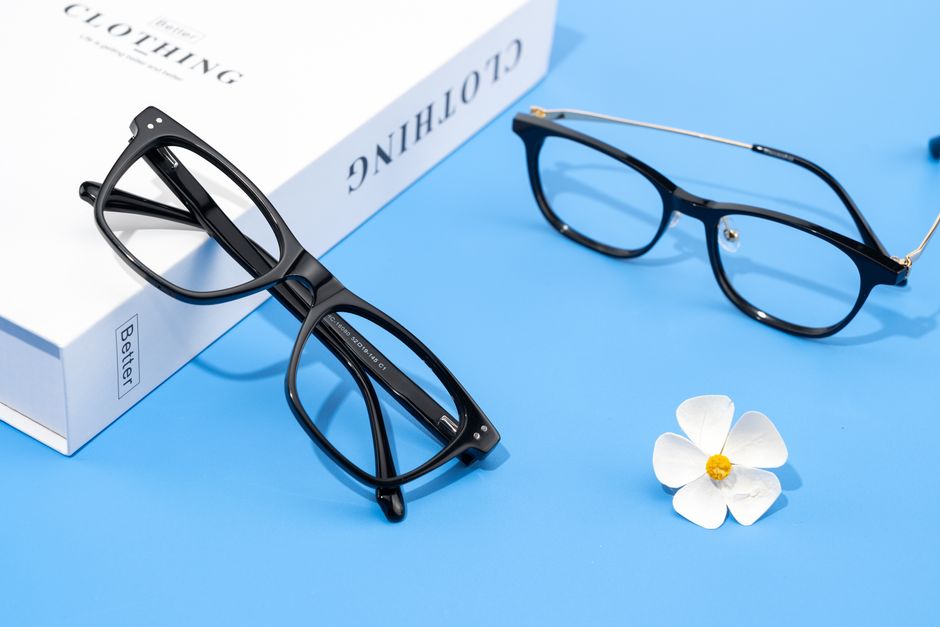
If your glasses are pinching your nose, digging into your temples, or leaving red marks by the end of the day, you can often fix the problem at home in a few minutes. The safest and most effective home adjustments involve widening the frame arms or lowering the nose pads. However, you must be careful—over-bending frames, especially plastic ones, can snap them or void your warranty, so start with small, gentle adjustments.
Why Do Glasses Feel Tight All of a Sudden?
Glasses rarely change size on their own. The frame materials can slowly warp from heat, pressure, or daily wear and tear. If you have plastic frames, they can become misshapen if you sleep on them, leave them in a hot car, or frequently take them off with one hand, which twists the frame over time.
Your face can also change slightly. Weight fluctuations, water retention, or simply the natural loss of facial volume as we age can alter how frames sit on your nose and ears. What fit perfectly six months ago may now press against a different part of your nose or sit closer to your temples.
Another common cause is seasonal humidity or temperature changes. Heat makes most frame materials more flexible, and if the frame cools in a twisted position, it will stay that way. This is why glasses that fit fine in winter can suddenly feel tight in summer.
How To Make Glasses Less Tight At Home: The Basic Method
Start with the most common fix: widening the arms. The arms, also called temples, are the long pieces that go over your ears. If they press against the sides of your head, they likely need to be bent slightly outward.
To do this safely, hold the glasses with both hands at the hinge where the arm meets the front frame. Gently bend the arm outward, away from the lens, using slow, steady pressure. Do not bend at the middle of the arm or at the ear hook—bend near the hinge or just behind the ear curve, depending on the material and where the pressure is felt.
Work in tiny increments. Bend a small amount, try the glasses on, and check the pressure. Repeat as needed. Over-bending can make the glasses too loose, causing them to slide down your nose, which then requires a different adjustment.
Adjusting Plastic Frames vs. Metal Frames
The material of your frame determines how you should handle it. Plastic frames, including acetate and zyl, can be heated to become more flexible. Metal frames are generally easier to bend but require more precision to avoid breaking solder points or hinges.
For plastic frames, use a hairdryer on a low or medium heat setting. Hold the dryer about 6 to 8 inches from the frame and keep it moving constantly over the area you want to adjust. Heat for only 20 to 30 seconds at a time. The frame should feel warm to the touch but not hot. If it is too hot to hold comfortably, it is too hot for the frame. Once warm, gently bend the arm outward. Hold the position for 30 seconds while the plastic cools to help it set in the new shape.
For metal frames, no heat is needed. Use your thumbs to apply pressure at the hinge area or at the point where the arm starts to curve behind the ear. Metal can snap if bent back and forth repeatedly, so make each adjustment a single, smooth movement rather than a series of small wiggles.





Fixing Nose Pad Pressure Points
If the pain is on your nose rather than your temples, the nose pads are the likely culprit. Nose pads that sit too close together pinch the bridge of the nose. Nose pads that sit too high or too low create concentrated pressure points that cause red marks and soreness.
Most metal frames have adjustable nose pads attached to small arms called pad arms. Using your thumbs and forefingers, gently push the pads apart if they are pinching. If one side feels higher than the other, adjust the pad arm individually to level them. The goal is for the pads to sit flat against the sides of your nose, distributing weight evenly across the skin.
Plastic frames usually do not have separate nose pads. Instead, they have molded nose supports built into the frame. These cannot be adjusted individually. If the bridge of plastic glasses is too tight, the only at-home fix is widening the arms slightly, which can reduce overall pressure on the nose by shifting the weight distribution. If the molded bridge itself is too narrow, this is not something you can safely fix at home.
When To See a Professional Instead
Some problems should not be fixed at home. If your glasses are severely bent, if a hinge is loose, or if a screw has fallen out, take them to an optician. Attempting to bend a frame that is already stressed can cause it to crack or break completely.
If you have high-index or very thin lenses, the edges of the lenses can be fragile. Bending the frame can put stress on the lens edges and cause them to chip or pop out. An optician has the proper tools and heating equipment to make adjustments without damaging the lenses.
You should also see a professional if your glasses have never fit well from the start. A frame that is fundamentally the wrong width for your face cannot be fixed by a few bends. The frame front should be roughly the same width as your face, and the arms should not need to be stretched significantly to reach your ears. If the fit is off by a large margin, no home adjustment will solve the problem comfortably.
Most optical shops will adjust glasses for free, even if you did not buy them there. This is often the safest option, especially for expensive frames or progressive lenses, which are sensitive to frame alignment.
Preventing Tight Glasses in the Future
Proper daily habits prevent most tight-glasses problems. Always remove glasses with two hands. Pulling them off with one hand twists the frame over time, gradually bending the arms out of alignment.
Never leave glasses in a hot car, on a dashboard, or near a heater. Heat softens frame materials, allowing them to warp. When they cool in a distorted position, the warp becomes permanent. Store glasses in a hard case when not in use to protect them from being crushed or bent in a bag or pocket.
Pay attention to how the glasses feel during the day. If you notice pressure building at your temples or nose by mid-afternoon, the frame is likely gradually shifting out of alignment. Catching small misalignments early and correcting them gently is much easier than fixing a badly warped frame later.
Frequently Asked Questions
Can I use a hairdryer to adjust my glasses at home?
Yes, but only on plastic frames and only on low or medium heat. Keep the dryer moving and heat for short intervals so the frame becomes warm but never hot to the touch.
How long should I heat plastic glasses before bending them?
Heat for about 20 to 30 seconds at a time, holding the dryer 6 to 8 inches away. The plastic should feel warm and slightly pliable, not soft or dripping.
Will widening the arms make my glasses too loose?
It can if you over-bend them. Make tiny adjustments and try the glasses on after each bend to avoid loosening them too much.
Is it safe to adjust glasses with progressive lenses at home?
Progressive lenses are very sensitive to frame alignment because the reading zone is in a specific spot. Small adjustments are possible, but it is safer to have an optician adjust them to preserve the correct lens positioning.
