
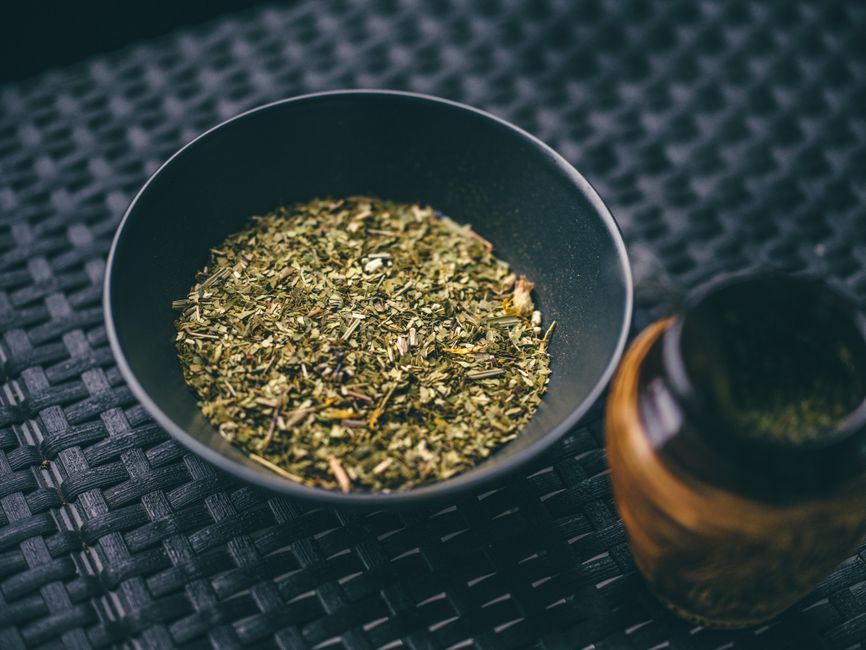
Fleabane is a common wild plant in the daisy family, and people have long brewed its leaves and flowers into tea. Making fleabane tea involves harvesting clean aerial parts in spring or early summer, drying them away from direct sun, and steeping a small amount in hot water. The plant has a folk history of use for digestive complaints and fever, but it is not a proven treatment for any condition, and some species contain compounds that can irritate the skin or cause allergic reactions in sensitive people.
What Is Fleabane and Where Does It Grow?
Fleabane is the common name for a large group of plants in the genus Erigeron, which belongs to the aster family. There are many species across North America, Europe, and Asia. Most are small, hardy plants with thin stems and daisy-like flowers that range from white to pale purple or pink.
The name comes from an old belief that the plant repelled fleas. That belief has not held up well under testing, and there is no reliable evidence that fleabane works as an insect repellent. The name stuck anyway.
You will often find fleabane growing in meadows, along roadsides, in disturbed soil, and in open fields. It blooms mainly from late spring through midsummer, depending on the species and climate. Some types are annual, others are biennial or perennial.
One important point: “fleabane” covers many different plants, and they are not all identical in chemistry. Erigeron canadensis (also called horseweed) is one of the most widespread. Others, like Erigeron philadelphicus and Erigeron annuus, are also common. When people talk about fleabane tea, they are usually referring to one of these weedy Erigeron species, not to a single standardized plant.
How Do You Harvest Fleabane Safely?
Harvesting fleabane starts with correct identification. This matters more than any other step. Several plants look similar to fleabane, and some of those lookalikes are not safe to consume.
Fleabane flowers typically have very fine, numerous petals around a yellow center. The stems are usually hairy and slender. Leaves alternate along the stem and are often narrow or slightly toothed. If you are not certain of the plant’s identity, do not use it. There is no reliable home test that confirms an unidentified wild plant is safe to eat or drink.
Where to Gather It
Avoid roadsides, industrial lots, and areas that may have been sprayed with herbicides or pesticides. Plants growing near heavy traffic can carry dust and exhaust residue. Lawns treated for weeds are a poor choice for the same reason.
The cleanest spots tend to be untreated meadows, wild edges of your own property, or areas you know have not been sprayed.
When and What to Pick
The best time is usually when the plant is flowering, since the flowers and upper leaves carry the aromatic compounds that give the tea its character. Pick in the morning after dew has dried.
Take the top few inches of the plant — flowers, leaves, and tender stems. Leave the lower woody stems and the roots. Do not strip an entire patch. Leave plenty behind so the plant can regrow.
- Choose plants with no visible mold, wilting, or insect damage.
- Pick only what you will use in one season.
- Keep your harvest in a breathable bag or basket, not a sealed plastic bag, so it does not sweat and rot.
How Do You Dry and Store Fleabane?
Drying is simple but easy to rush. Spread the harvested plant material in a single layer on a clean screen or paper in a warm, dry, shaded spot with good airflow. Direct sun can fade the color and drive off some of the aromatic compounds.
Depending on humidity, drying usually takes several days to a week. The plant is ready when the stems snap rather than bend and the leaves crumble easily. Any lingering moisture can lead to mold during storage.
Once fully dry, store the material in an airtight glass jar away from light and heat. Label it with the plant name and the date. Most dried herbs keep usable quality for about a year. After that they lose aroma and flavor, though they do not necessarily become unsafe.




How To Make Fleabane Tea: Harvest, Brew, And Benefits?
Brewing fleabane tea is much like brewing any loose herbal tea. The main difference is that you should keep the amount modest, because fleabane is not a plant with an established safe dose for human consumption.
Use about one teaspoon of dried fleabane per cup of hot water. Pour water that has just come off a boil over the herb, cover the cup, and let it steep for five to ten minutes. Covering the cup helps trap the volatile oils that carry much of the aroma. Strain before drinking.
Fresh plant material can be used too, but you will need roughly two to three times as much, since fresh leaves contain more water.
There is no standard clinical dose for fleabane tea. No health agency has set a recommended amount, and no large human trials have established a safe or effective serving size. Because of that, starting with a small amount and paying attention to how you feel is the cautious approach — but that is general advice for any unfamiliar herb, not a dosing guideline.
What Does It Taste Like?
Fleabane tea tends to be mild and slightly bitter, with a faint herbal or almost resinous note. Some people find it pleasant. Others find it flat. It is not a strongly flavored tea, and it does not taste like chamomile or mint despite the daisy-like flowers.
What Are the Claimed Benefits of Fleabane Tea?
Fleabane has a long history in folk medicine. Traditional uses include treating diarrhea, soothing upset stomach, easing fever, and acting as a mild diuretic. Some traditional systems also used it for urinary complaints and as a general tonic.
These uses come from historical practice, not from controlled clinical trials. That distinction matters. A plant being used for centuries does not prove it works. It only shows that people kept reaching for it.
Some laboratory research has looked at compounds in Erigeron species, including flavonoids and volatile oils. Lab studies can suggest possible biological activity, but activity in a petri dish or a test tube does not automatically translate into a benefit in the human body. Many substances that look promising in the lab fail when tested in people.
Here is the honest position: no well-designed human trial has confirmed that fleabane tea treats diarrhea, fever, or any other condition. The evidence is limited to traditional use and early laboratory work. That is not the same as proof.
Is Fleabane Tea Safe?
Fleabane is not a well-studied herb for human consumption, and that limits what anyone can say about its safety. Some Erigeron species contain compounds that can cause skin irritation or allergic reactions in sensitive people. Handling the fresh plant can sometimes trigger a rash in those who are sensitive.
Because fleabane belongs to the aster family, people with allergies to ragweed, chrysanthemums, or other daisy-family plants may be more likely to react. If you have known plant allergies, that is a reason for caution.
There are also groups where the risk is higher and the information is thinner:
- Pregnancy and breastfeeding: No clinical guidelines exist for using fleabane during pregnancy or while nursing. Avoid it.
- Children: No established safe dose exists for children. Do not give fleabane tea to children.
- People on medication: Fleabane’s interactions with drugs have not been well studied. If you take prescription medicine, talk to a pharmacist or doctor before using it.
One more caution: some plants called “fleabane” are confused with unrelated species that share the name. This is another reason correct identification matters. If you are not fully sure what you picked, do not drink it.
Fleabane vs. Other Common Herbal Teas
It helps to see fleabane in context. Many herbal teas people drink daily have far more research behind them than fleabane does.
| Herb | Traditional Use | Human Evidence |
|---|---|---|
| Fleabane | Digestive upset, fever, diuretic | Limited; mainly lab and folk use |
| Chamomile | Sleep, mild digestive comfort | Some human studies, mixed results |
| Peppermint | Digestive discomfort | Some human studies |
| Ginger | Nausea | Reasonably studied in some uses |
This table is not a ranking of quality. It simply shows that fleabane sits in a different category from herbs with more clinical research. If you are looking for a tea to help with a specific problem, herbs with more human data are the more sensible starting point.
If you enjoy fleabane for its taste or out of interest in wild plants, that is a different goal than expecting a health effect. Keeping those two goals separate is honest and safer.
Common Mistakes When Making Fleabane Tea
Most problems with fleabane tea come down to a few repeated errors.
The first is misidentification. Picking the wrong plant is the single biggest risk. The second is harvesting from contaminated ground — roadsides and sprayed lawns. The third is storing material before it is fully dry, which invites mold.
Another common mistake is assuming that because a plant is natural, it is automatically gentle or safe. That is not true for any herb, and it is not true for fleabane. Natural does not mean risk-free.
Finally, some people brew fleabane very strong, thinking more plant means more benefit. With an herb that has no established safe dose, a stronger brew is not a smarter one. If you choose to try it at all, keep it mild.
Frequently Asked Questions
How do you make fleabane tea?
Steep about one teaspoon of dried fleabane in a cup of hot water for five to ten minutes, then strain. Cover the cup while steeping to keep the aromatic oils in.
Is fleabane tea safe to drink?
Fleabane is not well studied for human consumption, so its safety is not firmly established. People with daisy-family allergies, pregnant or nursing women, and children should avoid it.
What are the benefits of fleabane tea?
Fleabane has a folk history of use for digestive upset and fever, but no well-designed human trial has confirmed these benefits. The evidence is limited to traditional use and early lab work.
When should you harvest fleabane?
Harvest the flowers and upper leaves in spring or early summer while the plant is blooming. Pick from clean, unsprayed areas and only if you are certain of the plant’s identity.
