
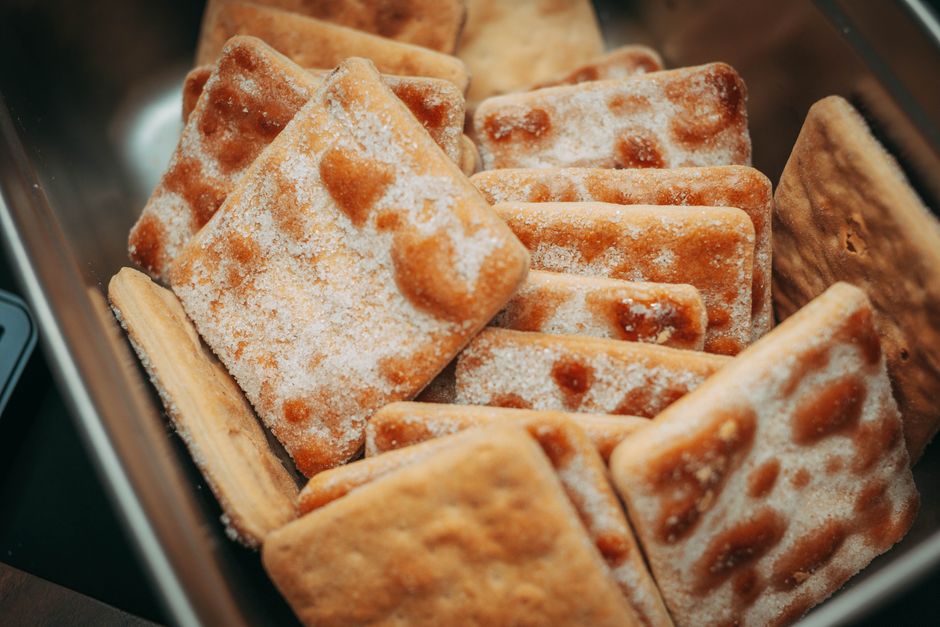
Most people are trying to make their cookies softer and chewier, so it might feel odd to aim for the opposite. But a hard, crunchy, crispy cookie has its own appeal — perfect for dunking in coffee, crumbling over ice cream, or satisfying a specific craving for snap and crunch. The good news is that texture is not a mystery. It comes down to a few specific choices in ingredients, mixing, and baking. If you want cookies that are genuinely hard and crunchy, you need to reduce moisture, increase sugar, and bake them longer at a lower temperature.
What Makes a Cookie Hard and Crunchy Instead of Soft?
Cookie texture is largely a science of moisture and structure. A soft cookie retains water and has a higher ratio of moisture to dry ingredients. A hard, crunchy cookie has very little moisture left after baking. The water evaporates during baking, and the sugars and starches set into a firm, glassy structure.
There are three main factors that control this: the ingredients you choose, how you mix them, and how long you bake them. Each one matters. Change one and you change the final texture. Change all three in the right direction and you get a reliably crisp cookie every time.
The biggest culprit for soft cookies is brown sugar. Brown sugar contains molasses, which is hygroscopic — it attracts and holds moisture. White sugar does not do this as much. If you want crunch, white sugar is your friend. The more white sugar you use relative to brown sugar, the crisper the cookie will be.
How To Make Cookies Hard Crunchy And Crispy: The Core Method
The most reliable way to get a hard, crunchy cookie is to use white sugar, a higher baking temperature for a shorter initial bake, then a longer period in a cooling oven or a low-temperature finish. This drives out moisture without burning the outside.
Here is the core approach that works consistently:
- Use white sugar only. Replace brown sugar entirely with granulated white sugar. This removes the moisture-retaining molasses.
- Use butter, not shortening. Butter contains water and milk solids. When baked, the water evaporates and the milk solids brown, creating a firmer structure. Shortening stays soft at room temperature.
- Cream butter and sugar longer. Creaming for 3 to 4 minutes incorporates air and dissolves the sugar more fully. This creates a more uniform, crisp structure.
- Use an egg white instead of a whole egg. The yolk adds fat and moisture. The white adds structure and dries out more completely.
- Bake at 350°F (175°C) for a normal time, then turn the oven off. Leave the cookies in the cooling oven for 10 to 15 minutes. This slowly dries them out without browning them further.
This combination produces a cookie that snaps when you break it. It will hold up well in milk or coffee without crumbling immediately.
Which Ingredients Make Cookies Harder?
Every ingredient plays a role in the final texture. If you want maximum crunch, you need to know what each one does.
Sugar type matters most. White sugar creates a crisper, harder cookie. Brown sugar makes cookies softer and chewier because of the molasses it contains. Honey, maple syrup, and corn syrup all hold moisture and will make cookies softer. If a recipe calls for brown sugar, swap it for white sugar to get a harder result.
Fat type matters. Butter produces a firmer cookie than shortening or oil. Butter is about 15 to 20 percent water. That water turns to steam in the oven, helping the cookie rise slightly, then evaporates, leaving a drier, firmer structure. Shortening is 100 percent fat and stays soft at room temperature. Coconut oil behaves similarly to shortening — it produces a tender, less crisp cookie.
Eggs matter. Egg whites dry out and create structure. Egg yolks add fat and moisture. For a crunchy cookie, use one egg white instead of one whole egg. If a recipe calls for two eggs, use one whole egg plus one egg white. This reduces fat and moisture while adding protein structure.
Flour type matters less, but it still counts. All-purpose flour is the standard choice. Bread flour has more protein, which creates more gluten, and more gluten means a harder, chewier texture. Cake flour is lower in protein and produces a tender, crumbly cookie. Stick with all-purpose flour for the best balance of crunch without toughness.





How Baking Time and Temperature Change Texture
Baking time is the most direct control you have over crispness. A cookie that comes out of the oven soft will harden as it cools, but only slightly. The real key is internal moisture. The longer a cookie bakes, the more moisture leaves it, and the harder it becomes.
Here is the practical approach: bake your cookies at 350°F (175°C) for the normal time in the recipe, usually 10 to 12 minutes. Then, turn off the oven and leave the cookies inside for another 10 to 15 minutes. This slow drying phase removes more moisture without burning the edges. The cookies will come out harder and crunchier than they would with a shorter bake.
Some bakers prefer a lower temperature for longer. Baking at 325°F (165°C) for 15 to 18 minutes produces a cookie that is evenly crisp throughout, not just at the edges. The lower temperature allows the interior to dry out before the exterior over-browns.
One warning: cookies continue to bake from residual heat after you remove them from the oven. If you pull them out while they still look slightly soft in the center, they will firm up as they cool. If you want a hard cookie, wait until the center looks fully set before removing them from the oven.
Should You Use a Silicone Mat, Parchment Paper, or a Bare Pan?
The baking surface affects browning and crispness. A bare metal pan conducts heat directly and produces the most browning on the bottom of the cookie. This can create a crunchy bottom and a slightly softer top. Parchment paper insulates slightly and reduces browning. Silicone mats insulate the most and produce the least browning.
For maximum crunch, bake directly on a light-colored metal pan. Dark pans absorb more heat and can burn the bottoms before the cookies are fully dry. If you only have dark pans, lower the oven temperature by 25°F (about 15°C) to prevent burning.
Let the cookies cool completely on a wire rack. Cooling on a flat surface traps steam underneath and softens the bottoms. A wire rack allows air to circulate on all sides, which keeps the cookies dry and crisp.
How To Store Crunchy Cookies So They Stay Hard
Crunchy cookies go soft quickly if stored wrong. The enemy is moisture in the air. Once a cookie absorbs humidity, it loses its snap.
Store crunchy cookies in an airtight container at room temperature. Do not refrigerate them — the refrigerator is humid and will soften them. Do not store them with soft cookies, bread, or fruit, which release moisture. If you live in a humid climate, add a food-safe silica gel packet to the container to absorb moisture.
If your cookies do go soft, you can revive them. Place them on a baking sheet in a 300°F (150°C) oven for 5 minutes. This drives out the absorbed moisture and restores crispness. Let them cool completely on a wire rack before storing again.
Why Do Some Cookies Turn Out Hard When You Wanted Soft?
Understanding the flip side helps you control the process. If you have ever baked a cookie that came out hard when you wanted soft, you already know some of these factors. Overmixing the dough develops gluten, which makes cookies tough and hard. Overbaking removes too much moisture. Using too much flour absorbs liquid and creates a dry, hard dough. Baking soda or baking powder that is old or expired fails to create the lift that keeps cookies tender.
For a hard, crunchy cookie, these same factors work in your favor. Overmixing slightly is not a problem if you want a firm texture. Overbaking is exactly what you are aiming for. The difference is intentionality. You are not making a mistake — you are making a deliberate choice.
Can You Make Any Cookie Recipe Crunchy?
Almost any drop cookie recipe can be adapted for crunch. The changes are simple: swap brown sugar for white, use an egg white instead of a whole egg, bake longer, and dry the cookies in a cooling oven.
Some cookie types are naturally better suited for crunch. Shortbread, biscotti, and sugar cookies are designed to be crisp. They use high ratios of sugar and butter, no eggs or minimal eggs, and are baked until dry. If you want a reliably crunchy cookie with minimal effort, start with one of these recipes rather than adapting a chewy chocolate chip recipe.
Chocolate chip cookies can be made crunchy, but the chocolate chips themselves soften the texture slightly. Use less chocolate or chop it into small pieces so the cookie structure dominates. Oatmeal cookies are also possible, but oats absorb moisture and can create a chewy rather than crunchy texture. Toast the oats first to dry them out before adding them to the dough.
Frequently Asked Questions
Why did my cookies come out hard instead of soft?
You likely used too much flour, overbaked them, or used white sugar instead of brown sugar. These all reduce moisture and create a firmer texture.
How long should I bake cookies to make them crunchy?
Bake at 350°F (175°C) for 10 to 12 minutes, then turn off the oven and leave the cookies inside for another 10 to 15 minutes to dry them out.
Does brown sugar make cookies softer?
Yes. Brown sugar contains molasses, which attracts and holds moisture, so cookies made with brown sugar stay soft and chewy.
How do I keep crunchy cookies from going soft?
Store them in an airtight container at room temperature with a silica gel packet if your climate is humid. Do not refrigerate them.
