
A bruise is bleeding under the skin, and there is no way to make it vanish overnight. The fastest honest answer is this: most bruises heal on their own in about two weeks, and the steps that genuinely help are cold packs in the first day or two, gentle compression, and elevation. Anything that claims to erase a bruise in hours is selling you something the evidence does not support.
What you can do is support your body’s natural cleanup process and avoid the common mistakes that make bruises bigger or last longer. Below is what actually happens under the skin, what helps at each stage, and when a bruise deserves a doctor’s attention.
What Actually Happens When You Get a Bruise?
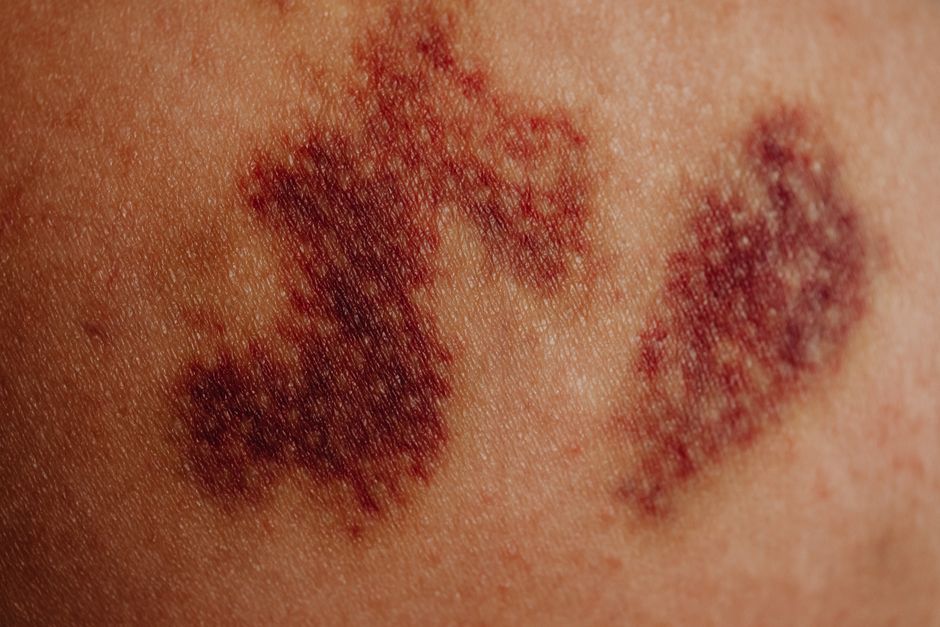
A bruise forms when small blood vessels under the skin break and leak blood into the surrounding tissue. The skin itself stays intact. What you see is that pooled blood showing through.
Your body then runs a cleanup process. Immune cells arrive to break down the leaked red blood cells and carry away the debris. This is why a bruise changes color over time. It is not random. It is a visible timeline of hemoglobin breaking down into other compounds.
A fresh bruise is often red or purple because of oxygen-rich hemoglobin. Within a day or two it typically turns blue or dark purple as oxygen leaves. Around day five or six it often shifts to green or yellow as the hemoglobin breaks into biliverdin and then bilirubin. By the time it fades to a yellow-brown, the blood is mostly being reabsorbed.
That color timeline is a rough guide, not a rule. Depth, skin tone, and location all change how a bruise looks. On darker skin, a bruise may be harder to see and show up more as a tender lump than a color change.
How To Make Bruises Go Away Fast
The single most effective thing you can do in the first 24 to 48 hours is apply cold. Cold narrows blood vessels, which can limit how much more blood leaks into the tissue. It also numbs the area and can reduce swelling.
Use an ice pack, a bag of frozen vegetables, or a cold gel pack wrapped in a thin cloth. Never put ice directly on bare skin. Apply it for about 15 to 20 minutes at a time, then take it off for a while before repeating. This on-and-off pattern protects your skin from cold injury.
After the first day or two, some clinicians suggest switching to gentle warmth. The reasoning is that heat increases blood flow, which may help your body clear the trapped blood faster. This is common advice, but the evidence that warmth speeds bruise resolution is not strong. It is reasonable to try if it feels good. It is not a proven accelerator.
A few other steps genuinely help:
- Elevate the bruised area above heart level when you can, especially on the first day. This reduces blood pooling.
- Apply gentle compression with an elastic bandage if a limb is swollen. Keep it snug but not tight enough to cause numbness or tingling.
- Rest the area to avoid re-injuring fragile vessels.
- Protect it from sun once it starts fading. Freshly healed skin can darken more easily with sun exposure.
What you should not do: do not massage a fresh bruise hard, and do not apply heat in the first 24 hours. Both can increase bleeding and make the bruise worse.
Do Bruise Creams and Arnica Actually Work?
Most over-the-counter bruise creams have weak or absent evidence behind them. That is the honest position.
Arnica is the most studied of these options. Some small trials suggest topical arnica may modestly reduce bruising after certain procedures, but results are mixed and study quality is limited. It is not a reliable fast fix. If you want to try it, know that you are trying something with uncertain benefit, not a proven treatment.
Vitamin K creams are marketed for bruises, often based on the fact that vitamin K plays a role in clotting. But applying it to intact skin to clear an existing bruise is not supported by strong evidence. The logic does not automatically translate into a real effect.
Products containing bromelain, a pineapple enzyme, have been studied for swelling and bruising after surgery with mixed results. No large, high-quality human trial has confirmed that any of these products reliably speeds bruise healing in everyday situations.
The uncomfortable truth is that no topical product has been shown to make a bruise disappear faster than your body would clear it on its own. Time does most of the work.



Does Anything You Eat or Take Help Bruises Heal?
Nutrition matters for healing in general, but there is no food or supplement proven to clear a bruise quickly.
Vitamin C is needed to build collagen, the protein that gives blood vessel walls their strength. Severe vitamin C deficiency, called scurvy, causes easy bruising and bleeding gums. But if you already get enough vitamin C, taking more will not speed up bruise healing. The same pattern applies to vitamin K.
This is a common point of confusion. A nutrient can be essential for a process without giving extra benefit when you already have enough. More is not better here.
If you bruise easily and often, that can be a sign of an underlying issue, not a sign you need more supplements. It is worth discussing with a doctor rather than self-treating.
Why Do Some Bruises Last Longer Than Others?
Not all bruises are equal. Several factors change how long one lasts and how dramatic it looks.
- Location. Bruises on the legs and feet tend to last longer because blood has farther to travel and gravity works against drainage.
- Depth. A deeper injury bleeds more and takes longer to clear.
- Age. Skin and blood vessels thin with age, and the protective fat layer under the skin gets thinner. This makes bruises more common and sometimes more visible.
- Medications. Blood thinners, including aspirin and anticoagulants, and some anti-inflammatory drugs can make bruising easier and heavier.
- Sun exposure and skin tone. These affect how visible a bruise is and how long discoloration lingers.
One thing people rarely realize: a bruise that seems to “move” downward over days is usually just gravity pulling the pooled blood lower. A bruise on the thigh might show up near the knee a few days later. It does not mean a new injury happened.
When Should You See a Doctor About a Bruise?
Most bruises are harmless and need no medical care. Some are a signal to get checked.
Seek medical attention if you have:
- A bruise that keeps growing or becomes very swollen and painful
- Bruising with no clear cause, or bruising that appears in many places at once
- Bruises along with bleeding gums, frequent nosebleeds, or blood in urine or stool
- A bruise over a bone or joint that makes it hard to move the area
- Signs of infection, such as warmth, spreading redness, fever, or pus
- Bruising that does not fade after about two weeks, or keeps returning
Easy bruising can also point to a blood clotting problem, a liver condition, or a medication effect. These are not diagnoses you can make at home. A doctor can check your blood counts and clotting factors if needed.
One specific warning: a bruise that appears suddenly with severe pain and swelling in a limb, especially after an injury, could signal a deep bleed or a blood clot. That is a reason to get care promptly rather than wait.
The Bottom Line on Bruise Healing
Bruises heal on their own, and the timeline is set by biology, not by products. Cold in the first day or two, elevation, and gentle compression are the steps most likely to help. Everything else is mostly time.
The color changes you see are your body breaking down and clearing leaked blood. That process usually takes about two weeks, sometimes longer depending on where the bruise is and how deep it goes.
If bruises are frequent, unexplained, or slow to clear, that is worth a medical conversation. It is far more useful than buying another cream.
Frequently Asked Questions
How long does a bruise normally take to heal?
Most bruises fade over about two weeks as your body reabsorbs the leaked blood. Bruises on the legs or deeper injuries can take longer.
Does ice actually make a bruise go away faster?
Ice in the first 24 to 48 hours can limit further bleeding and reduce swelling, which may keep a bruise from getting worse. It does not erase a bruise that has already formed.
Do arnica or vitamin K creams really work on bruises?
The evidence is weak and mixed, and no topical product has been shown to clear a bruise faster than your body would on its own. Some small trials suggest arnica may help slightly, but results are inconsistent.
When should I worry about a bruise?
Get medical care if a bruise keeps growing, appears without a cause, comes with bleeding elsewhere, or does not fade after about two weeks. Frequent or unexplained bruising can point to a clotting or blood problem that needs evaluation.
