
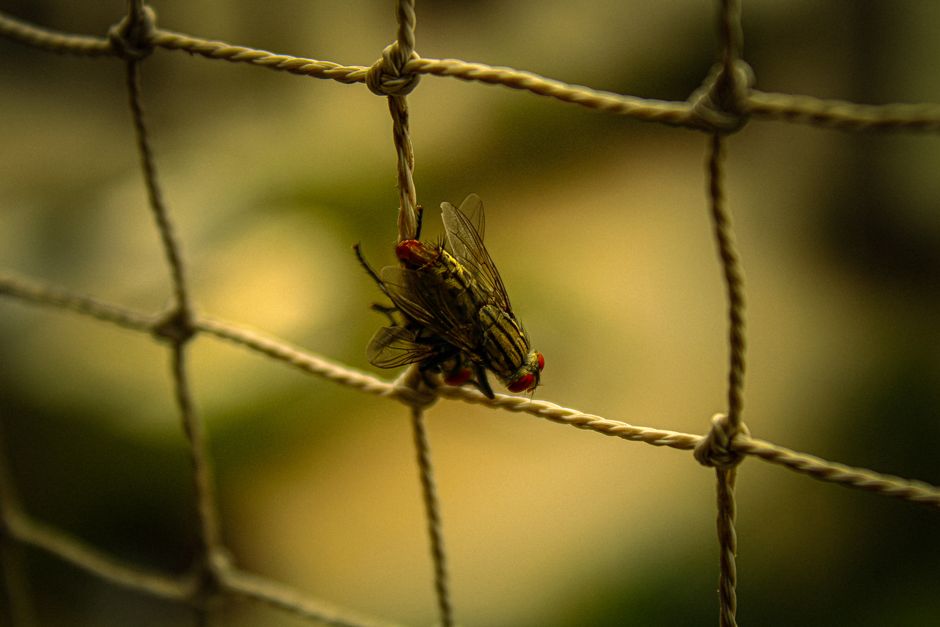
Flies in a house are usually a sign of an opening somewhere, a food source, or both. Getting rid of them means finding where they are coming from, removing what attracts them, and sealing the routes they use to get inside. Most indoor fly problems can be solved without pesticides if you handle the source directly.
How To Get Flies Out Of House
You do not usually need to chase individual flies around a room. You need to find the entry point and the breeding site. Flies rarely appear from nowhere. If you are seeing several at once, something nearby is producing them.
Start with the obvious. Check window screens for tears. Look at the gaps around doors, especially the bottom sweep. Check dryer vents, attic openings, and any hole where a pipe enters the wall. A common house fly can pass through a gap roughly the width of a pencil. Cluster flies and blow flies often enter through small exterior gaps in late summer and fall.
Once inside, flies tend to gather near light. A simple approach is to darken the room except for one window or door leading outside. Flies move toward the light. This does not always clear a room completely, but it helps concentrate them where you can deal with them.
For flies already indoors, a few methods work reliably:
- A jar or glass trap with a paper cone funnel lets flies in but makes it hard for them to leave.
- Sticky fly ribbons placed near windows catch flies that land.
- A vacuum with a hose attachment removes flies quickly from walls and ceilings.
- Electric fly swatters kill flies on contact without chemicals.
Traps and swatters handle the flies you see. They do nothing about the flies you do not see yet. That is why source removal matters more than any single trap.
Why Are There So Many Flies In My House?
A sudden increase almost always points to a breeding source. Flies lay eggs in moist, decaying organic material. When that material is inside or near your home, the population can grow fast.
The life cycle is the reason. A house fly goes from egg to adult in roughly a week under warm conditions, though this varies with temperature and species. That means a small source can produce a large number of flies in a short time.
Common breeding sources indoors and just outside include:
- Overripe or rotting fruit and vegetables, including in bowls on counters
- Garbage cans without tight lids, especially with food waste
- Recycling bins with food residue on cans and containers
- Pet food left out for long periods
- Drains and garbage disposals with built-up organic film
- Compost bins kept too close to the house
- Dead rodents or other animals in walls, attics, or crawl spaces
Fruit flies and drain flies are often mistaken for house flies. If the flies are tiny and hover around fruit or sinks, you likely have fruit flies or drain flies rather than house flies. The fix is different for each. Drain flies, for example, breed in the slime inside drains, so cleaning the drain itself matters more than cleaning the sink.
How Do I Find Where Flies Are Coming From?
Watch the flies. Their behavior tells you a lot. Flies gathering at a window are usually trying to get out and may have come from somewhere else in the room. Flies that appear in one specific area again and again are often breeding near that spot.
Check these locations in order:
- Kitchen: trash, compost, fruit bowls, drains, and the space under appliances
- Bathrooms: floor drains and sinks with slow drainage
- Basements and crawl spaces: damp areas, standing water, and any dead animal
- Attics and wall voids: cluster flies and blow flies often enter here and can overwinter
- Outdoors near entry points: garbage bins, pet waste, and standing water
If you cannot find a source and the flies keep appearing, the problem may be inside a wall or void. That is harder to solve yourself. In that case, a pest control professional can locate and treat the area.
Do Home Remedies For Flies Actually Work?
Some do, and some are mostly folklore. It helps to separate the two.
Apple cider vinegar with a few drops of dish soap in a small bowl does attract and trap fruit flies. The soap breaks the surface tension so the flies sink. This works for fruit flies, not house flies.
A paper cone trap works for house flies because they tend to move upward toward light and cannot easily find the small entry hole to escape.
Essential oils are widely sold as fly repellents. The evidence here is limited. Some laboratory studies suggest certain plant oils can repel flies, but there is little consistent evidence that household use reliably clears an infestation. No clinical guidelines recommend essential oils as a primary fly control method.
Ultraviolet light traps can catch flies, but their effectiveness depends on placement. A trap placed near a door may actually draw more flies inside. Placement away from entry points and away from food areas tends to work better.
What does not work well: leaving out bowls of sugar water or honey. These attract more flies than they catch.
How Do I Keep Flies From Coming Back?
Prevention comes down to cutting off food, water, and entry. Do all three and the problem usually stays solved.
For entry points:
- Repair or replace torn window and door screens
- Install door sweeps and weather stripping on exterior doors
- Seal cracks around pipes, vents, and utility openings with caulk or mesh
- Keep exterior doors closed when not in use
For food and waste:
- Use garbage cans with tight-fitting lids, and take out food waste often
- Rinse cans and bottles before recycling
- Store fruit and vegetables in the refrigerator or in sealed containers
- Clean up pet food and spills promptly
- Keep compost bins away from the house and covered
For moisture and drains:
- Fix leaky pipes and eliminate standing water
- Clean drains and disposals regularly to remove organic buildup
- Keep basements and crawl spaces as dry as possible
One thing people often overlook: flies can also come in on things you bring inside. Grocery bags, produce boxes, and outdoor items can carry eggs or larvae. Checking produce and shaking out bags before bringing them in helps.
When Should I Call A Pest Control Professional?
Call a professional if you have checked the usual sources and the flies keep coming back. Persistent flies with no visible source often means a breeding site inside a wall, attic, or crawl space. These are difficult to reach and treat safely on your own.
You should also call a professional if you suspect a dead animal in the walls or attic. This is a common cause of blow fly problems, and it needs to be removed, not just treated.
Large or repeated infestations, or flies appearing in a commercial or rental property, are also good reasons to bring in help. A pest control professional can identify the species, which matters because different flies need different treatments.
For most household fly problems, though, the source and the entry point are things you can find and fix yourself. Traps and swatters handle what you see. Sealing gaps and removing breeding material handle what you do not.
Frequently Asked Questions
What is the fastest way to get flies out of a house?
The fastest method is to darken the room and open one door or window to the outside, since flies move toward light. Pair this with a vacuum or swatter to remove the flies that remain.
Why do flies keep coming back in my house?
Flies keep returning when a breeding source or entry point is still present. Check for rotting food, dirty drains, uncovered trash, and gaps around doors and windows.
Does vinegar really get rid of flies?
Apple cider vinegar with a drop of dish soap traps fruit flies effectively. It does not work well for house flies, which need a different approach.
Are flies in the house dangerous to my health?
Flies can carry bacteria on their bodies and spread them to food and surfaces. This is a real concern, which is why keeping flies away from food and cleaning surfaces matters.
