
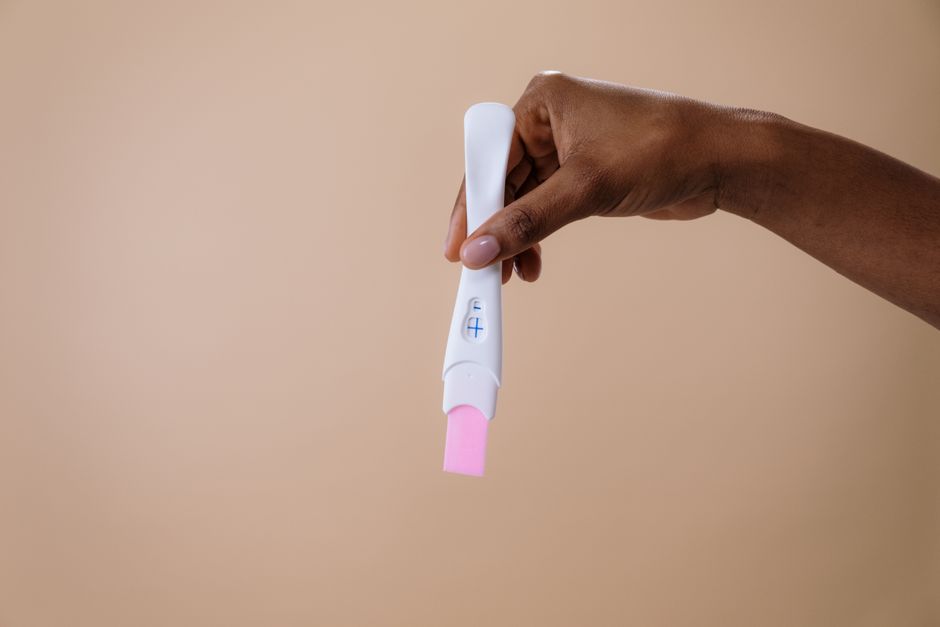
Pregnancy can first be detected through a blood test about 8 to 11 days after ovulation, or roughly 6 to 8 days before a missed period. Home urine tests typically turn positive around the time of the missed period, or a few days before it. The most reliable way to know is to wait until your period is late, then test with first-morning urine.
When Can Pregnancy Be Detected? The Full Timeline
Pregnancy detection depends on one thing: when a hormone called human chorionic gonadotropin (hCG) becomes measurable in your body. That hormone is produced by the developing placenta after a fertilized egg implants in the uterine lining.
The sequence looks like this:
- Ovulation: An egg is released and can be fertilized for about 12 to 24 hours.
- Fertilization: Sperm meets egg, usually within a day of ovulation.
- Implantation: The fertilized egg travels to the uterus and burrows into the lining. This happens about 6 to 12 days after ovulation, with most implantations occurring around 8 to 10 days.
- hCG production begins: Once implanted, the cells that will become the placenta start releasing hCG. Levels roughly double every 48 to 72 hours in early pregnancy.
- Detection threshold reached: Blood tests can pick up hCG at very low levels. Urine tests need a higher concentration, which takes a few more days.
So the earliest possible detection is around 8 days after ovulation with a blood test. But “possible” is not the same as “reliable.” Implantation timing varies from person to person, and even from pregnancy to pregnancy in the same person. A test taken too early can miss a pregnancy that is developing normally.
How Do Blood Tests Detect Pregnancy So Early?
Blood tests measure the exact amount of hCG in your bloodstream. They can detect the hormone at concentrations as low as 1 to 2 milli-international units per milliliter (mIU/mL).
There are two types of blood tests:
- Qualitative hCG test: Gives a yes-or-no answer. It detects whether hCG is present at all.
- Quantitative hCG test (beta hCG): Measures the exact level. This is often used to track early pregnancy progression or to check for complications.
A blood test can typically detect pregnancy about 8 to 11 days after ovulation. Some sources say as early as 6 days, but that assumes implantation happened on the early end of the range. If implantation occurs at 12 days, even a blood test taken at 8 days will be negative.
Blood tests are not usually the first step for someone who simply wants to know if they are pregnant. They are more common when a healthcare provider needs precise information — for example, when monitoring a pregnancy after fertility treatment or when symptoms suggest an ectopic pregnancy.
When Do Home Pregnancy Tests Work?
Home urine tests are designed to detect hCG at concentrations of about 20 to 25 mIU/mL. That threshold is higher than a blood test, so urine tests turn positive later.
Most home tests claim they can be used as early as the first day of a missed period. Some advertise “early detection” — up to 5 or 6 days before a missed period. That claim is technically true, but the accuracy is much lower that early.
The math explains why. If you have a 28-day cycle and ovulate on day 14, your period is expected on day 28. Five days before that is day 23 — just 9 days after ovulation. At that point, implantation may have only just happened, and hCG may not have reached the 20 mIU/mL threshold yet.
Research on home pregnancy tests has found that early testing leads to more false negatives. A negative result before your missed period does not mean you are not pregnant. It may simply mean you tested too soon.
For the most accurate result:
- Wait until the first day of your missed period.
- Test first thing in the morning, when urine is most concentrated.
- Follow the instructions exactly — timing matters.
- If the result is negative and your period still has not started, wait 2 to 3 days and test again.




Why Does Implantation Timing Matter So Much?
Implantation is the step that triggers hCG production. Without implantation, there is no hCG, and no test can detect a pregnancy.
The range of normal implantation is wide — roughly 6 to 12 days after ovulation. That six-day window is why two people with identical cycles can get different test results on the same day.
What determines when implantation happens? The journey from fallopian tube to uterus takes a few days, and the embryo needs to reach a specific stage of development before it can implant. The exact timing depends on factors that are not fully understood, including the embryo’s own biology and the uterine environment.
This is also why some people experience light spotting around the time of implantation — sometimes called implantation bleeding. It is usually lighter than a period and lasts a shorter time. But not everyone has it, and its absence does not mean implantation did not occur.
Can You Be Pregnant and Still Test Negative?
Yes. A false negative — a negative test when you are actually pregnant — is more common than a false positive. The most likely reasons are:
- Testing too early: hCG has not reached detectable levels yet.
- Diluted urine: Drinking a lot of water before testing can lower hCG concentration.
- Expired or improperly stored test: Check the expiration date and storage instructions.
- Not following instructions: Some tests require holding the stick in urine for a specific number of seconds, or reading the result within a narrow time window.
- Rare medical factors: Very rarely, a pregnancy may not produce normal hCG levels, or a test may be affected by certain medications.
False positives are less common but do happen. They can be caused by:
- Recent miscarriage or termination — hCG can linger for weeks.
- Fertility medications that contain hCG (such as trigger shots).
- Certain rare medical conditions unrelated to pregnancy.
- Evaporation lines — a faint line that appears after the test’s reading window has passed.
If you get a positive result, contact a healthcare provider to confirm and begin prenatal care. If you get a negative result but still suspect pregnancy, wait a few days and test again, or ask your provider about a blood test.
What About Early Symptoms — Can They Tell You Before a Test?
Early pregnancy symptoms are caused by rising hormones, especially hCG and progesterone. But those same hormones fluctuate throughout a normal menstrual cycle. That makes symptoms an unreliable way to detect pregnancy before a test.
Common early symptoms include:
- Breast tenderness or swelling
- Fatigue
- Mild cramping
- Nausea (usually starts later, around 6 weeks)
- Frequent urination
- Food aversions or a heightened sense of smell
Many people experience these symptoms before a missed period and are not pregnant. Others have no symptoms at all in early pregnancy. The only way to know is to test.
One non-obvious point: hCG levels rise faster in some pregnancies than others, and the rate of rise varies widely. A single hCG measurement is less informative than two measurements taken 48 hours apart, which is why providers often repeat the test rather than relying on one number.
When Should You See a Healthcare Provider?
If you have a positive home test, schedule a visit with a healthcare provider. They can confirm the pregnancy, estimate how far along you are, and discuss next steps.
Seek care sooner if you have:
- Severe abdominal pain
- Heavy bleeding
- Dizziness or fainting
- Shoulder pain (which can signal an ectopic pregnancy)
These symptoms can indicate a miscarriage or an ectopic pregnancy — a pregnancy that implants outside the uterus. Ectopic pregnancy is a medical emergency and requires immediate treatment.
If you are trying to conceive and have irregular cycles, your provider may recommend blood tests or ultrasound to better pinpoint ovulation and early pregnancy timing. Ultrasound can usually detect a gestational sac around 5 weeks after the last menstrual period, but that timing depends on the accuracy of your dates.
Frequently Asked Questions
How early can a blood test detect pregnancy?
A blood test can detect pregnancy about 8 to 11 days after ovulation, though it may be possible slightly earlier if implantation occurred on the early end of the normal range. A negative result before a missed period does not rule out pregnancy.
Can a home pregnancy test be positive before a missed period?
Yes, but the accuracy is lower. Most home tests are most reliable on or after the first day of a missed period, when hCG levels have had more time to rise.
What if I test negative but still feel pregnant?
Wait 2 to 3 days and test again with first-morning urine. If the result is still negative and your period has not started, contact a healthcare provider for a blood test.
How accurate are home pregnancy tests?
When used correctly and after a missed period, home pregnancy tests are generally accurate. Accuracy drops when tests are used too early, when urine is diluted, or when instructions are not followed.
