
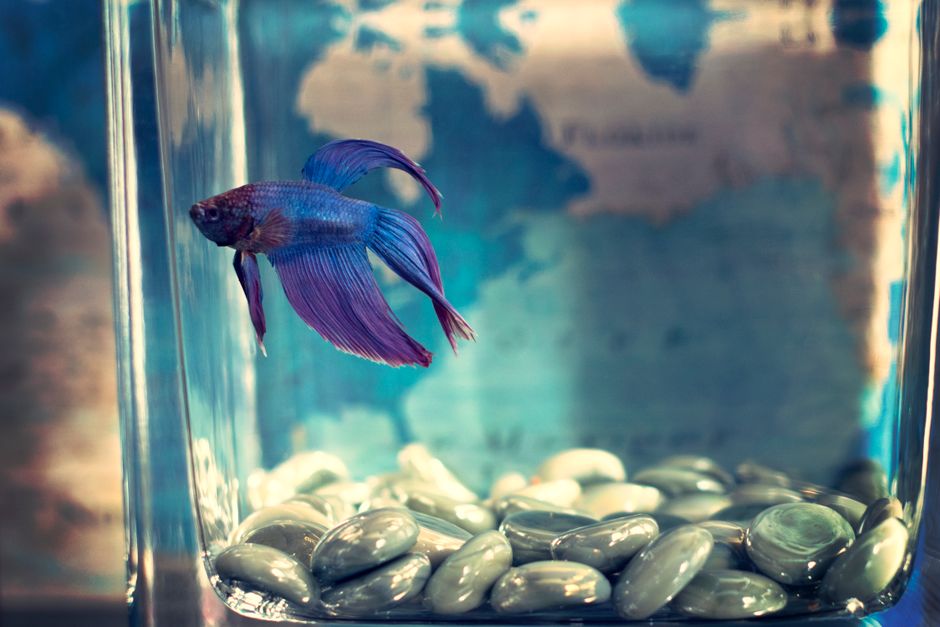
Betta fish are tropical fish, and the water they live in has to be treated before it is safe. The single most important step is to remove chlorine and chloramine from tap water with a water conditioner, then make sure the water is the right temperature and free of ammonia and nitrite. Skip the conditioner and chlorine will damage a betta’s gills and skin, sometimes within hours.
Getting betta water right is not complicated, but it does require understanding a few basics. A betta’s health depends on water chemistry, temperature, and how the tank is maintained over time. This guide explains what actually matters and what is largely marketing noise.
Why Does Tap Water Harm Betta Fish?
Tap water is treated to be safe for humans, not fish. That treatment is the problem.
Municipal water suppliers add chlorine or chloramine to kill bacteria. These chemicals do their job in drinking water, but they are toxic to fish. Chlorine damages the gills, and a fish that cannot breathe properly will show stress, lethargy, and eventually death. Chloramine is a compound of chlorine and ammonia. It is more stable than chlorine and does not evaporate out of water the way chlorine does.
This is the key point many beginners miss. Leaving a bucket of tap water out overnight was once a common way to remove chlorine. It does not work for chloramine. Many US water systems now use chloramine, so the old “let it sit” method is unreliable. A water conditioner that neutralizes both chlorine and chloramine is the dependable approach.
Tap water can also contain heavy metals like copper and lead, depending on the plumbing and the water source. Copper is toxic to bettas at low levels. A good conditioner often binds these metals as well.
What Does a Water Conditioner Actually Do?
A water conditioner is a liquid added to new water before it goes into the tank. Its main job is to break the chemical bond in chlorine and chloramine so they are no longer harmful.
Most conditioners do two things: they remove chlorine and chloramine, and they bind heavy metals. Some also contain additives that claim to support a fish’s slime coat. The slime coat is a real protective layer on a fish’s skin, but whether the additives in a given product meaningfully improve it is not well established. The core function — removing chlorine and chloramine — is what matters most.
Read the label. A conditioner that only removes chlorine is not enough if your water has chloramine. Check your water supplier’s annual water quality report to find out which one your system uses. It is public information.
One more thing worth knowing: some conditioners claim to remove ammonia. Ammonia in tap water from chloramine is a real issue, but the amount is usually small. The bigger ammonia problem comes from inside the tank, which is a separate topic covered below.
How To Make Betta Water Safe And Healthy: The Step-By-Step Method
Here is the process that works, whether you are setting up a new tank or doing a routine water change.
- Fill a clean bucket with tap water. Use a bucket that has never held soap or household chemicals.
- Match the temperature to the tank water. Bettas are tropical fish and do best in water between 76°F and 82°F. A sudden temperature swing causes stress.
- Add water conditioner according to the label dose. Follow the product’s instructions for the volume of water you are treating.
- Stir gently and let it sit for a few minutes so the conditioner can work.
- Add the treated water to the tank slowly.
If you are filling a brand-new tank, the water still is not ready for a fish. A new tank has no established colony of beneficial bacteria, and that matters more than most people realize. This is called the nitrogen cycle, and it is covered next.





What Is the Nitrogen Cycle and Why Does It Matter?
Fish waste, uneaten food, and decaying plant matter all break down into ammonia. Ammonia is toxic to fish. In a tank with an established biological filter, bacteria convert ammonia into nitrite, and a second group of bacteria converts nitrite into nitrate. Nitrate is much less harmful and is managed through regular water changes.
This process is the nitrogen cycle. It is the foundation of a healthy aquarium, and it does not happen instantly.
A brand-new tank has almost none of these bacteria. If you add a betta right away, ammonia will build up with nothing to convert it. The fish can be harmed. The solution is to cycle the tank before adding a fish, or to use a product designed to speed up bacterial colonization and test the water frequently during the first weeks.
Testing is not optional if you want to know what is actually happening. Liquid test kits for ammonia, nitrite, and nitrate are widely available and more accurate than test strips. In a cycled tank, ammonia and nitrite should read zero. Nitrate will rise between water changes and is managed by replacing part of the water.
Be skeptical of any product claiming to make a tank instantly safe for fish with no cycling. Some products can help, but no product removes the need to monitor water quality in a new tank.
What Water Parameters Do Bettas Need?
Bettas are adaptable, but they have a preferred range. These values reflect widely accepted aquarium keeping standards.
| Parameter | Target Range |
|---|---|
| Temperature | 76°F to 82°F |
| pH | 6.5 to 7.5 (bettas tolerate a wider range) |
| Ammonia | 0 ppm |
| Nitrite | 0 ppm |
| Nitrate | Below 20 ppm, kept low with water changes |
| Water hardness | Soft to moderately hard |
Stability matters more than hitting an exact number. A betta kept at a steady pH of 7.2 is generally better off than one bouncing between 6.5 and 7.5. Chasing a perfect reading with chemical additives often causes more swings than it solves.
Temperature deserves special attention. Bettas are tropical and do poorly in cold water. A heater with a thermostat is standard equipment, not an optional extra. Room temperature in most US homes is too cool and too variable for a betta.
Should You Use Bottled or RO Water for Bettas?
Bottled water and reverse osmosis (RO) water are not automatically better for a betta. In fact, they can cause problems.
RO water has had most minerals removed. That sounds clean, but fish and the beneficial bacteria in a tank need some minerals to function. Water that is too pure can cause pH to crash and can stress a fish. If you use RO water, it usually needs to be remineralized or mixed with tap water.
Bottled drinking water varies widely. Some is simply treated tap water. Some has added minerals. Unless you know the mineral content, it is not a reliable choice. Treated tap water is generally the simplest and most consistent option for most households.
If your tap water has unusually high nitrate or other issues, your water supplier’s report will tell you. In that case, mixing RO water with tap water is a common approach. Test the result rather than assuming.
How Often Should You Change Betta Water?
Water changes remove nitrate and replenish minerals. The right frequency depends on tank size, whether the tank is filtered, and how many fish are in it.
For a small filtered tank with one betta, replacing roughly 25 to 50 percent of the water once a week is a common approach. Larger tanks with a strong filter can go longer between changes. Very small unfiltered containers need more frequent changes, which is one reason they are harder to keep stable.
Watch the nitrate reading. If nitrate climbs, change more water or change it more often. If it stays low, you can adjust. The test result guides the schedule better than a fixed rule.
Never replace all the water at once unless there is an emergency. A full change removes the bacteria and disrupts the balance the tank has built. Always treat new water with conditioner before it goes in.
Common Mistakes That Make Betta Water Unsafe
Most problems come from a handful of avoidable errors.
- Using untreated tap water. This is the most common and most dangerous mistake.
- Assuming chlorine evaporates. It does not reliably, and chloramine does not at all.
- Skipping the cycle. Adding a fish to a brand-new tank exposes it to ammonia.
- Letting temperature swing. Bettas need steady warmth.
- Overcleaning. Rinsing filter media in tap water kills the bacteria that keep the tank safe. Rinse it in old tank water instead.
- Overfeeding. Uneaten food decays and raises ammonia.
None of these require expensive equipment to fix. They require attention and a testing habit.
Frequently Asked Questions
Can I use tap water for my betta if I let it sit overnight?
Not reliably. Chlorine may dissipate over time, but chloramine does not, and many US water systems use chloramine. A water conditioner is the dependable way to make tap water safe.
What temperature should betta water be?
Bettas do best between 76°F and 82°F. Keep the temperature steady with a thermostat-controlled heater, since swings cause stress.
How do I know if my betta water is safe?
Test for ammonia, nitrite, and nitrate with a liquid test kit. In a healthy cycled tank, ammonia and nitrite should read zero.
Is bottled water better for bettas than tap water?
Not necessarily. Bottled water varies in mineral content, and pure reverse osmosis water can lack the minerals a tank needs. Treated tap water is usually the simpler choice.
